Is the mid-day meal failing the children of Karnataka?
Religious, caste or class preferences shouldn't come in the way of providing children with an adequate quantity and quality of a well-balanced mid-day meal.

The mid-day meal provided in government schools cannot be taken lightly by anyone who claims to care for the young citizens of the country—its children.
As per the National Centre for Health Statistics (NCHS) standards, a boy of age 14 should ideally be around 147 centimetres in height and weigh around 47 kg while a girl of the same age should be around 159 centimetres and weigh around 48 kg. However, according to the National Family Health Survey (NFHS) 4th round (2015), Karnataka has an alarming number of children who are shorter, thinner and weighing less than what is ideal.
The data in Table 1 is self-explanatory. This has a direct impact on mortality and morbidity rates due to communicable diseases in childhood and non-communicable diseases in adulthood.
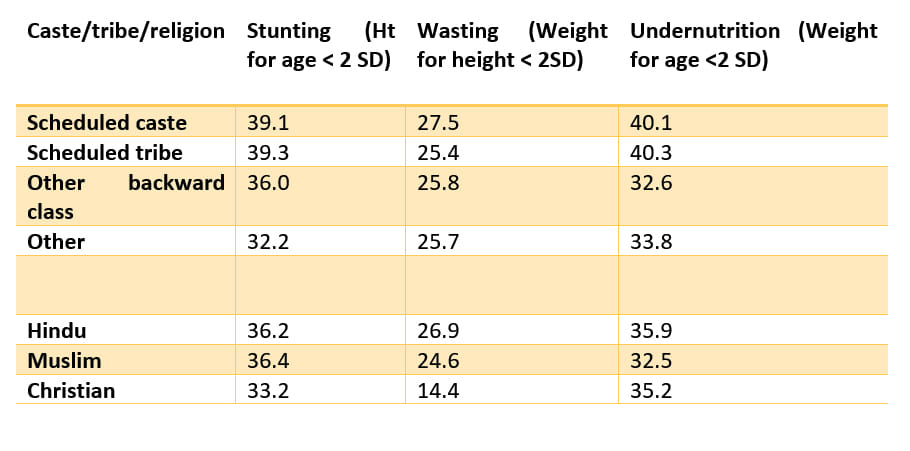
Table 1 – NFHS4 data on nutritional indicators in Karnataka
The other objective of the mid-day meal (MDM) is to increase school attendance. The logic is simple: children who have eaten a proper meal are able to concentrate better. It is also often an incentive for children, who come from impoverished families and who may not be provided with a full meal at home, to attend school. The government becomes liable if it fails to meet the nutritional standards of the mid-day meal as legally mandated by the National Food Security Act, 2013.
The daily requirements of common nutrients for a 14-year-old boy and girl recommended by the National Institute of Nutrition are as in Table 2.
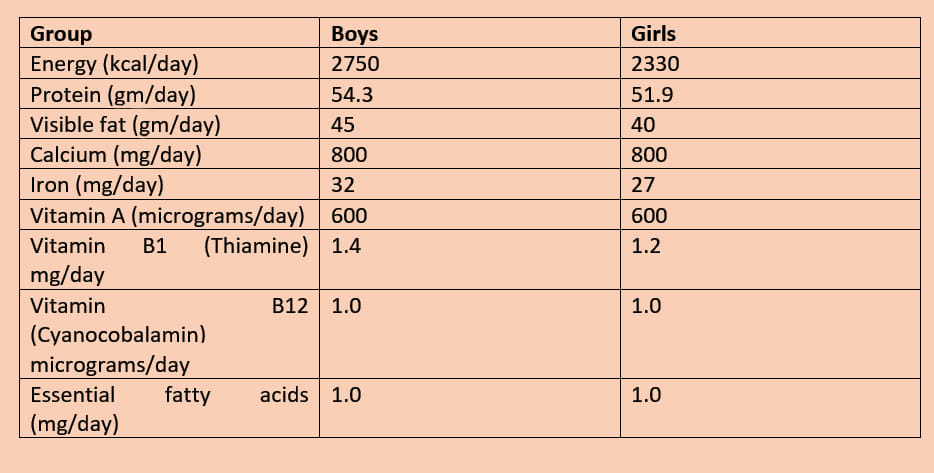
Table 2 – Recommended Dietary Allowances, National Institute of Nutrition (14-year-old boys and girls)
One mid-day meal in the government school, can, by no stretch of the imagination, provide all the nutritional requirements of the child. However, if provided based on scientific and nutritional norms (Table 3), it can make a small dent in improving the nutritional status of children.
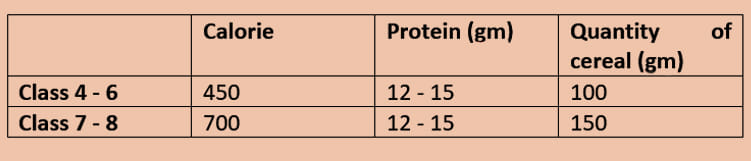
Table 3 – Nutritional standards of the MDM as per the NFSA 2013
To meet the intake of calories, proteins and other requirements, the mid-day meal has to be scientifically planned and implemented. As per the Indian Food Composition Tables published by the National Institute of Nutrition, 100 grams of egg provides 13 grams of protein and 170 kilocalories of energy as well as most of the other vitamins and minerals required for proper functioning of the body—except for Vitamin C. Since each egg weights approximately 60 grams, it would provide around 100 kilocalories of energy and 8 grams of protein.
These proteins are of superior biological value. Eggs have not been provided by the State government for the last seven to eight years citing religious reasons. Therefore a simple means of providing calories and proteins are lost to the children. The National Institute of Nutrition (NIN) recommends consumption of at least three eggs per week in view of several nutritional advantages. There have been demands for eggs in the mid-day meal from civil societies, parents and children across several states of India.
If eggs are not provided to children, the nutritional needs have to be made up with an addition of milk, milk products, dark green leafy vegetables and fruits in adequate proportions to meet the requirement of proteins, vitamins and minerals.
Children also have to eat around 100-150 grams of cereal at the MDM to be able to meet the calorie requirement of 450–700 kilocalories. If children eat less, they do not get the required calories.
Akshaya Patra has recently been in the limelight for refusing to comply with government guidelines for food preparation, a move criticised by the Right to Food and the Right to Health (Jan Swasthya Abhiyan) campaigns. The vegetarian food provided by Akshaya Patra does not meet nutritional criteria. As stated by the Food Commission of Karnataka, children do not drink even the one glass of milk provided by Akshaya Patra because it is cold and often gets spoilt on heating. Apart from this, the sambar is watery and does not have adequate vegetables. Nutritional assessments should not be conducted on single ingredients but for the meal as a whole.
A more important point about MDM supplied by Akshaya Patra is that children are consuming less than recommended 100-150 grams of rice, which means that children are consuming even less of the food which is already of low nutritional quality. So they get neither quantity nor quality. Here is where the issue of onion and garlic come in. Onions and garlic contain minerals and vitamins and are a source of essential oils, flavonoids, carotenoids and phytochemicals, all necessary to boost immunity. Very few labs have the facility to analyse all these ingredients. It is not so much about the nutritional value of these ingredients as much as how they are related to cultural eating practices which directly affect taste. If children are provided food that they find tasty, they are likely to eat more. Otherwise, children just eat enough to suppress hunger which is inadequate and takes away from the whole purpose of the MDM. The Supreme court also says that the MDM should be cooked taking into consideration local preferences and tastes.
Policymakers should make wise decisions on the quality and quantity of the MDM. Arguments that those who don’t like the taste can eat at their homes undermines the very intent of the MDM. For some of the poorest and malnourished children in Karnataka, the MDM may often be the most nutritious meal in the day. How we plan and implement this meal is crucial to decide the course of the health and nutritional status of children of the State—no religious, caste or class preferences should come in the way of providing children with adequate quantity and quality of a well-balanced mid-day meal.
The writer is a public health doctor and researcher and part of both the Right to Food and Right to Health campaigns.