What does investigative journalism really take? The journalist who exposed Bofors explains
How can one build trust with a source or a whistleblower? How can journalists establish intent and purpose, sift fact from fiction, and gauge personal agendas?
Every journalist dreams of cracking that one big story, whether it’s an investigation that exposes a corrupt official or politician, unearths a dangerous cover-up, or holds a large corporation accountable. The process of doing such work isn't easy. You must find sources willing to talk, verify everything they say, and build the story piece by piece.
So, how do journalists do this?
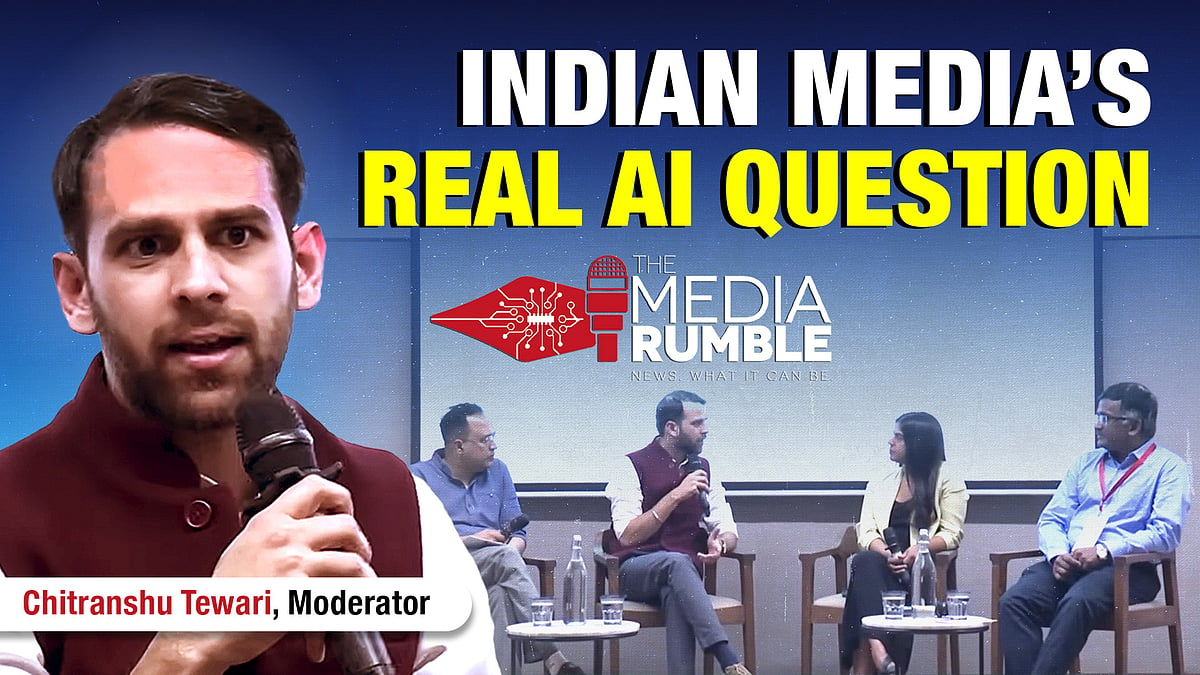
That was the question at the heart of the workshop ‘Media and whistleblowers: The process, the challenges, the cautionary tales’ at The Media Rumble 2025 in Bengaluru on October 3 and 4. Powered by the Canadian High Commission, the workshop was led by award-winning investigative journalist Chitra Subramaniam.
As a reporter in the 1980s, Chitra investigated the Bofors scandal – one of India’s biggest political scams to date. Her 10-year, three-country Bofors investigation (1987-1997) in Sweden, Switzerland and India led to the electoral defeat of Indian Prime Minister Rajiv Gandhi in 1989. It also changed Swiss laws on international assistance in criminal matters.
In 1986, India bought Howitzers from Sweden. The guns were excellent, and the price was reasonable. The problem was that bribes were paid into secret bank accounts in Switzerland. As Chitra recalled, “Swedish radio said India had both howitzers and bribes had been paid into Swiss bank accounts. It (the Bofors story) broke on Easter. I didn't know what a howitzer was; it took me some time to figure out that it was a gun.”
On the question of where the money went, she claimed, “Where did the money go? I think the money went to Mr Ottavio Quattrocchi, who is a friend of Sonia Gandhi.”
Unlike reporters today, she didn't have access to the internet or a myriad of software. She had to sift through and verify every detail in libraries and books in Switzerland and Sweden, and send her stories via telex machines. Despite these challenges, certain facets of investigative journalism remain unchanged, according to her. As Chitra said, “If you want to be a good journalist… your devotion and your research should be to facts, and facts alone.”
She also shared some insights with journalists interested in investigative journalism. “There is nothing more beautiful than meeting somebody who knows such information,” she said. Also, she noted, “Every time you do an investigative story, it will be new. Don't become cynical.”
In times of misinformation, you need news you can trust. We’ve got you covered. Subscribe to Newslaundry and power our work.
 Efficiency vs ethics: The AI dilemmas facing Indian media