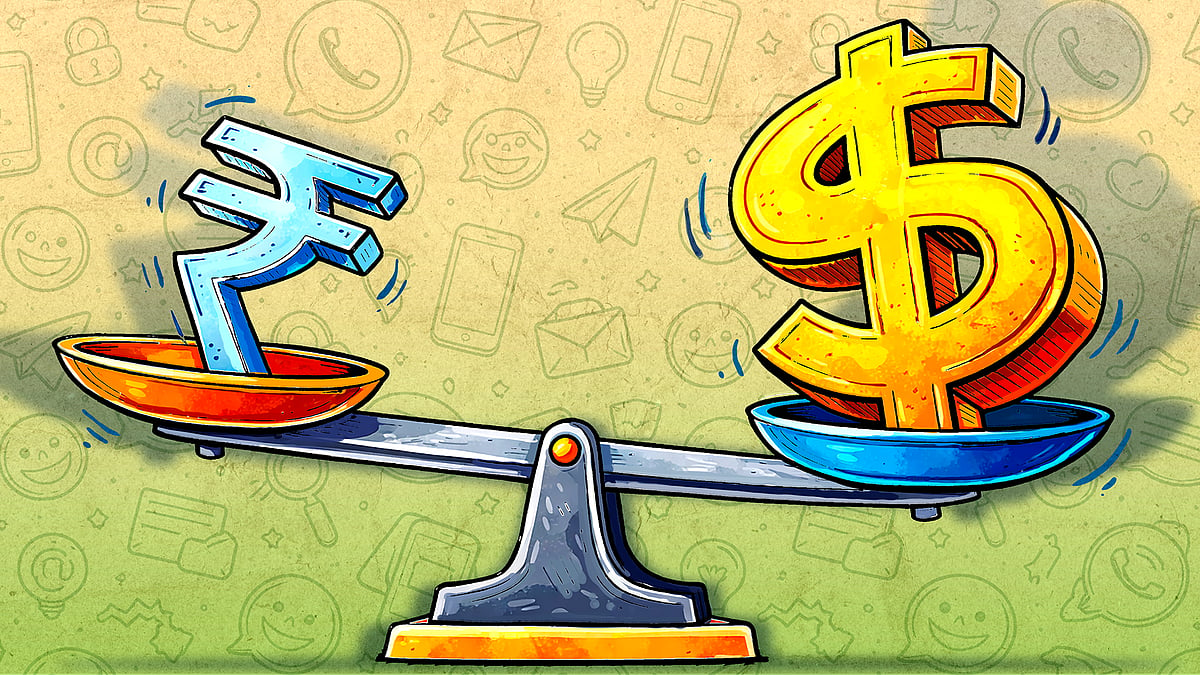
What happens if the dollar hits Rs 100?
‘Rs 100 is just a number,’ PM Economic Advisory Council member Shamika Ravi’s remarks triggered debate. What happens when the rupee weakens?
“100 is just a number.”
That’s how Shamika Ravi, a member of the PM’s Economic Advisory Council, responded to concerns that the rupee could soon slide to Rs 100 against the dollar. And at first glance, it sounds like a rational take.
Why panic over a number? Why treat exchange rates like a cricket score? And why should the government spend billions trying to defend an exchange rate that may no longer reflect economic reality?
The problem is that while the number itself may be arbitrary, the economics behind it are not.
In fact, anyone making the opposite argument is overlooking some fundamental realities about how the Indian economy works and why policymakers, investors and central banks pay such close attention to exchange rates in the first place.
Because such statements assume that India can comfortably absorb a weaker currency and live with the consequences. But sooner or later, it shows up somewhere. And ultimately, in bills that businesses and households have to pay. Including you and me.
Let me explain.
Like Pooja's LME? Support the show: https://rzp.io/rzp/support-lme
Like our journalism? Become a subscriber: https://www.thenewsminute.com/subscription
 Why India cannot let the rupee float
 Can India blame just war for its economic slowing?