Move over Tanmay Bhat, The New York Times (NYT) is here. In a report about the comedian’s video that caused widespread outrage, the American daily has committed a faux pas of its own, referring to Lata Mangeshkar as a “so-called playback singer”. It seems the newspaper felt its audience is not familiar with the term ‘playback singer’, choosing to explain it in the sentence as someone who provides “vocals for song-and-dance numbers, to which actors and actresses lip sync”.
To be fair to NYT, the Oxford Dictionary, both British and American, carries two definitions of the term ‘so-called’. The first definition is “used to show that something or someone is commonly designated by the name or term specified”, the second is “used to express one’s view that a name or term is inappropriate”.
But even if one gives NYT the benefit of doubt and assumes that the term was used in the first sense and not the second, there is no denying the fact that ‘so-called’ was an extra qualifier that could have been done without. By that first definition, even the NYT is a “so-called” newspaper.
At present, playback singing is restricted mainly to films from the Indian subcontinent. But even when it comes to Hollywood, the concept is not entirely unknown. Musicals like My Fair Lady and West Side Story, winners of eight and 10 Oscars respectively, employed singers who were the voices of on-screen stars, albeit surreptitiously.
Even if one assumed NYT‘s current readers are unaware of the term, it is surprising that the newspaper assumed familiarity with the sport of cricket. In the same paragraph where Mangeshkar’s occupation is described, Sachin Tendulkar, the other target of Bhat’s humour, is referred to as a “hugely popular cricketer who retired in 2013”.
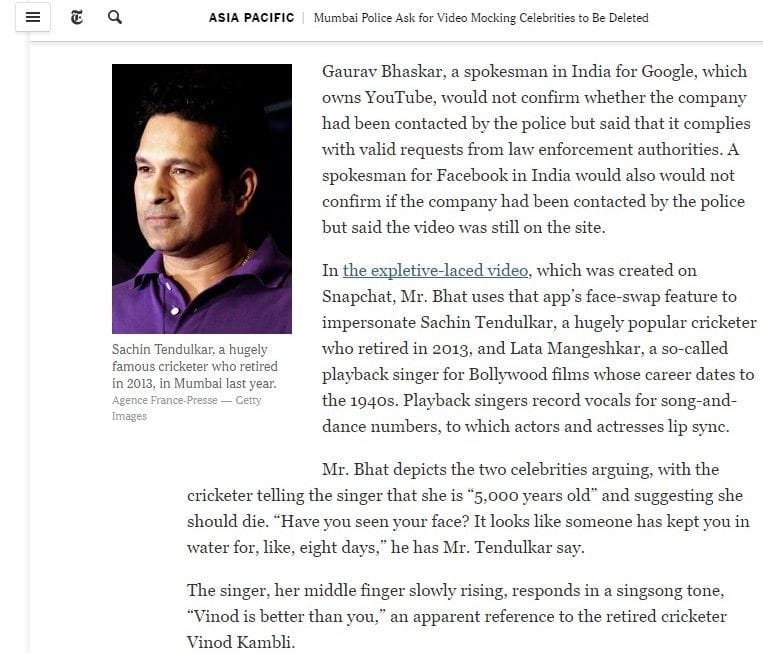
While this might keep the comedian and his ‘Sachin vs Lata Civil War’ in the news for one more day, this is hardly the first time journalists from international news organisations have failed to do a basic fact-check when it comes to public figures from India. By far the most common gaffe is misspelling Mahatma Gandhi’s last name as “Ghandi”. The Telegraph is the most recent one to do so and The Guardian, in particular its photo department (see below), is a serial offender.
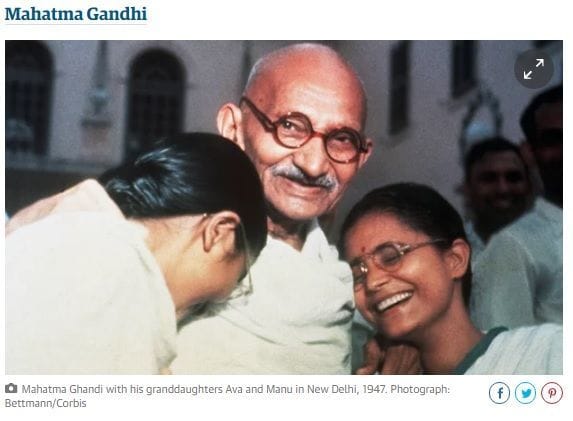
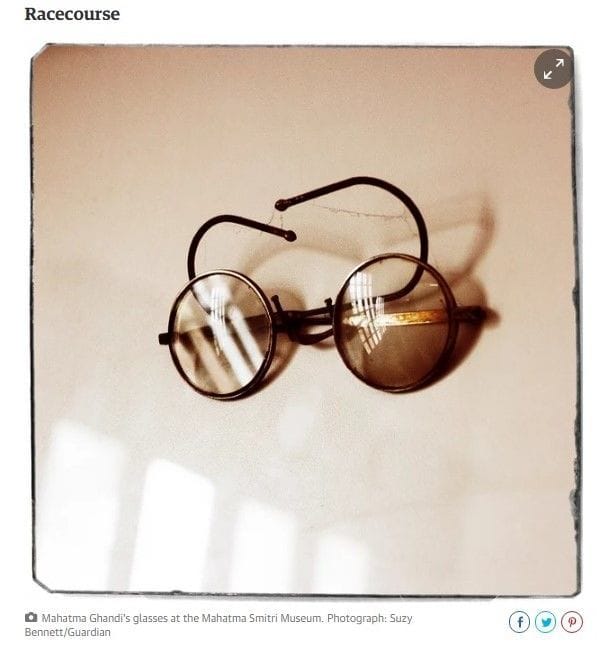
Not that Indian media outlets are particularly better at spelling the surname of the Father of the Nation . On April 20 this year, an India Today staffer report from London misspelt Gandhi as “Ghandi” and says “statutes” instead of statues. Interestingly, the same mistakes are also there in a Press Trust of India report of the same event as carried by Economic Times. The latter is a case of an agency story being uploaded without basic proofing, which is bad enough. The former is worse – PTI’s errors are replicated as padding in an article carrying the byline of a staffer.
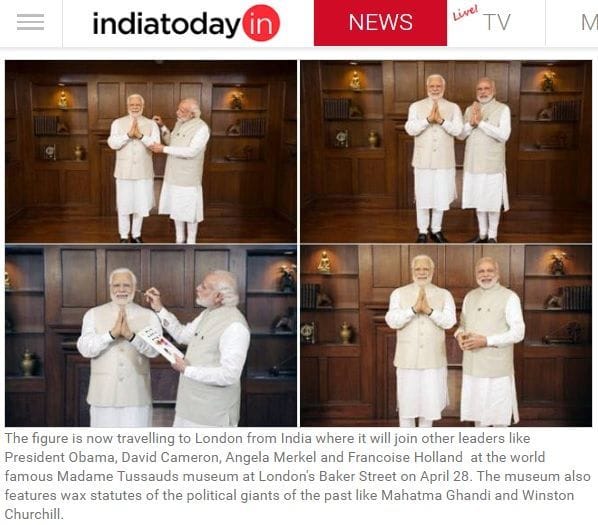
Seriously, Indian media. At least spell Gandhi correctly.
P.S. Dear readers, if you know of similar mistakes made by newspapers and websites, let us know.