UP Elections: In Bundelkhand, Caste Wins Over Agrarian Crisis, Infrastructure And Other Issues

Three months ago, Hiralal Kushwaha, known to his friends and family as Bablu, boarded a train only to jump off it and kill himself. He was 27. He is the second Kushwaha to have died in the past four years. In June 2013, Bablu’s father Halke Kushwaha succumbed to cancer. He left for Bablu eight bighas of land and the loans that the family had to take to pay for expensive cancer treatment. That was how the Kushwaha family walked into the loan trap – by hoping that Bablu’s father wouldn’t die.
“Hau moda ne lagau 1 se 1.5 lakh, karja lekar (My son has taken 1 to 1.5 lakh loan to take care of those expenses),” Bablu’s mother, Menda, told Newslaundry. Next, Bablu borrowed money to construct a pucca room for the family. Another loan was to construct a borewell because the land his father had left him was parched. Bablu didn’t know it then, but all the land in not just his village of Mailoni but all of Bundelkhand was about to crack with disaster and tragedy. His precious borewell didn’t stand a chance against the three consecutive years of drought that were about to strike Bundelkhand. The end of this nightmarish period came last year and would be marked with the heaviest rain that the region has seen in a decade.
Six months later, neither the Bundelkhand nor the Kushwahas seem ravaged. The green mustard crops that are growing in the Kushwahas’ land are the only bit of relief for the two widows and the three children Bablu has left behind. For the Kushwahas, the Assembly elections that are underway are irrelevant. As far as Bablu’s widow, Shanti, is concerned, the only reason the government matters to her is that she’s owed compensation. If she doesn’t get it, then she can’t repay the moneylenders. If she can’t repay the moneylenders, then this land that has finally offered some hope to the Kushwahas will be lost to repay Bablu’s debts.
The Kushwahas need to repay Rs 2.5 lakh to State Bank of India for credit taken on Kishan Credit Card (KCC) and another Rs 1.5 lakh to private moneylenders. They’re staggering figures to Shanti and what she earns from the land, if all goes well weather-wise, won’t be enough to clear these accounts. “I could kill myself too, but then I have to think about my children,” she said.
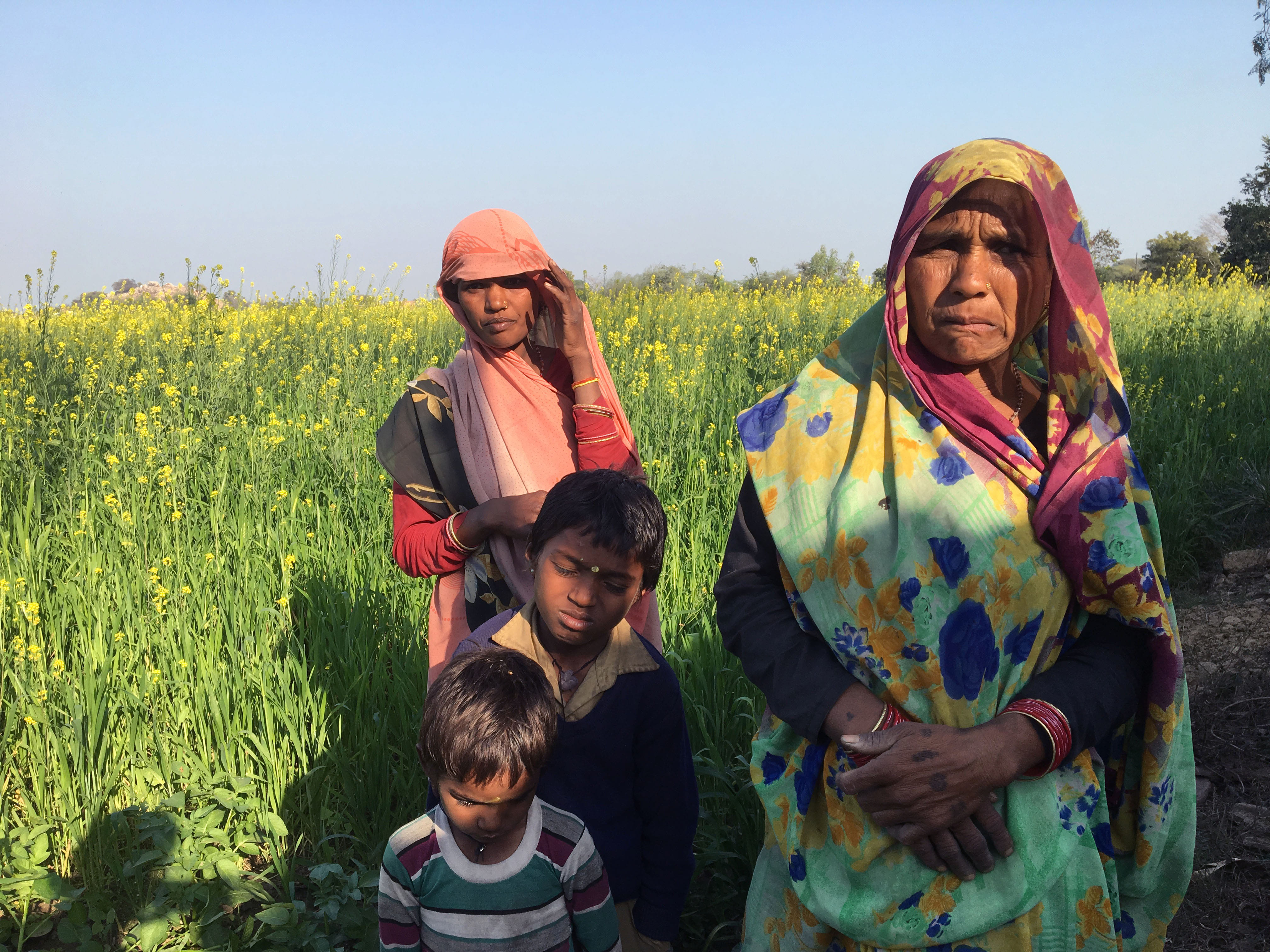
Shanti’s story doesn’t stand out in the seven, drought-hit seven of Bundelkhand in Uttar Pradesh. Crisis and disaster have been a way of life here for almost a decade. In April 2008, a team formed by Central Government submitted its report recommending a special package of Rs 8,316 crore for the region. A year later, the United Progressive Alliance (UPA) government approved Rs 7,266 crore package for Bundelkhand, of which Rs 3,506 came to Uttar Pradesh. Despite all this aid, little has changed in the lives of Bundeli farmers.
Of 25.48 lakh hectares sown land in the region in UP, only 42.3 per cent is irrigated. In Bundelkhand, farmers have tried to adapt to changing weather patterns. Responding to consistently late monsoons, farmers have delayed sowing kharif crops (such as paddy) by a month and half. This has meant erratic yield. Dependence on the rabi crop season, between November to March in Bundelkhand, has increased. Farmers pin their hopes on wheat, besides vegetables and lentils. Unfortunately, the market for vegetables isn’t lucrative and as a result, as financial burdens have intensified, much of the farming community has shifted to mustard cropping.
Since 2013, however, this cycle has been struck by a series of disasters that have repeated themselves over and over again. First, the monsoon fails the farmers. Then, even if they are able to cultivate good crops, their yield is destroyed by either excess rainfall or fog. With bills to pay and fields lying waste, farmers turn to their KCCs with the hope that it will tide them over. Next season, drought strikes again.
The farmers in Bundelkhand are hopeful that this year, they will not suffer the way they have for the past three years. While this crisis has informed practically every Bundeli’s life, it’s barely a talking in the ongoing polls. When it comes to votes — asking for them and giving them — what matters is caste and personality cults.
In its final stages, the political campaigning in Bundelkhand has turned particularly ugly. Prime Minister Narendra Modi, Samajwadi Party and present Chief Minister of UP Akhilesh Yadav and Bahujan Samaj Party supremo Mayawati have attacked one another viciously. These potshots have taken primacy over some serious issues that could and need to be tackled by the administration.
Bundelkhand is made up of seven districts in UP and six districts in Madhya Pradesh. The UP section is mostly plateau with a few hilly bumps breaking the flat line of the landscape. Its lifelines are two rivers – Ken and Betwa water the fields of this entire region. Among the most harsh geographical conditions — dust, hill, searing dryness and ravines — are in Chitrakoot and Mahoba, which in 2006 were listed as among the 250 most backward districts in India. Mahoba is amongst the most drought-prone areas.
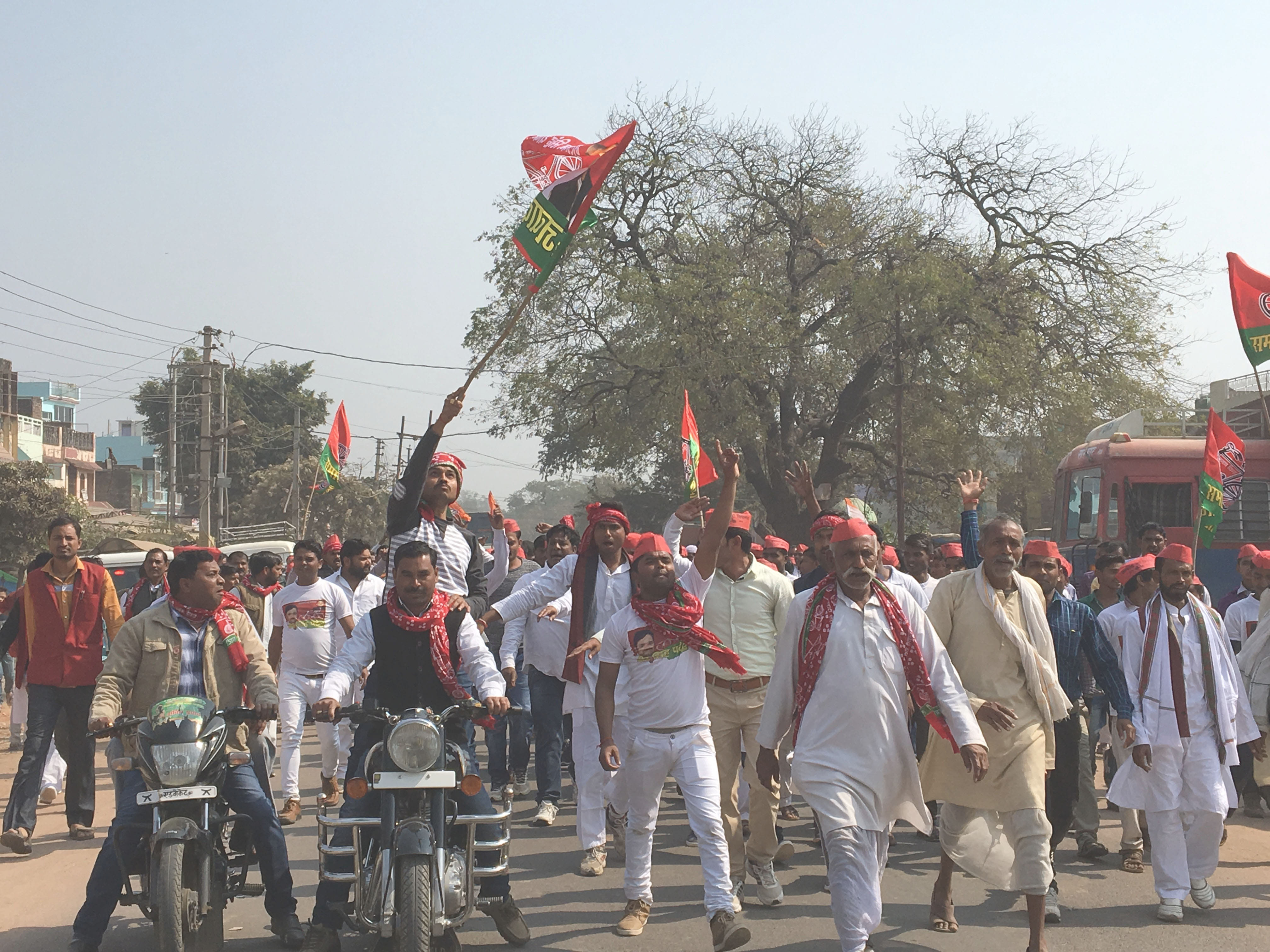
There are pockets within Bundelkhand that are so cut off — both geographically and in the minds of the political parties — that candidates don’t even bother to go all the way there to campaign. Just as they don’t reach, neither do the electoral promises that make headlines elsewhere. None of the BJP supporters Newslaundry spoke to had heard of the anti- Romeo squad, for example.
Entering Manikpur
In a rally in Orai, Modi promised the gathering that if BJP wins election, his party will transform Bundelkhand like it had earthquake-ravaged Kutch. No one seems to be buying it. “Vikas ke naam par humne bas ye sadak dekhi hai, (All that we have seen in name of development is this road),” said Rajneesh Kumar Pandey, 26, who works with a public sector bank in the town of Chitrakoot town. His village Lakshmanpur is on the borders of Bundelkhand. The road Pandey was referring to gives way within a few kilometres to a kuccha path. Keep walking and it will take you to the road that goes to the town of Manikpur.
Last year’s summer was particularly brutal for Manikpur. Approximately 250 families live in this area and they were dependent on only two hand pumps. When the rains came finally, it brought only temporary relief. Among the houses that collapsed due to heavy rains was Kaushal Gupta’s and 15 days later, his 20-year-old son Udaybhan was struck by lightning. These tragedies, however, remain personal and there’s little effort to address the infrastructural issues that could improve people’s lives.
Local journalist Hari Krishan Poddar explained how caste is used by political parties in this part of UP. In Mahoba, Brahmins, Thakurs and Dalit along with Muslim constitute the major vote bank. To draw the upper caste vote to him, the BJP candidate from Mahoba, Rakesh Goswami, has got Saifali Singh, a “princess” of Sarila in Hamirpur district to campaign for him. “BSP has fielded Arimardhan Singh who belongs from Thakur community,” said Poddar. “In order to break the caste-based alliance of Thakurs with BSP, Goswami sought support of Princess Saifali Singh and organised a separate rally with her.” Speaking of Singh, Poddar said she had hardly ever “interacted with commoners”. “And now the BJP has brought her to woo the Thakurs community.” said Poddar.
The Samajwadi Party-Congress alliance has fielded a local celebrity, Sampat Pal of Gulabi Gang fame, in Manikpur. It’s one of the few decisions that aren’t caste-driven, but locals don’t give her much of a chance though the media — particularly foreign — has been flocking to record her campaign. BJP and Bahujan Samaj Party (BSP) have fielded candidates RK Patel and Chandra Bhan Singh Patel respectively. Abhishek Dwivedi, a candidate from Swabhimaan Party, hopes that the Brahmins who are disgruntled by the Patel candidates will vote for him. “What hurts me is that my hard work in the social sector, my management degree isn’t important for the voters now. What matters to them is my caste,” said Dwivedi. There are rumours that politicians have even sought the help of Babli Kol, who belongs to the Kol tribal community that forms the largest vote bank in tribal villages such as Naagar — a nearby village to Lakshmanpur.
Leaving Naagar
In Naagar, water isn’t a problem anymore. Last summer, the gram pradhan got a new borewell for common use. However, the village is still waiting for road and transport that isn’t discriminatory. “We use shared autos and buses owned by Brahmins,” said 23-year-old Pramod Kol. “If there is a medical emergency at night, we end up paying nothing less than Rs 2,500 to Rs 3,000 to reach town.”
Brahmins are the landowners here and Kols, although greater in number, either work as agricultural labour or on fields they lease. “Almost 70 per cent of the youth here leave for nearby Indore or Bhopal or some other place in Madhya Pradesh in search of jobs,” said Pramod, who works in a brick kiln. By the end of rabi crop season, boys and young men from practically every family in Naagar family leave home because there are so few prospects. They got to cities in MP or even as far as Delhi and Mumbai in search of jobs.
Migration is a serious problem in Bundelkhand. Like so much else in Bundelkhand, it begins with debt. To repay the KCC loans that have been taken against land that was too dry to yield anything but dust and famine, Bundeli men have been going to cities to earn a living. These best-laid plans often collapse in tragic heaps. Sixty five-year-old Jagdish Rathore had take a loan of over Rs 7 lakh against his 22 bighas of land. His crops failed season after season and eventually, he along with his two sons left for Greater Nodia. Here, Rathore opened a small grocery store and his two sons worked as construction labourers.“He heard about the Bank’s recovery notice on February 1 and since then felt pain in his head,” said Rathore’s son, Mahendra. Twenty four hours later, Jagdish Rathore was dead. He’d died of brain haemhorrhage, often caused by stress.
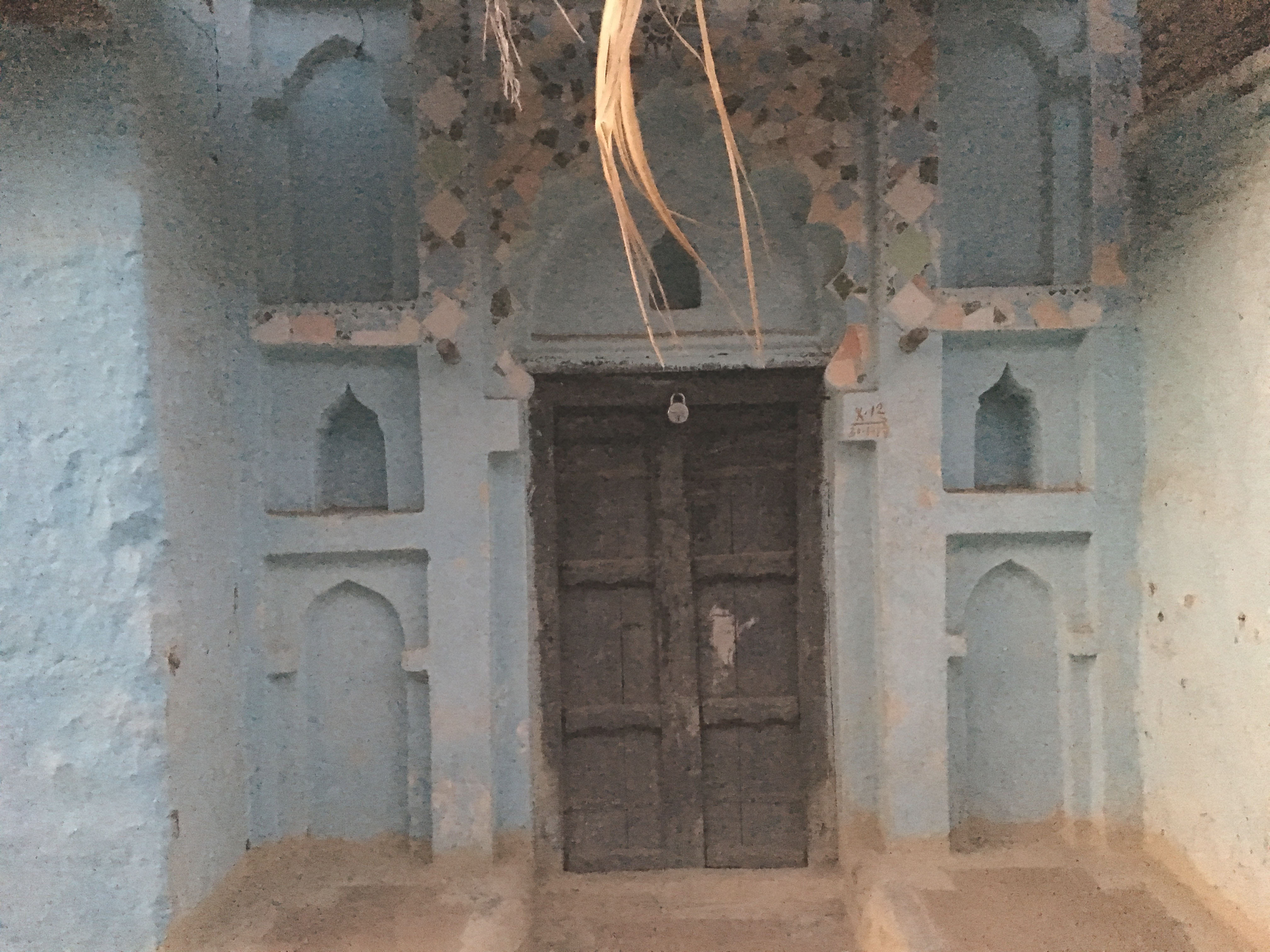
Particularly for those who have gone to cities for work, demonetisation has been a crushing blow. “The owners first delayed the payments, then it stopped coming and eventually we were asked to leave our jobs as they didn’t had any money left,” said Ram Manohar Verma, a 26-year-old Dalit who was working in Mumbai and had to return to his village of Naseni. Even though his employer has started sending the money that is due to workers, Verma has been told there is no work for him until March. “We have zero per cent employment opportunity in the village and this notebandi took away our jobs in the metros too,” he said.
Yet none of these issues — shortage of jobs, absence of infrastructure, the agrarian crisis — seem to register as problems that a politician could help solve. One explanation is that things are looking up, at least for the farmers. “Iss bar achi fasal ki khusi mein voter sukhe ka dard bhool gaya hai. Aur yahan voters ke sath yahi problem hai, (A good harvest has made the voters forget dreadful days of droughts. And that is the problem),” said Ashish Sagar, an RTI activist. “Mein to yahi sochta hai hoon ki chunav agar garmiyon mein hota to mudde kuch aur hi hote.(The polling agendas would have been different had the election been held in summer).”
The author can be contacted on Twitter @amit_bhardwaz