Wherefore art thou Romeo?
Is the all-seeing eye of the UP police officers who make up Anti-Romeo Squads really all that is necessary to make the streets safe for women?

Nineteen-year-old Mukesh Chaudhary’s ice cream stall is known as Mewar Prem. He stands outside Meerut College, which is more than 100 years old and once a place where student romances flourished. Today, though, the love has flown Mewar Prem’s coop. “Police wale sabko bhagate hain, couples ko bhi, (Police wallahs ask every one to leave, even the couples)” he compained. “Puchte hain agar exam dene aaye ho to andar jao, warna nikal jao, (They ask whether those standing outside the college if they have an exam, if yes they better go inside and if not they not must leave.)” This is the effect of Anti-Romeo squads, who have been entrusted with making the streets safe for Uttar Pradesh’s women.
“Ek ladka aur ladki kabhi dost nahin ho sakte (A girl and boy can never be friends).” First uttered by Mohnish Behl in Maine Pyar Kiya, this maxim is the guiding principle of at least one of police officers in Meerut’s newly-formed Anti-Romeo Squad (ARS), which seems to channel more of Gangs of Wasseypur 2 (a film that famously referenced Maine Pyar Kiya). He wants his identity to remain undisclosed, but he would also like everyone to know that experienced policemen like him have seeing eyes. “Humme ankhone mein dekh kar pata lag jata hai, itne saalon ki naukri hai (We can tell by looking into their eyes, we’ve worked for years after all)”.
Set up ostensibly to combat the harassment of women in public spaces, the ARS is one of the most publicised and controversial initiatives that the state has seen. It was one of the promises Bharatiya Janata Party (BJP) made while campaigning and after its win and the appointment of Yogi Adityanath as Chief Minister, the ARS is a promise fulfilled. It’s one of the first moves that has the CM’s personal stamp on it.
Every police station in state has been asked to form one ARS, besides the Mahila Thana which is already in place to tackle cases of crime committed against women. UP Director General of Police, Javeed Ahmad has stated that the sole intent of the squads were to ensure the safety of women and the police would not indulge in any moral policing.
Meerut has the distinction of not only being an early adopter, but also of having an all-woman squad. Every police station in the districts under Meerut has one ARS, comprising one sub inspector, three constables and a woman constable. Mahila Police Station Officer Anjana Chaudhary, is in charge of the all-women ARS in Meerut. Under SO Chaudhary, the Mahila Thana ARS patrols between 11 am to 3 pm, the timing of other teams might vary. Alok Priyadarshi, SP City, told Newslaundry that police might change its strategy and conduct surprise patrolling so as to instill fear amongst those who tend to harass women.
“Ye abhiyaan kewal un logon ke khilaaf hai jisse ladkiyan galat maan rahi hain, jo comments pass karte hain, chedchad karte hain, (This drive is against those who pass lewd comments and molest girls),” said Chaudhary. “Unke doston ke khilaf bilkul nahi hai (it is not against their [boy]friends).”
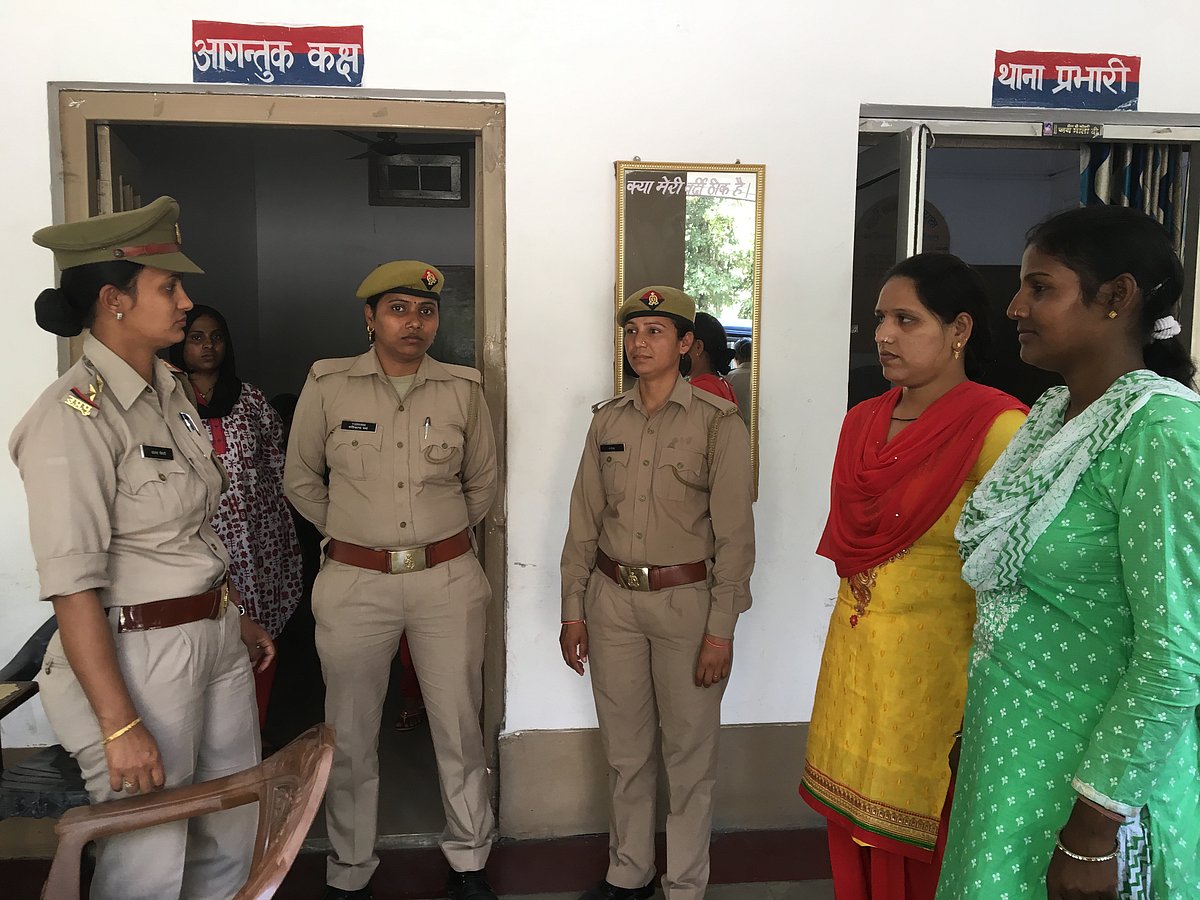
Meerut’s all-women anti-romeo squad.
Minutes before her team reached RG PG College, the radio in the Shakti mobile van, which is meant to respond to women who call on the 1090 helpline, announced, “Parkon ke andar baithe logon ko anawashyak taang nahi karna hai. Agar koi suchana aaesi aati hai, dandatmak karvai in karmchariyon ke virudh ki jaegi (Police shouldn’t disturb those sitting in parks…if any such incident is reported, punitive action will be taken against officials).”
The message could be as much a reminder to the police as an assurance to the public. The infamous ‘Operation Majnu’ of 2005 had brazenly assaulted couples, even those who were married, if they were spotted in parks. The National Human Rights Commission and the National Commission for Women took note of this harassment and an additional superintendent of police as well as a circle officer were suspended.
Chaudhary, however, took pains to stress that there is more to the ARS identifying harassers than the Mohnish Behl instinct. “Hum ussi ke khilaaf action lete hain jiske jawab se hum satisfied nahi hain. Hum unko kehte hain ki apne parents ko bula lijiye. Agar wo batate hain ki unhone iss kaam se apne bête ko bheja tha to hum chod dete hain (We take action against those who fail to give appropriate replies to our question. We ask them to call their parents and when they explain why their child was out, we let them go.)”
Around 200 kilometres away in Hathras, Sub-inspector Awadesh Kumar at Kotwali police station said that the ARS stops couples and ask them to call to their parents. “Agar galat nahi honge to apne mata pita se baat kara denge (If their intentions are right they will make us talk to their parents).” Kumar shares a theory common to several of the police we met “Aur parents ko handover kar denge, agar maa-baap koi diqkat nahi to hum kya kar sakte hain (We will hand over them to their parents, if parents don’t have any problem then what can we do.)”
In Meerut, by order of the Senior Superintendent of Police, ARS concentrates on areas near schools, colleges, tuition points and markets and look for those passing lewd comments or gestures. The model that ARS is following in UP is similar to what was attempted in Gujarat, in the 1990s. ARS were formed, disbanded and revived across 500 police stations in the state, mostly during national holidays and festivals. These squads mainly targeted and stopped couples from congregating in public. There is little data to suggest it caused an actual decline in the sexual harassment of women.
Yet, in UP, the ARS are popular. Fareen Malik, an undergraduate student at RGPG College said that the boys who would gather outside her college and pass lewd comments no longer do so because they’re afraid of the ARS catching them. When asked if she’d complained about them to the police before, Malik replied “Complaint kar ke milta bhi kya tha? parents bhi kehte the, chhod do, ignore karo. Humme bhi gussa aata tha, hum bhi sochte the ki college hi band kar dein.(What would complaints yield? Even our parents would ask us to ignore such comments. At times, out of anger, we even thought of leaving the college).”
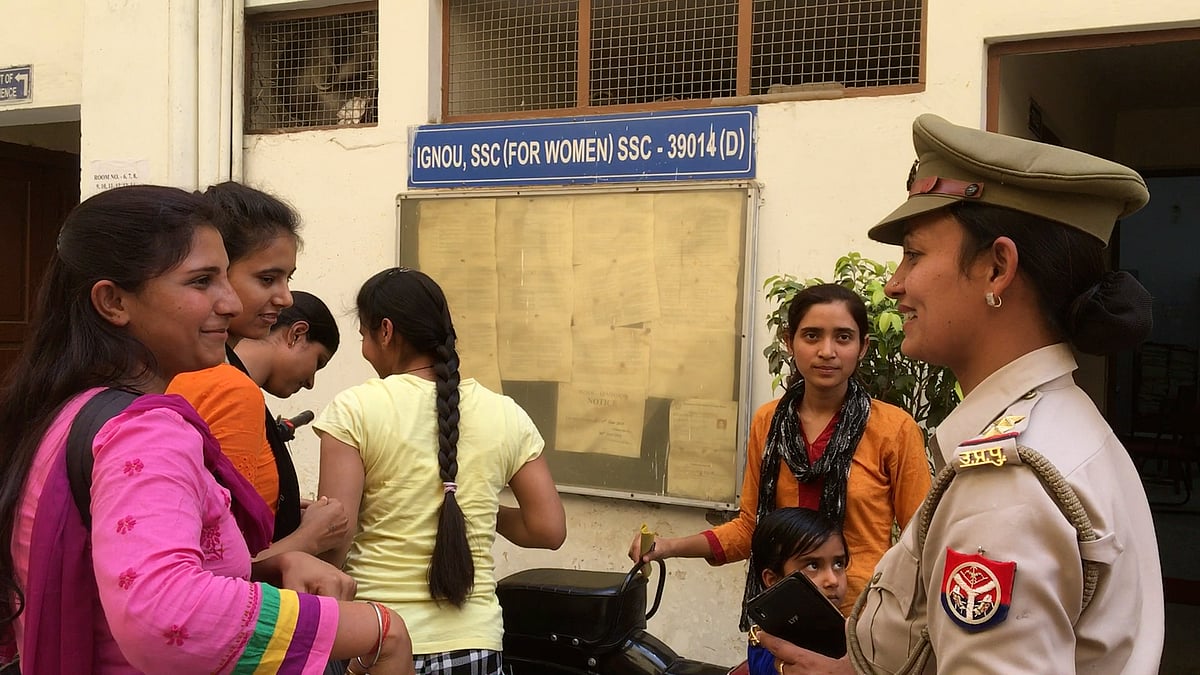
Similarly, Neha Jawla, an undergraduate student at Meerut College, told Newslaundry, “There is a sense of safety amongst girls since the drive has kicked off.”
Newslaundry joined the ARS team on one of its patrols last week. It went from RG PG College to Ismail National Mahila PG College and then to a shopping mall in Meerut. Chaudhary picked out women, boys or groups of men randomly, quizzing them about their presence. She maintained a fine combination of threatening with subtlety and concern. There’s no doubt that her questioning is an invasion of privacy but so wretched is the law and order situation in UP that it lends a sense of security to the public.
UP’s criminal reputation is legendary, but under the erstwhile Samajwadi Party government, the state’s law and order was in shambles. According to the National Crime Record Bureau (NCRB), Uttar Pradesh topped the list in crimes committed against women in 2013, 2014 and 2015. In 2015 alone 35,527 cases were recorded, of which 3025 were rape, including 462 gang rapes. No wonder ARS is welcome and the invasion of privacy is seen as an acceptable price to pay.
“In our days, we faced harassment on a regular basis,” 32-year-old Harleen Kaur said at the shopping mall in Meerut. “This drive is a welcome change for us.”
Yet there are niggling doubts. “Yesterday my daughter had to go to a temple. I didn’t let my son accompany her fearing that police might question them and creating an uncomfortable situation for both,” Geeta Kanojia told Newslaundry. However, even though she objects to ARS’s line of questioning, she does support the initiative because she, like others, is convinced that public spaces need to be safer for women. No one can argue with this demand.
If the ‘Romeos’ are feeling the heat, then among those who are basking in a sense of legitimate power are vigilante groups like Hindu Yuva Vahini. Founded by Adityanath in 2002, Hindu Yuva Vahini is a often termed his personal army. It’s been ranting against the erosion of Indian culture by Muslims and are among those responsible for the paranoia about “love jihad”.
“Love Jihad was a big issue in the state and formation of the anti-Romeo squad was important to deal with it,” mandal president, Sachin Mittal told Newslaundry. He alleged Muslim men have “misused false names” to “allure” Hindu women. “Misuse se mera matlab hai sexual harassment karna (By misuse I mean sexually harassing them),” he clarified.
Mittal’s vision of Indian love is one that is widely accepted. “Bharatiya Samaj is tarah ki chizon allow nahi karta hai (Being in a relationship is against Indian society),” Principal of RGPG College Sneh Gupta told Newslaundry. According to her, friendship between boys and girls should be limited to exchanging of notes. By allowing youngsters to fall in love before marriage, “we will ruin the future generation.”
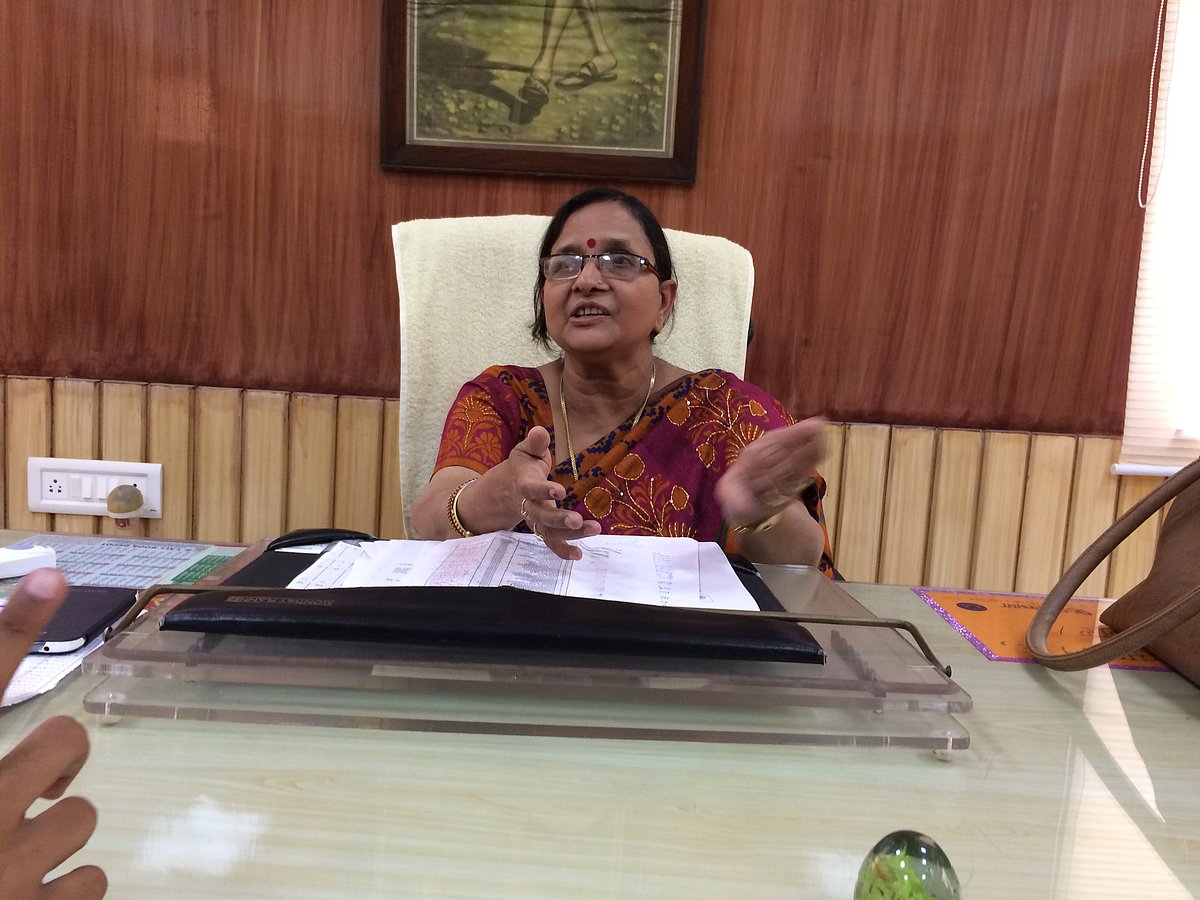
Sneh Gupta, Principal of RGPG College
Her counterpart in Ismail College, Meerut, Sadhna Sahay also supports the ARS and feels students are too young for love (which is particularly ironic when you keep in mind Romeo, the Shakespearean hero, was a teenager). She believes “girls” are too immature to chose their partners even when they are of legal age to vote. “We will have to look at the pavitrata of their relationship,” she said. Policing goes further than looking into students’ eyes. Mobile phones are banned on campus and students’ bags are checked for lipstick and other cosmetic products, as “padhne wale students ko in chizon ki kya jarurat? (why would students who’ve come to study need such things?)”
There is a diplomatic silence surrounding the fact that these moves have evidently not helped the female students feel more secure. After all, if they had, why would there be any need of ARS?
The big question, of course, is whether the ARS will bring the improvements that UP’s women so desperately want. If the first few days are any indication, it doesn’t seem likely. “So far there has been no training for the police officials,” admitted Chaudhary. Hence the faith placed upon looking deep into the eyes of boys and men to detect a harasser.
“I don’t think the police understands the difference between lover or couple and harasser,” said Komal Lakra, who works in Meerut. Her 21-year-old friend Anubhav Chaudhary added, “The police must change their approach. They cannot misbehave in name of questioning people. Moreover, the police should approach only when it sees someone misbehaving with a girl or when it receives a complaint.” While those who object to the ARS are a minority, they make arguments that the UP Police needs to keep in mind. “It is well within my rights to roam with my husband or boyfriend for a matter of fact. They cannot harass us in name of protection,” 30-year-old Ankita Agrawal told Newslaundry. “Every time we cannot have a passport to show who we are and what we are doing at a certain place.”
In addition to mistakes, there’s also the worrying issue of the police misusing the power that it’s being given by initiatives like ARS, which don’t require law enforcement to back their punitive measures with evidence or legal processes. On March 28, two policemen were suspended for harassing and detaining 18-year-old youth and his uncle’s daughter under the anti-Romeo operations in Rampur. The duo detained the cousins for over four to five hours on March 26 and had set them free only after allegedly taking a bribe of Rs 5,000. The family of the cousins had filmed the act.
In the first two days of the campaign, the police had reportedly nabbed 1,000 people – mostly young men – across the state. This very first week is also marred by controversies. Reportedly, in Deoria, the police stopped a sibling and later had to apologise to their parents.
Clearly, the eyes don’t always see everything.
The author can be contacted on Twitter @amit_bhardwaz.