Kashmir stands strong in the wake of Amarnath attacks
A protester against the attack on Amarnath Yatris said, ‘Entire Kashmir is now in mourning, it is a dark and sad day in the history of Kashmir.’

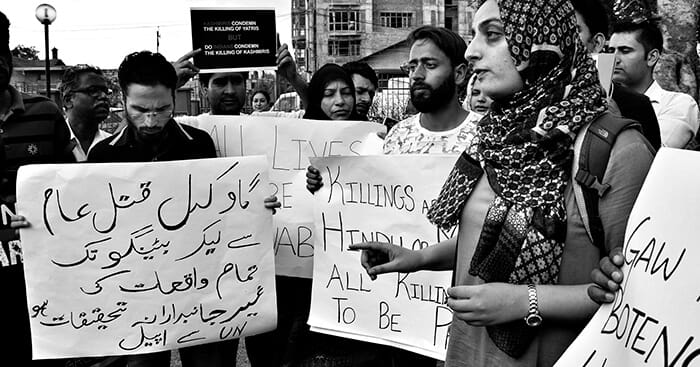
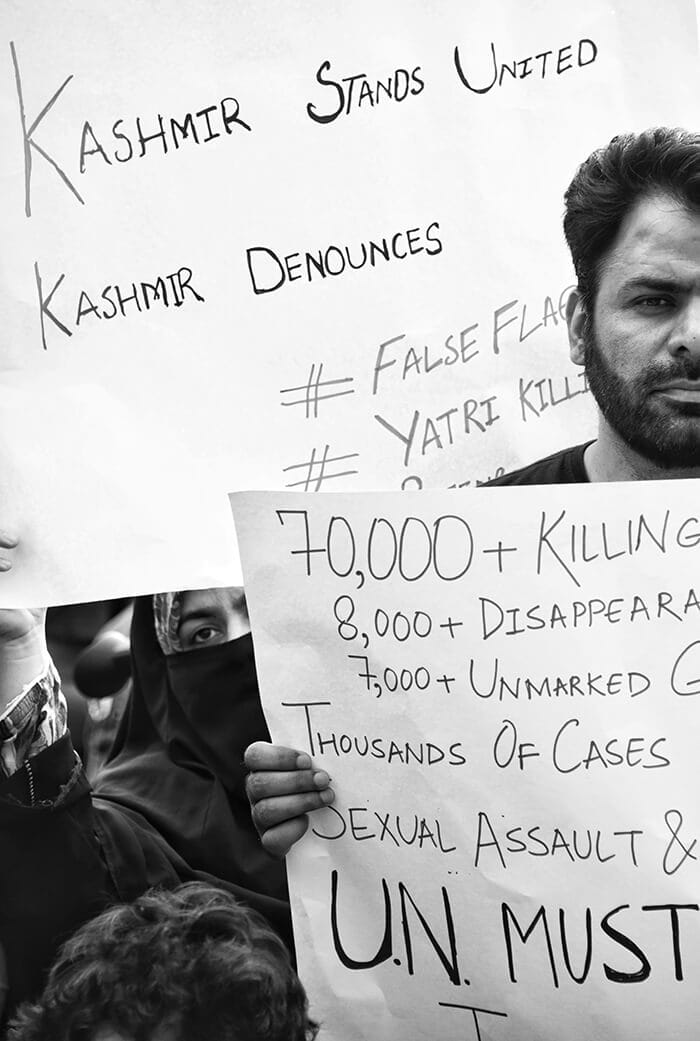
After weeks of the sweltering July sun, the weather of Srinagar has suddenly taken a turn for gloom, coinciding with the week marking Burhan Wani’s first death anniversary. Ever since the dark night of July 10 when Amarnath Yatris were attacked in Anantnag, the skies have remained overcast bursting into erratic spells of incessant rain and thunderstorms, flooding the neighbourhoods, forcing people indoors, and further imposing the state of desolation already haunting the city streets. Not limited to endorsing the condemnation of this barbaric act in online media with the “I Condemn” mascot made by Jaibeer Ahmad, a Delhi-based Kashmiri advertising professional, even in this weather, citizens of Srinagar gathered in Pratap Park of the Lal Chowk area in response to a social media call from the Jammu Kashmir Coalition and Civil Society that said, ‘Kashmiri civil society groups have decided to organise a sit-in to protest against the killing of 7 Amarnath pilgrims today at 5:30 pm at Pratap Park, Lal Chowk, Srinagar. Let us unambiguously & emphatically show solidarity towards those killed and demand a credible investigation against this and all other crimes perpetrated in Jammu and Kashmir.’
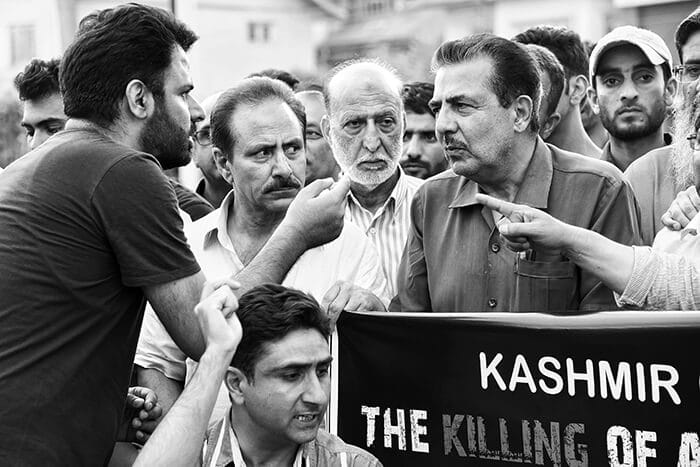
On the surface, the sit-in needs little background as the attack on Yatris has received constant national media coverage over the last two days. But while it has been established that seven pilgrims have died and 19 identified injured so far from the bus carrying 60-70 pilgrims from Baltal base camp to Jammu in the shooting that happened shortly after 8 pm in Batengoo of Anantnag district in Kashmir, what has successfully been drowned in the noise being made in news and social media by exaggerated displays of anguish from the state and condemnation from the opposition is the absence of some very vital details required for credible reportage of the incident.
What exactly happened?
With varying narratives doing their rounds, there seems to still be little clarity on whether the bus carrying pilgrims was targeted for attack or whether it was caught in the crossfire between militants and the security vehicle preceding the bus, even as the latter option raises questions as to why a police patrol car was safeguarding an unregistered bus plying on high security roads in blatant violation of the standard operational procedure on restriction of pilgrims’ vehicles after sundown. In the absence of clear investigative outcomes, the second narrative has found only minority adherence so far, and is being called out as an apologist reaction to militancy by counter narrators.
Who is responsible?
Enquiry on the matter is still underway even as responsibility is being pinned on ‘suspected militants’. However, in an unusual turn of events, none of the active terrorist groups operating in the Valley have so far taken accountability for the attacks, going forth instead to condemn it. Militancy in Kashmir being heavily dependent on local support, fear of being exposed by the civil society that has retaliated to the massacre compromising on their ethos, moral values and socio-economic security at large in an unforeseen and explicit act of condemnation can be assumed to be a key reason for the lack of accountability from the terror cells, if they are indeed the perpetrators of the incident.
Jammu and Kashmir Police, however, has named the Lashkar-e-Taiba their primary suspect in this attack, with Pakistani infiltrator Abu Ismail as alleged leader of the attack that is currently being deemed a planned reaction against the arrest of Lashkar operative Sandeep Kumar Sharma, alias Adil, earlier on Monday in connection with his involvement with the Achhabal Attack on six policemen, including SHO Feroz Ahmed Dar. LeT’s condemnation and denial of orchestrating the attack is being attributed to international condemnation that the incident has drawn and the pressure it has generated on Pakistan to revoke support for LeT activities.
Why did this security lapse happen?
Barely weeks before commencement of the annual Amarnath Yatra, intelligence agencies had warned the government of impending attacks being planned by militants on pilgrims to add fuel to the fire of communal conflict already raging through the country, instigated by the Indian media yet again playing judge without waiting for any conclusive investigative evidence, prompting a security high alert on the Yatra with the deployment of more than 40,000 troops and additional aerial surveillance via drone and helicopters.
Only buses registered with the Amarnath Shrine Board were allowed passage through the heavily guarded check points on the road to Amarnath and registered pilgrims allowed to visit the shrine. However, both registration and ownership status of the Gujarat-based bus that came under attack being yet unclear, questions are being raised as to how it was allowed to ply on roads dotted so frequently with security checks; how more than 60 pilgrims found entry to a shrine that cannot have rightfully allowed them admission is also being probed.
Even as these questions remain unanswered, just one day after the attack, the Yatra still continues with a further heightened security convoy of 105 vehicles guarding pilgrims en route the shrine.
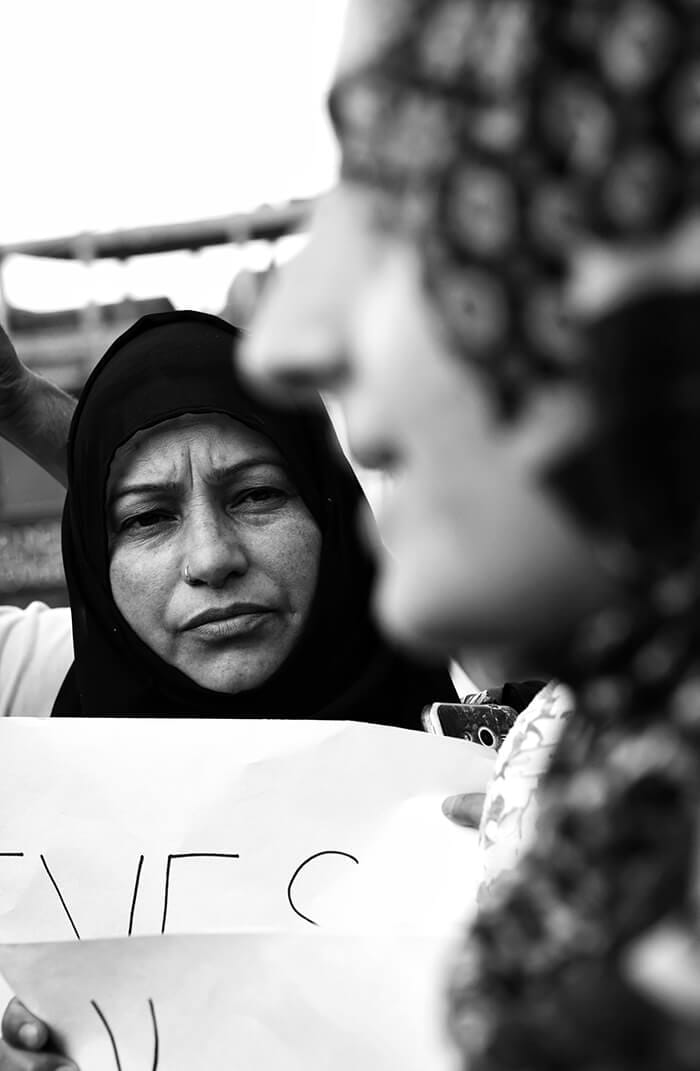
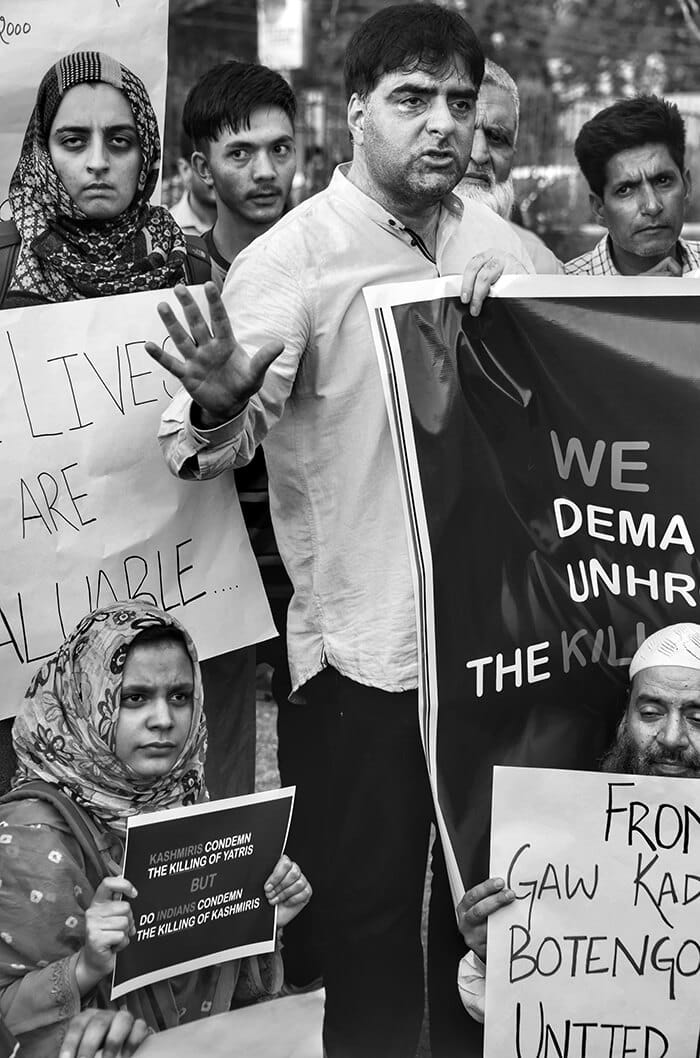
These were the questions on every mind as a 200-strong crowd gathered in Srinagar’s Pratap Park on Tuesday to delegitimise the picture that has been painted by political parties and the national media of Kashmiris for over 70 years as supporters of militancy, in a single moment that was as inspiring to the Kashmiri ethos as it is disgraceful to the biased Indian psyche.
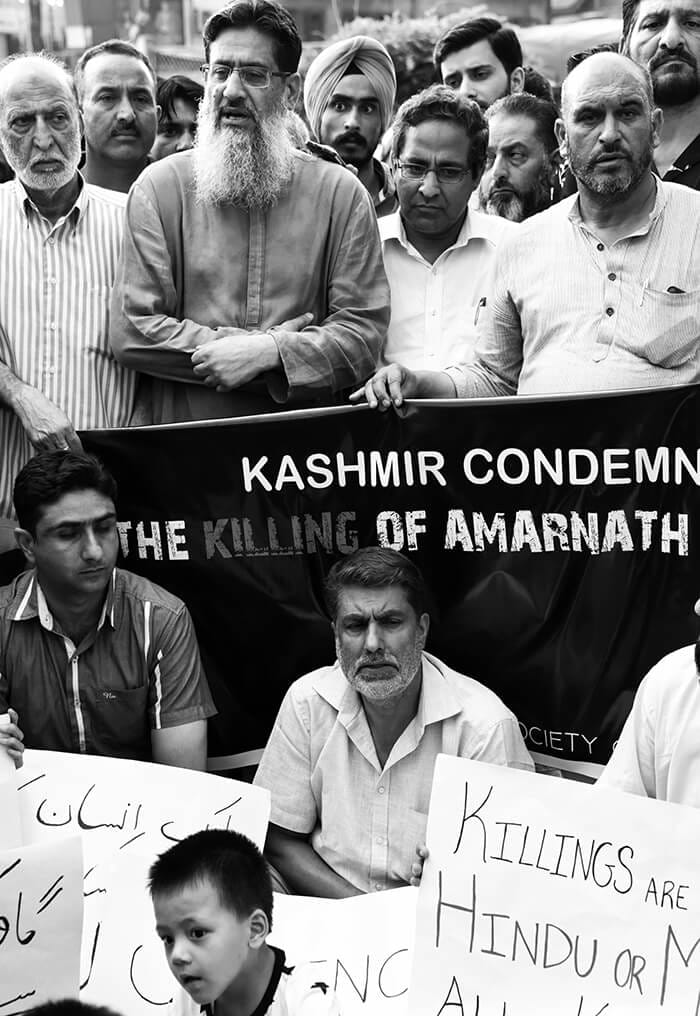
Citizen’s Voices
Citizen 1 – Gowhar Geelani
“We have gathered here united by the common belief that every human life is precious. The killing of an innocent cannot be supported and we condemn it in the strongest way. We want to remind everyone that Kashmir is still a place of syncretic, Sufi culture where Kashmiriyat is still alive. Our protest does not take into consideration race, religion, or colour; irrespective of cast, creed, or religion, we condemn any action that is inhuman. We accept that what happened in Anantnag was inhuman and barbaric and are now sending out the message that all Kashmiris, irrespective of their ideologies, condemn and deplore this barbaric act.”
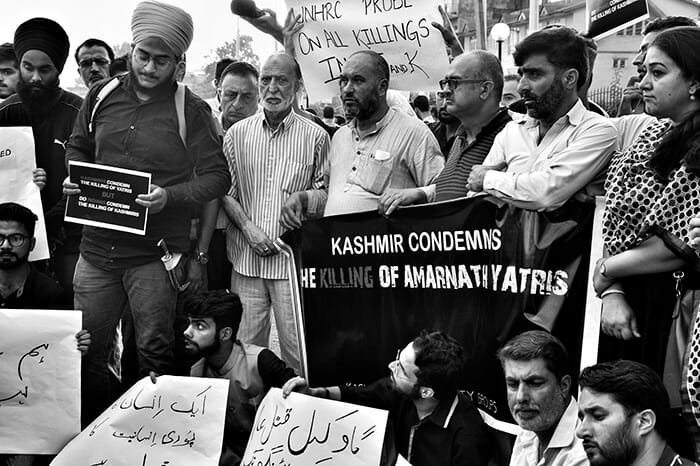
Citizen 2 – Angad Singh
“We feel a lot of pain for families of the Yatris. But after the attack, all of Indian media has blamed us Kashmiris. They have represented us in front of the entire world as terrorist. But we are all Kashmiris here (at Pratap Park) – be it a child or a mainstream leader of a political party – who have all come together to condemn the attack. And we request the Indian Government that the justice that they have not given [to] Kashmiris, they should give to the Yatris.”
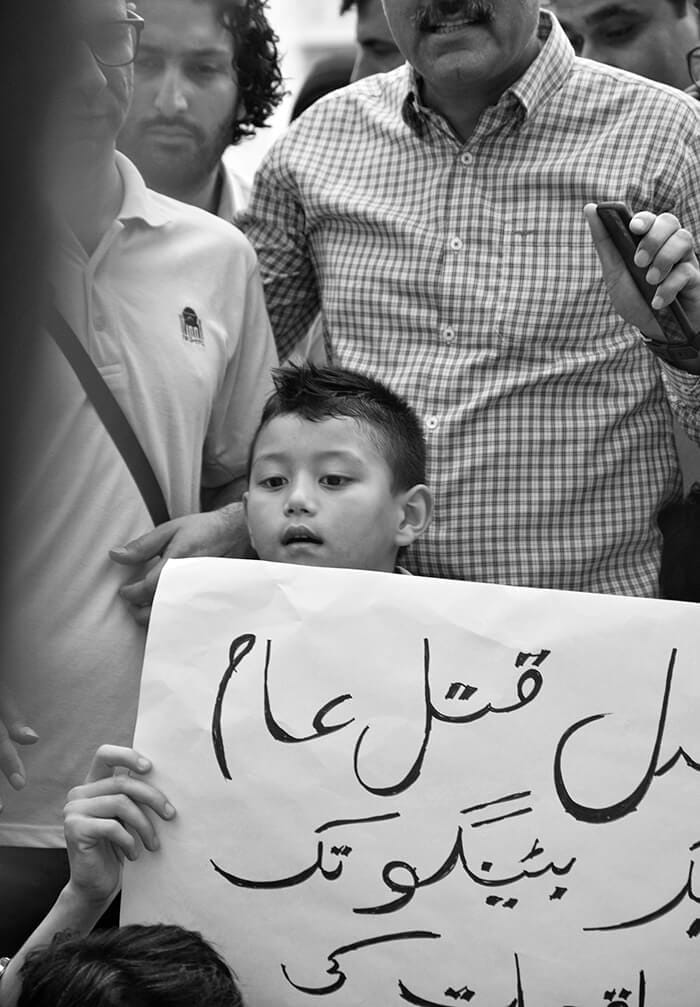
Citizen 3
“Pilgrims have always been welcome in Kashmir and will continue to be welcome in coming days. Such has been our tradition. Whatever happened yesterday is a blemish in the face of Kashmir and no true Kashmiri could have ever done this. Entire Kashmir is now in mourning … it is a dark and sad day in the history of Kashmir.”
Citizen 4
“Indian media is playing a negative role against Kashmir. We no longer welcome national media reporters here to tarnish our reputation as Kashmiris. We condemn this act that cannot have been the work of a Kashmiri. But simultaneously, we also hold national media responsible for this.”
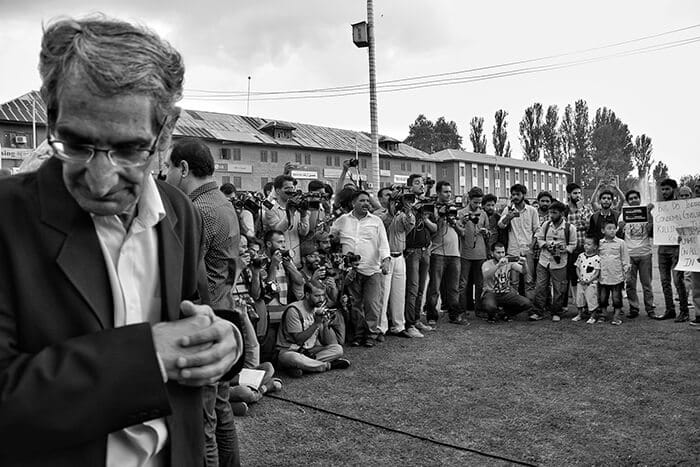
Citizen 5
“Our children have been trampled upon, our people have disappeared, and our people are languishing in jails without any trial. I wish civil society on the other side would also wake up, that they would also show that the milk of human kindness flows in their veins, and that they would express their solidarity with the suffering people of this land of Kashmir. I am so proud of this land where everybody, regardless of any ideological divide that dissolved last night, has expressed solidarity with the bereaved family. This is what Kashmir is all about. I am proud of it. As Kashmiris, no matter how much provocations we suffer, no matter how much injuries and deaths we suffer, we will not barter away our ethos, we will not barter away our philosophical basis which is based on humanity. We stand for humanity. We demand that all our rights should be guaranteed to us just as liberal rights are guaranteed to human being all over the world.”
Condemning violence on not only against Hindus or Indians but civilians at large, and asking for an impartial inquiry into the matter that would lay to rest the various conspiracy theories that are looming at large in its absence, and ensure that similar incidences are not re-enacted, prominent Kashmiri human rights activist Khurram Parvez (Chairperson,Asian Federation Against Involuntary Disappearances; Program Coordinator of Jammu Kashmir Coalition of Civil Society) summed up the civil sentiments as he said, “We are here to express our outrage against civilian killings. But it is not for the first time as some people would want the Indian people to believe. Kashmiris have always been against any civilian killings. We do not condone any violence against any civilian. We believe that there has to be a distinction between the combatants and non-combatants… We believe that these killings that have taken place in Jammu and Kashmir – from Gaw Kadal Massacre to now, the Botengoo Massacre – what has always happened is that there has been no investigation. And whenever there have been some leads, into who may have been behind these killings, the government has shut the investigation because they were scared that it might be revealed that the Indian armed forces and their agencies were involved. Even today there is a lot of politics being done by the BJP government. It is not a coincidence that the last time the Yatra was attacked was also BJP regime or today when Yatris have been attacked, it is again the BJP regime. We believe that there has to be a credible investigation of all these crimes and we believe that Indian investigation agencies cannot have fair investigations. Therefore, it should be United Nations Human Rights Council which should be allowed to visit Jammu and Kashmir and investigate not only this crime but all other crimes in the past as well, because there are always narratives and counter narratives. The Government of India does not believe Kashmiris and Kashmiris do not believe the Indian State and Indian State Institutions. Therefore there have to be credible investigations which can be undertaken only by an international agency like the UNHCR.”
On his feelings about the attack, the sit-in, and its projected impact, Kashmiri scholar, educationist, and political thinker Prof. Siddiq Wahid (PhD in Inner Asian Studies, Harvard University) said, “Firstly, you feel sad that this should happen in a place where this does not happen. You get sad, then frustrated and angry. You get angry because your entire identity about who you are and what you are is questioned. Secondly, in the vagueness of events and the cause of it staying hanging in the air, it is not an environment you can trust…I hope today’s meeting raises some consciousness, not only among Kashmiris, but consciousness about Kashmiris, outside of Kashmir.”
[opiniontag]