
Dear NLTeam,
As customary, I am a Newslaundry subscriber for more than a year and love your articles and interviews conducted by the portal.
Abhinandan ki tareef :
Would like to take an opportunity to appreciate the response from Abhinandan in one of the email conversation on the Quran and how one has to deep dive to understand better and break away from the regular stereotype surrounding Islam and Quran .
Rohingya Muslim refugees :
In the last NL HAFTA , Anand did bring the RM refugees being sent back to Myanmar because India has its own issues and other islamic countries are not showing interest in getting these refugees (per capita basis). Here is the twitter thread from Anand timeline and data shown :
As per Kiren Rijju’s statement in Parliament, there are 14,000 refugees as per data from UNHRC, with some unknown sources minister claims 40,000. So Anand has updated that in his column, but officially still it’s 14,000.
Here’s an article from Al Jazeera which shows data about other countries. One can look at the numbers and one can see other countries also have taken refugees.
Another article showing how RM refugees are fleeing to the neighbouring countries such as Malaysia,Thailand etc
In the time of crisis people always flee to the neighboring countries and so any republic nation responsibility is to take in the people who are in danger. Same was the case with Syria and Sudan crisis, let me share the data :
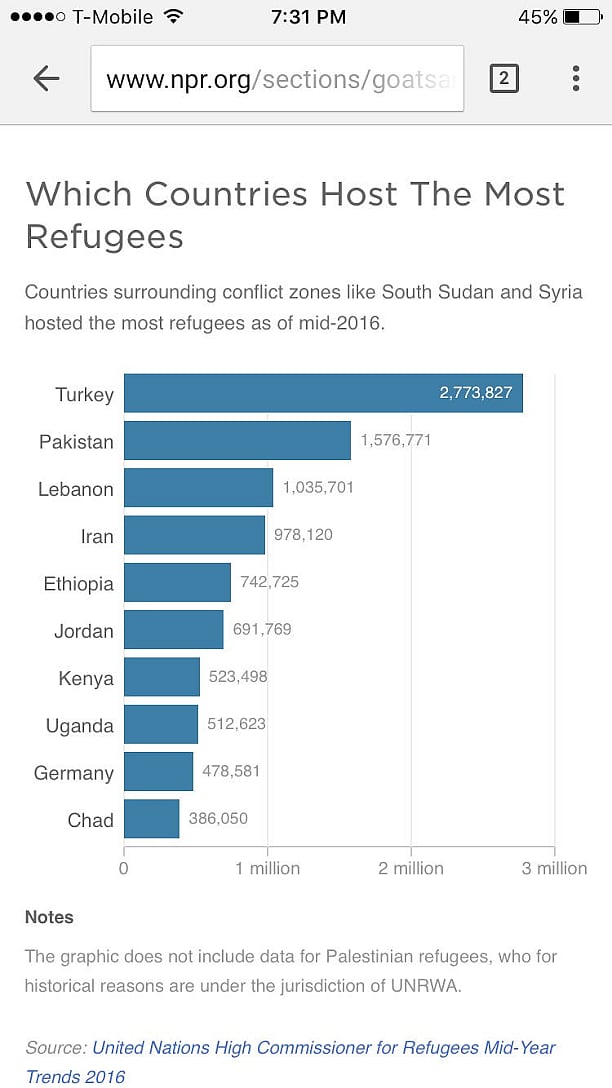
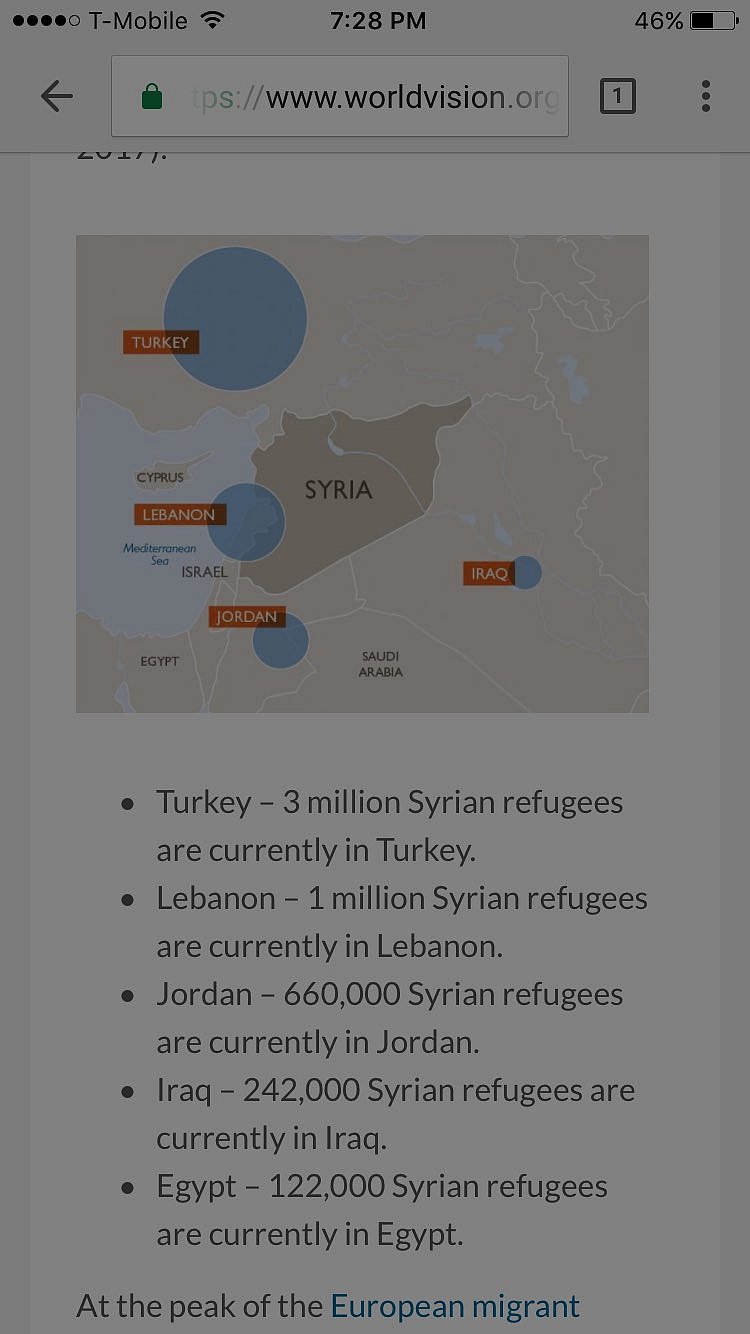
This interactive UNHR site gives clear idea how many refugees taken by country across the world: http://www.unhcr.org/globaltrends2016/ – Shows the refugees and other categories since UN 1951.
Sreenivasan Jain of NDTV conducts a better reality check show than anyone I have come across in the current media circle. He too shows as per MHA guidelines contradicts minister statement
Also claims by the RSS’ Rakesh Sinha, these are ALL having some affiliation with the militant group without any support to the claim. Even senior advocate Colin Gonsalves did visit these refugee camps and did confirm there were no FIRs or criminal cases against anyone and if exists need to deal with individual level nor as a group.
As Mr Sekhri rightly said, it’s more of a dog-whistle to their support base. The same was done by Trump during the election campaign with fear-mongering rhetoric. John Oliver did destroy the notion by sharing how UN and USA conduct refugee background check, here is the video:
I believe India and other countries do have followed similar procedure to take these refugees and sending them back now to Myanmar where genocide is happening this moment as we are getting reports where UN has to withdraw food and medical aid because they are also in danger.
What is the exact message we are giving to the world, “India can’t take care of 14,000 (40,000) refugees because per capita is poor than France/Germany/UK/Netherlands or Why Qatar not taking some?” (These countries did take the refugees from Syria as shown in the above articles.)
Am sure even the panel agrees these 14,000 people are not having lavish (middle-class) life, but they are just surviving like any other poor person regardless of caste and religion they trying to meet day-to-day.
Congrats to Meghnad for coming up with “Consti-tution” vlogs , loved the first episode , looking forward to more informative videos.
Great respect to Manisha who has done good onfield reports including latest on Dera riots and looking forward to Rohtak articles (NLSena).
All power to NL team , keep up the good work.
Thanks,
Sheik Ahmed
———————-
Hello Abhinandan Sekhri,
This mail is in regards to the last couple of NL Haftas where YOU talked about your view on arangetram. It is just a minor point and no need to read it out aloud.
Being a student of “Bharatanatyam” and having had an arangetram myself, I found your association of Arangetram (can also be used for first instrumental or vocal performance but predominantly associated with bharatanayam) with an “upper caste” symbol to be quite unsettling. It might appear to be a Tamil brahmin thing but it is quite the contrary.
In the precolonial era, Bharatanatyam (called as Dasi-attam or Sadir) was performed only by Devadasis down south. Most of these women were brought to the temple either as an offering, kidnapped by or sold by their own guardians. Some women did become a part of this tradition by their own volition. Typically, these women became the collective property of the village (women’s rights :(). There was a period in time when these Devadasis were considered auspicious and holy though in due course their status deteriorated to an element of entertainment for the wealthy ending up in prostitution (though not every devadasi is one). Bharatanatyam ended up being associated with the stigma of Devadasi and considered as a low vulgar art form.Why, even about (~ 20 years ago) a tamil female acquaintance boasted to me (a 10 year old child then) how her child was learning carnatic music instead of the cheap dance form. Though, I did not understand the severity or the meaning then, I do now.
Social reform in the devadasi tradition began in the colonial era with thinkers such as Raja Ram Mohan Roy, Karve, and Periyar condemning this practice. Indian government itself has passed the Devadasi abolition bill. Unfortunately, a byproduct of the social reform was an almost complete eradication of the dance form itself.
The current status that Bharatanatyam (including the name) has gained today is the legacy of stalwart, Rukmini Devi Arundale (of Kalakshetra fame, born in a Tamil Brahmin family and married to a catholic). Her efforts in conjunction with those of E. Krishna Iyer were instrumental in the revival of bharatanatyam as a temple art. She had to reinvent the aesthetics, redesign the costumes, create new palatable dance dramas so as to make it globally acceptable. Only after the revival did the dance spread in the so called Tamil Brahmins else it was always associated with the devadasi way of living.
With the recent globalization, bharatanatyam has become accessible to everyone irrespective of caste, language or community. Pune, from where I come from boasts of some of the best bharatanatyam dancers who are neither Tamil nor Brahmin (though I am not really sure of their caste …have not asked them… but definitely not Tamil Brahmins). I am sure that you AGREE that it is a beautiful art form and just like every other it needs appreciation to survive. It does take a lot of effort on the dancer’s part to learn it. An arangetram just acts as a stage to show their perseverance. Don’t we all go to our niece’s and nephew’s annual social gathering in schools? Arangetram is just the same but with fewer people.
Well I would say it took Bharatanatyam a 100 years to go from “Oh shit to Oh wow”. Would it not be good to appreciate it and keep it alive for atleast a 100 more?
PS: I love NL hafta. It is very interesting to listen to the different ideas and view points. I find the discussions very well structured. It helps me think about my own thoughts in greater detail. Please do keep it coming.
Hoping for more!
Anagha