Why I am happy that Kapil Sharma’s show is off air
Kapil Sharma’s show seems to propagate the myth that comedy has to be overtly misogynist, innately sexist and profoundly elitist to be popular.

I like comedy shows. But as Erma Bombeck put it, “There is a thin line that separates laughter and pain, comedy and tragedy, humour and hurt.”
America has a trove of popular nightly shows that mainly focus on political satire but Indian television is way behind on that front. Although we boast of having more channels than any other country, the late night comedy shows in India never really gained a foothold. The legendary Jaspal Bhatti, with his witty and powerful take on the social system, may have tickled our funny bones but it wasn’t a reality show. Shekhar Suman somewhat adopted an American tone with his Movers and Shakers and did extremely well but the show did not last long. CNN-IBN currently has The Week That Wasn’t but it’s no reality show either.
With the advent of stand-up comedy talent shows over the last decade, comedy shows have started flourishing again, albeit sans pure political comedy.
Although Sunil Pal shot into limelight after winning the Great Indian Laughter Challenge, it was Kapil Sharma, the winner of the second season, who was the biggest beneficiary. Sharma made the most of his name and settled on a nightly show that turned out to be a huge hit. So much so, no Bollywood film promotion was complete without an appearance on his show. Comedy Nights with Kapil on Colors ended after three successful years that saw Sharma winning Entertainer of the year award, and the crew started their second innings on Sony and named it The Kapil Sharma Show.
The Kapil Sharma show hit a roadblock last month, with the producers announcing a break. My disappointment with the show does not emanate from the Sharma-Sunil Grover spat. In fact, I want to touch upon the essential components of the show that are overtly misogynist, innately sexist and profoundly elitist, to say the least.
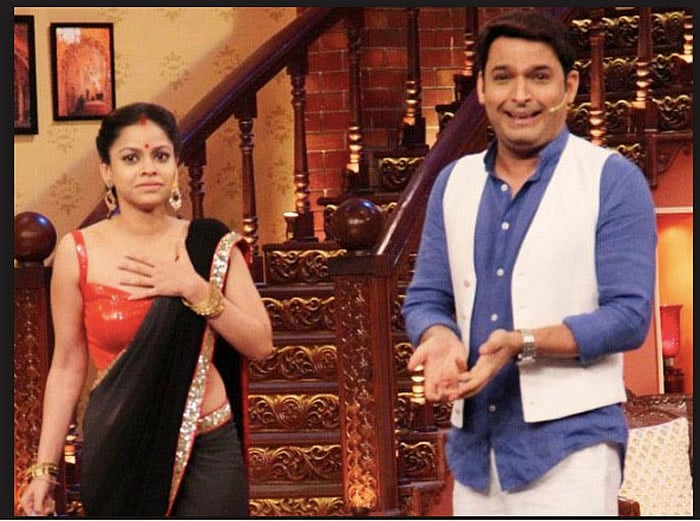
Take, for instance, Sharma’s on-screen-wife Sumona. Sharma would never speak to his wife with respect, resorting to insulting punches all the time, asking her to go back to the kitchen instead of coming on stage. Granted, it’s a comedy show but must misogyny remain an inherent part of a comedy? Why don’t we see his wife insulting him back with twice as much ‘comic’ venom?
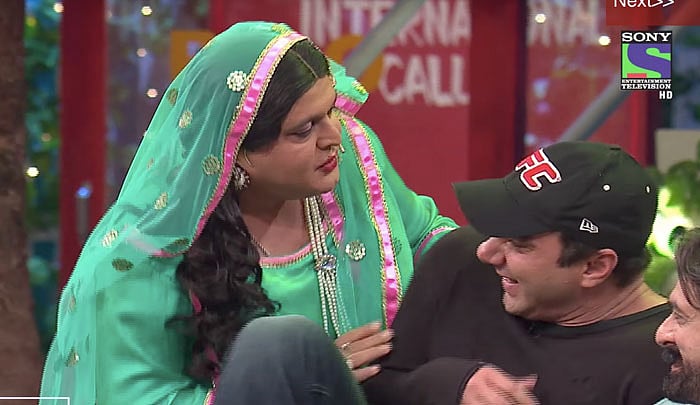
Oh yes, because as per the format, the males always get punch lines leaving female counterparts either succinctly dumb or overtly horny. Even his male colleagues Kikoo Sharda or Ali Asgar gets to dress up as horny aunties ogling at the male guests – young or old.
So what made this show a hugely popular show with a monotonous theme of comedy, some ‘thumka’ moments with celebrity guests, and some stage managed stupid questions from the audience? Is it because our Indian version of comedy is basically sexist?
A US-based PhD research scholar Pradnya Mangala said, “Misogyny and color biases are deep-rooted in the caste culture of our Indian society. Not just the Kapil Sharma show, most other TV serials and most of the Bollywood industry is a reflection of that. Here, misogyny and sexism is normalised and is presented as entertainment. It’s gross! It’s annoying that we have such an apathy and we are okay with it.”
Now, let’s examine some specific examples, which really cross the line. The December 2016 episode with Aaj Tak’s Sweta Singh as a guest showcases the height of sexism. Sharma welcomed the female anchor with a taunt, “Sweta, you’ve created a revolution in news. Earlier, only old people used to watch news, now all young men watch it because of you.” His creepy speech went on for about four minutes as he added: “Why didn’t you try in films as you look so beautiful reading news?” Kapil also insulted legendary Doordarshan female news readers when he told Sweta, “Probably they used to knit sweaters below the bench while reading news.” Shockingly, Singh played along and only responding with “Are you praising me or pulling my leg?”
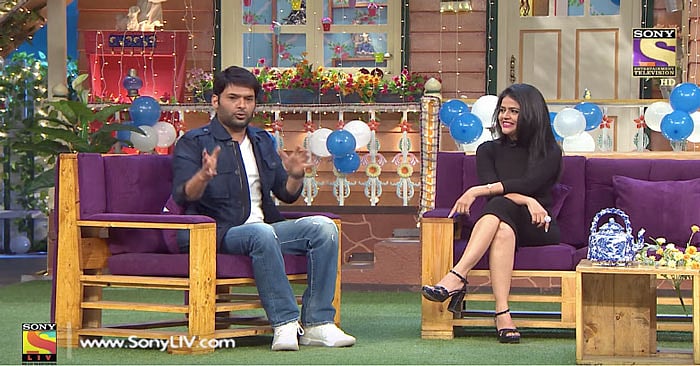
Riya Singh, who shot into national limelight after topping the Tata Institute of Social Sciences entrance exam this year, has strong views on the show. The PhD in Women’s Studies said, “It’s ridiculous to see such a show on national television where utterly patriarchal jokes on women and her family are normalized as if they have no respect and identity of their own. I am happy that the show is completely taken off the television. I am also relieved to know that my 10-year-old nephew is now away from one of such stupid satire which propagates sexism. No such programs should have any space on television on the internet.”
Not content with sexism, the show also plays with colourism. In the January 21 episode, while promoting his film Raees, Nawazuddin Siddiqui was asked if he had taken a bath (Siddiqui is dark-skinned). Siddiqui, the humble man he is, laughed it off. Sharma added that if he had the lead role, the film would have been named after some beggar and not Raees. Sharma received many comments on the Youtube link of the show berating him for his treatment of the actor. One of the comments read, “I love Nawazuddin just because of his simplicity. Kapil you lost your fan just because of the way you treated Nawaz.”
Apart from these offensive jabs, the show ran into multiple issues with Sharma abusing his colleagues on and off the sets. Insults were not the only issue with the show. Delhi-based journalist Shalini Sharma told us, “I am happy to see ‘Comedy Nights With Kapil Sharma’ is off the air. In fact, it should remain off the air forever. The show of late had turned into a forced humour only torturing the audience.”
Meanwhile, Grover, who quit the show has a new show, The Drama Company and it remains to be seen if it too will follow Sharma’s deplorable format. When will our comedians and the scriptwriters learn that one does not need misogynist rants, fat shaming and racism to create comedy?
I sincerely wish that the Kapil Sharma Show never returns. That way the daily dose of normalised insults and offensive rants will stay away from people’s homes in lieu of showing them a celebrity chat.