Suicides return to stain Telangana cotton belt
A pittance for procurement price and bad quality pest-resistant BT cotton seeds have forced many farmers to suicide.

In the last two weeks, monochrotophos, an insecticide has become a cotton farmer’s last resort in Warangal district of Telangana. An accomplice so effective that it relieves him of the drudgery of life and debts in an instant, reducing him to a statistic. The last 14 days have seen this cotton-growing district transform into a land of mourning with as many as 21 farmers committing suicide.
“I will never venture into farming,” says a despondent Suresh in Banjarpally village. His father Raju committed suicide on November 9, drinking insecticide on an empty stomach. It left the 38-year-old with no chance to survive the trip to the hospital in Nekonda, 8 km away. Suresh who studies M.Sc (Maths) at a college in Hanamkonda says his father never wanted him to be a farmer, encouraging him to take the exam to be a forest officer. His priority now is to sell the family’s six acres to repay the Rs 9 lakh debt he has been left with.
The trip to the Narsampet marketyard a day before he killed himself had broken Raju’s spirit. He had taken his three quintals of cotton produce only to receive a payment of Rs 4000 per quintal, less than the MSP of Rs 4320 fixed by the Cotton Corporation of India.
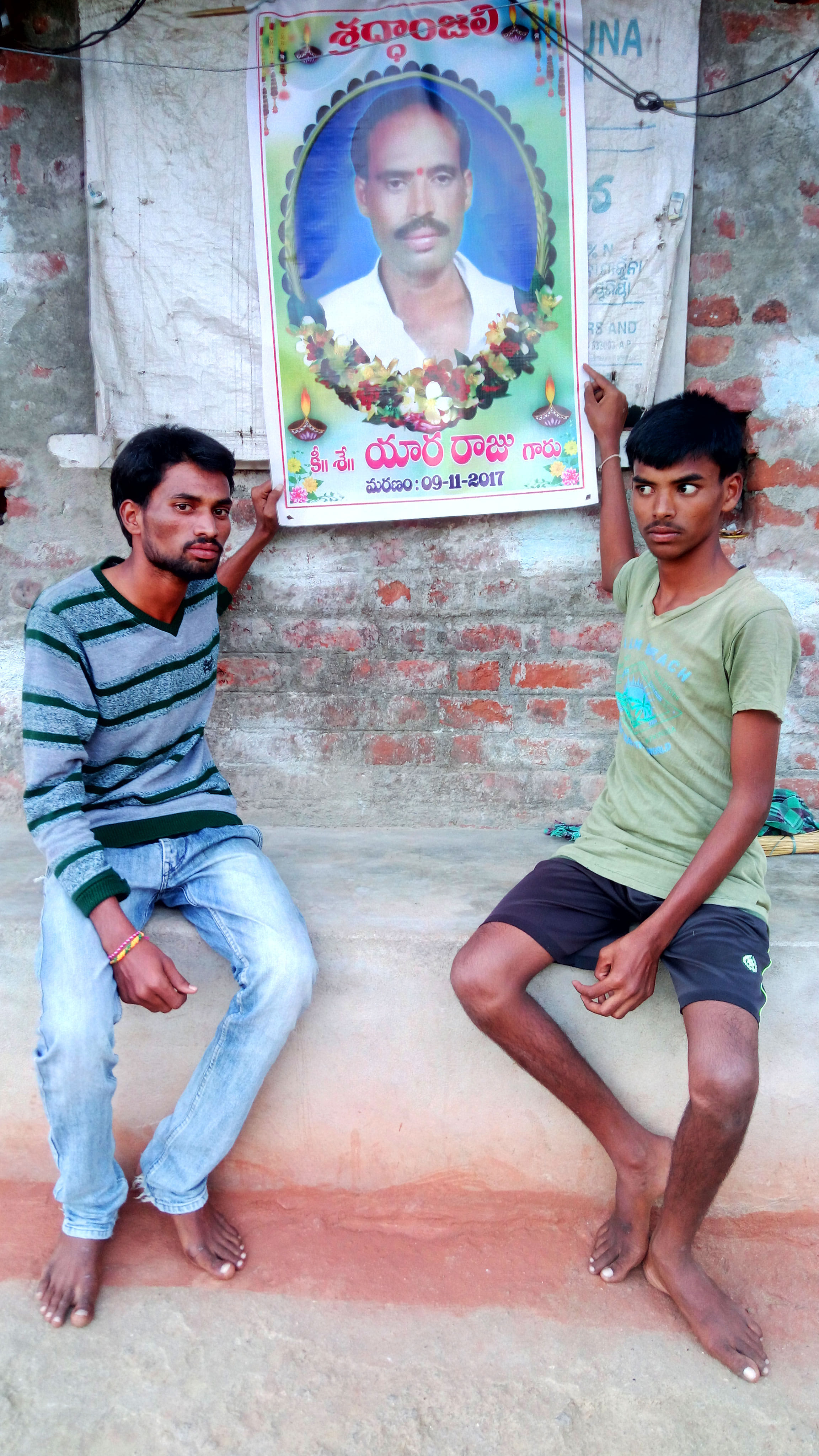
Suresh and his younger brother Anil with father Raju’s photograph.
“Last year, the government asked farmers to grow more chillies leading to a glut in the market and crash in price. In comparison, cotton went for Rs 5500 per quintal, prompting more farmers to opt for cotton this year,” says Ramu, a Warangal-based agriculture activist. “As a result, there has been a 30 per cent increase in area under cotton this year in Warangal. The problem is with the agriculture department not giving proper advice as a result of which farmers suffer.”
Thirty km away in Kothapeta, Rasamala Rajender took approximately nine quintals to the Enumamala market yard on the morning of November 13. While seven quintals fetched him Rs 3500, the rest went for lower than Rs 2500. The amount of Rs 29,000 he received in hand was just about enough to cover the labour cost of Rs 27,600 he had engaged for 10 days. At his wits’ end on how he would repay his debt of Rs 4.8 lakh accumulated over four years, a disillusioned Rajender bought a can of monochrotophos and drank one-third of it on his field. His body was discovered late at night.
When I reached Rajender’s home, the last rites have just gotten over. His two sons, aged 8 and 6, were clearly unable to comprehend the magnitude of the tragedy. They were engrossed in finishing off the special lunch ordered for the occasion as their sobbing mother Sumalatha spoke about how Rajender had planned to go to the school to pay the fee, after he got the money from the yard.
“The two boys study in NSR school in Arepally,” says Srinivas, Rajender’s cousin. “I don’t know how the family will now manage the annual fee of Rs 15000 for each son.”
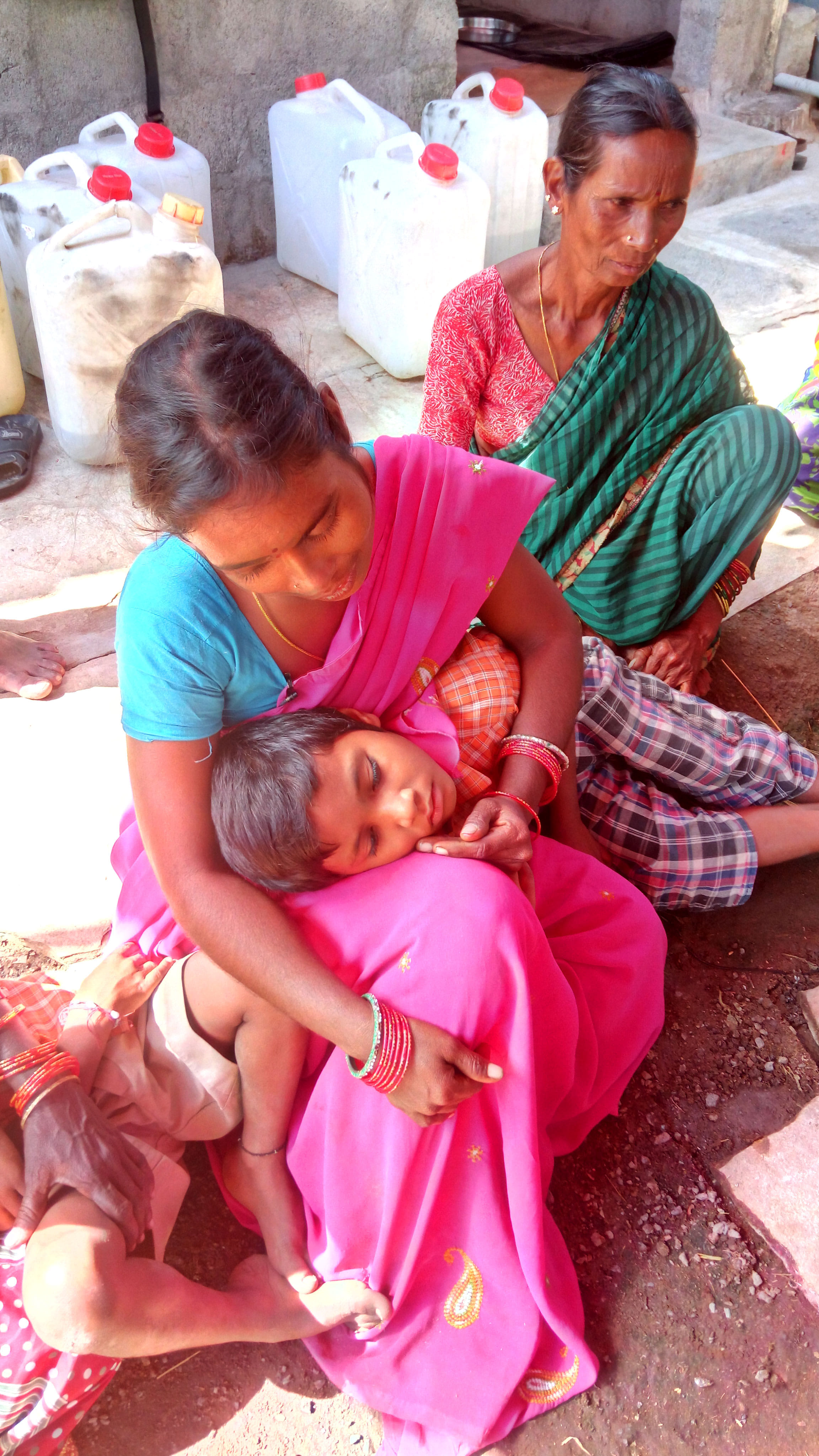
Sumalatha, Rajender’s widow, with her son.
“Agriculture is just too much risk,” says Sharat, Rajender’s elder brother who chose to work as a coolie in the Warangal wholesale market instead of tilling his one-acre land. Rajender too owned an acre but he had taken another six acres on lease, all of it to grow cotton.
But it is not just the glut in the market that is resulting in farmers not even getting the minimum support price. Most farmers complain that their crop was affected by pink bollworm, affecting the yield and resulting in bad quality cotton. Ironical, considering Bt cotton was introduced as the answer to the pest.
“Everyone has to die one day because of the spurious seeds we get in the market,” says an angry Rama, a farmer in Chintanekonda. Ideally, an acre should yield between two and three quintals of cotton but this year, the average output has been just one quintal per acre. The seed-sellers pin the blame on overdependence on rainfall instead of regular sources of irrigation. The government, on paper, has instructed officials to ensure cotton is purchased at the MSP but on the ground, the price is pegged lower, citing inferior quality.
Narendra Modi had, during the 2014 election campaign, promised the MSP as input cost plus 50 per cent. That should have worked to nearly Rs 6500 per quintal in the case of cotton. Farmers like Raju and Rajender are choosing to die because they are barely recovering the labour cost. Agriculture activist Kavitha Kuruganti points out that Indian farmers this kharif season (2017-18) are projected to lose Rs 2 lakh crore because of the failure of the government to procure the produce at the guaranteed price.
It is this anger that is translating into a nationwide campaign by farmers in Delhi, called ‘Kisan Ki Loot’ on November 20. The agrarian class says an average farm household earns Rs 6426 per month. Compare that with a Class IV employee who earns Rs 18000 per month.
When farmers from Tamil Nadu protested for over 40 days in Jantar Mantar earlier this year, they failed to move a soul in the Indian establishment. The show of numbers from all over India, activists hope, would have better luck next week.