2 dailies unable to print as mobs torch Dhaka newsrooms, assault journalist after India critic’s death
Sharif Osman Hadi, who was shot by unidentified gunmen, had emerged as a key figure in the uprising that led to Hasina’s ouster.

Hours after the leader of an anti-India group from Bangladesh succumbed to gunshot injuries, the offices of Bangladesh dailies Prothom Alo and The Daily Star were set ablaze by violent protesters, who also assaulted New Age editor Nurul Kabir.
Sharif Osman Hadi, a youth leader of the radical group Inquilab Moncho, died in Singapore late on Thursday after he was shot by unknown assailants in Dhaka on December 12. Hadi had emerged as a key figure in the July-August 2024 uprising in the country that had eventually led to the ouster of Sheikh Hasina. His outfit reportedly asked people to assemble calling for justice and not disperse until the demands are met even as Bangladesh Chief Adviser Mohammad Yunus announced a state mourning.
Bangladesh Today reported that violent protestors initially gathered at Shahbagh before proceeding to the Prothom Alo office. They chanted slogans targeting the Bengali daily and India, as per the report. The situation escalated when some of them entered the paper’s office and damaged equipment and some documents.
According to bdnews24, “The first attack came on the Bengali-language daily Prothom Alo, where the crowd had gone chanting slogans against what they said was ‘Indian aggression’. The crowd vandalised the office before setting it on fire around 12 am.”
“After setting fire in front of Prothom Alo, the protesters gathered in front of the multi-storey [The] Daily Star building located some distance away. Eventually, they entered the Daily Star building and set it on fire as well,” reported Bangladesh Today.
A total of 27 employees were trapped inside the Daily Star building, according to The Guardian. Zyma Islam, a reporter for the English-language daily, said on her Facebook page that she was trapped inside. “I can’t breathe anymore. There’s too much smoke. I am inside. You are killing me,” she wrote. Speaking to The Guardian, Ahmed Deepto, a Star reporter, said, “We took refuge at the rear of the building and could hear them [protestors] chanting slogans.”
To pacify the crowd outside The Daily Star’s office, Nurul Kabir, the editor of New Age, a Dhaka-based daily, stepped out to talk to them. However, as a video of the incident that has gone viral shows, he was pushed, grabbed by the collar and called an “Awami League agent”.
Firefighters finally brought the fire at the Star office under control at around 1.40 am, according to The Guardian, but the journalists could not be brought out until 4 am, according to bdnews24, because the mob had stormed the building after the fires were doused. Eventually, the army and additional police forces were deployed at the scene to rescue the employees. According to bdnews24, “Soldiers were later seen escorting the journalists out, along with New Age Editor Nurul Kabir, who had gone there to speak to the crowd but was himself assaulted.”
When you land on The Daily Star website, it shows a statement: “Following the vandalism and arson at our office last night, The Daily Star’s publications are temporarily disrupted. We sincerely apologise to our readers and appreciate your patience as we work to restore our online services and publication.”
Prothom Alo also issued a statement: “Due to a massive attack, vandalism, and arson at the Prothom Alo office last night, it has not been possible to continue normal operations. Therefore, the print edition of Prothom Alo could not be published today. Its online portal is also temporarily suspended. We sincerely apologise to our readers for this. We will restore the damaged technical systems and resume the publication of Prothom Alo’s online and print editions as quickly as possible. We request the cooperation of our readers in this matter.”
Media in Bangladesh under attack
Following the ‘July Revolution’ last year, which led to the unseating of former Bangladesh prime minister, Sheikh Hasina, who eventually fled to India, there has been a spate of attacks on the media in Bangladesh. In November 2024, Reporters Without Borders (RSF) issued a statement condemning violent assaults on several offices of The Daily Star and Prothom Alo.
In April 2025, Célia Mercier, head of the RSF (Reporters Without Borders) South Asia Desk, said, “While the interim government’s takeover in August 2024 raised hopes for improvement, journalists’ safety remains unprotected. They are being assaulted while reporting, subjected to physical retaliation for their articles, and their newsrooms are being stormed by protesters. RSF calls on the authorities to prosecute all those responsible for these attacks, to put an end to this intolerable cycle of violence, and to ensure the safety of media professionals.”
In late June 2025, Khandaker Shah Alam, a correspondent for the Daily Matrijagat, was brutally assaulted in retaliation for his reporting and died from his injuries.
On August 7, Asaduzzaman Tuhin, a 38-year-old journalist working for Dainik Pratidiner Kagoj, was hacked to death by armed assailants after he recorded footage of these people chasing a youth through a marketplace. Following the incident, the reporter's brother lodged a formal complaint, leading law enforcement authorities to detain five suspects.
More recently, in October, RSF called for the "immediate and unconditional release" of journalist Monjurul Alam Panna, who runs the YouTube channel Manchitro, and was charged with the country’s draconian anti-terrorism law before being released on bail 75 days later. According to their World Press Freedom Index 2024, the country currently ranks 149th out of 180.
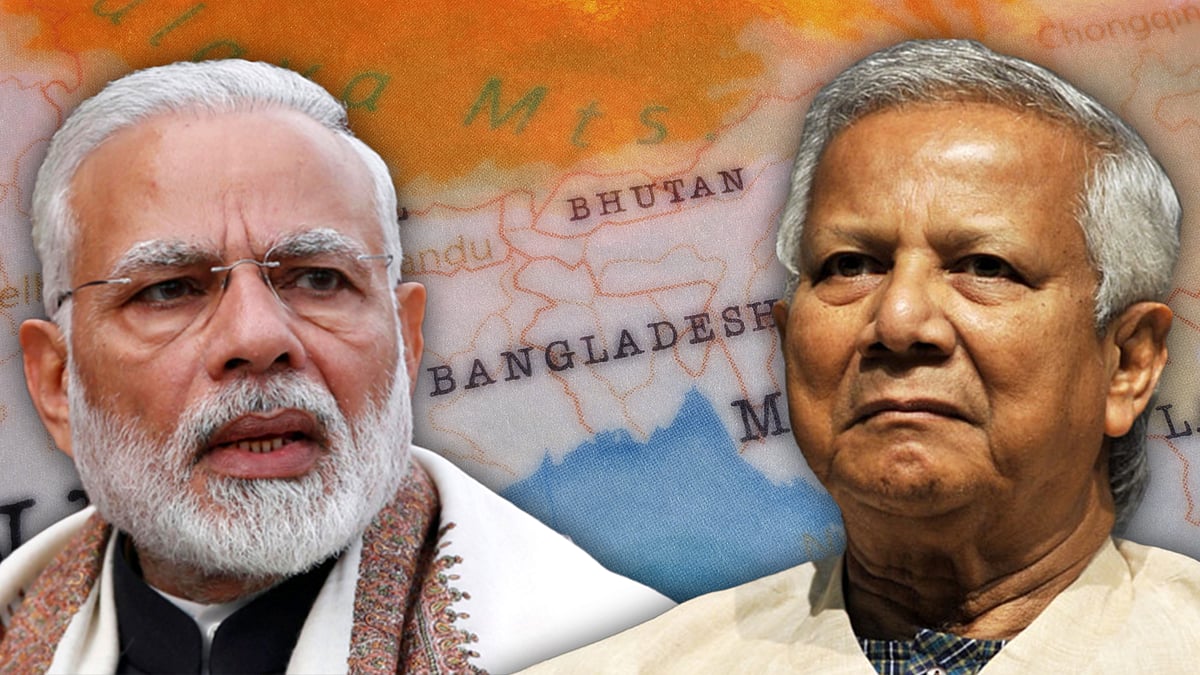 Negotiating realities in frosty India-Bangladesh relations
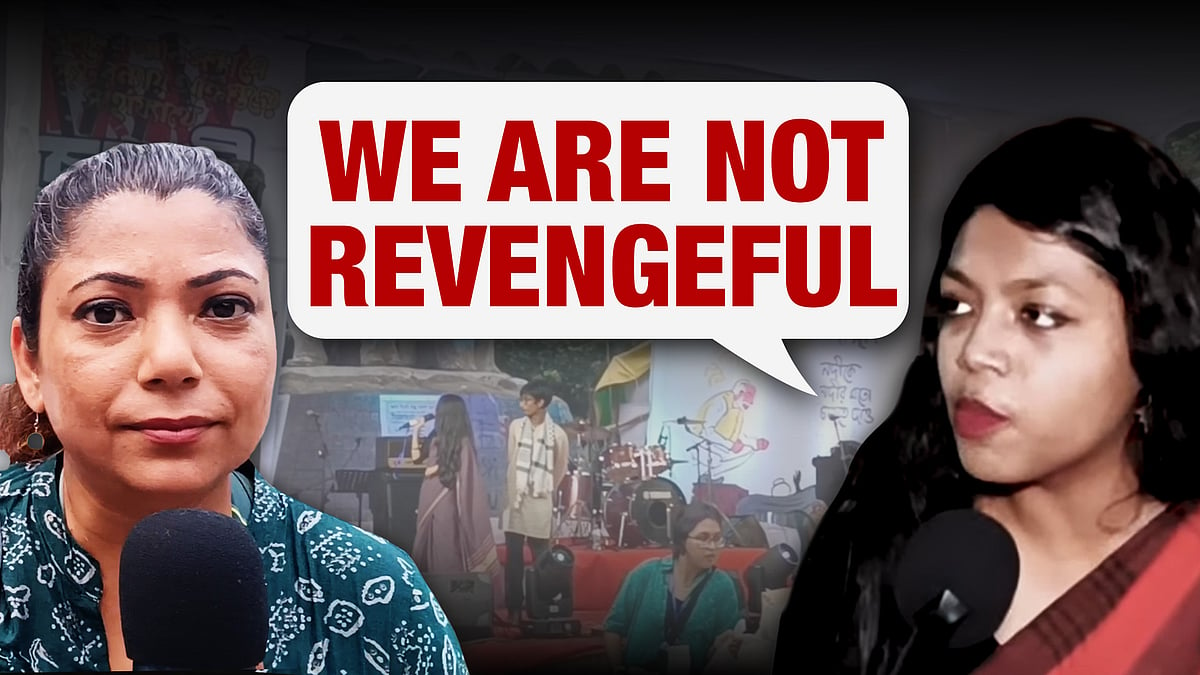 ‘Time for revolution, secular ethos’: What Bangladesh students hope from their movement