I covered Op Sindoor. This is what it’s like to be on the ground when sirens played on TV
Border civilians, a mislabelled teacher, and the cost of war beyond television debates.

I’ve been reporting from the ground for five years. I’ve covered elections, protests, accidents, communal violence and the environment. I’ve waited outside police stations and hospitals, slept on station floors, travelled overnight to places that stop making headlines within a day. Still, this year felt heavier. Some assignments ended when the story was filed. Others didn’t.
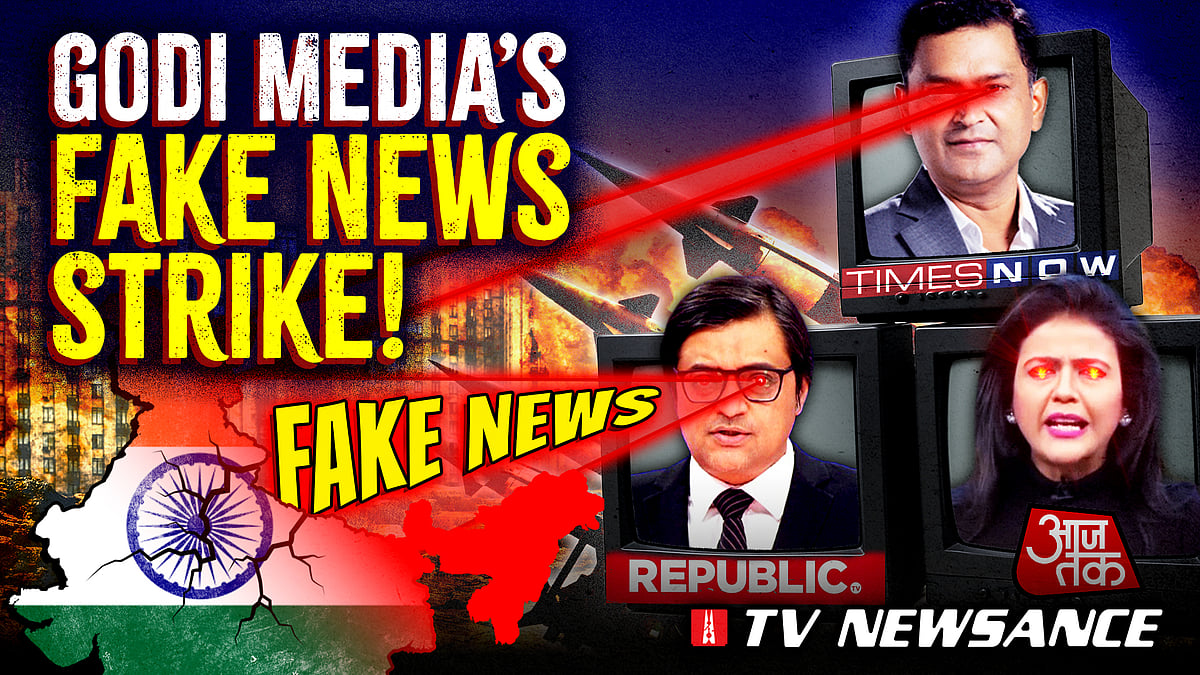
After the Pahalgam attack in April, in which 22 civilians were killed, India carried out air strikes on the night of May 6–7, calling it Operation Sindoor. Around the same time, Indian television news went into overdrive. There were graphics, speculation, breathless claims. Mock drills announced by the government were turned into breaking news loops. Sirens played repeatedly on television, even in cities where nothing was happening.
One channel identified an Indian citizen as a Lashkar-e-Taiba commander and reported him killed in Pakistan. Nobody paused to check. Nobody pulled it down.
Newslaundry decided to send reporters to Jammu and Kashmir. The idea was simple enough: go there and report what was actually happening.
On May 8, I was told to leave for Jammu the next morning. Before leaving the office, I was handed a bulletproof jacket. I had never worn one before. It wasn’t a gesture. It was heavy, uncomfortable, and hard to ignore.
I travelled by road with Nidhi Suresh through Punjab. The highway was nearly empty – no buses, no long lines of trucks, just security convoys, supply vehicles, and the occasional media car. It looked like the lockdown years, except this time the silence felt planned.
Jammu city was unrecognisable. Shops were shut, streets empty, checkpoints everywhere. I had been here earlier in the year for the assembly elections. Then, the city felt ordinary. Now it felt paused, as if people had stepped out briefly and not returned.
Our hotel was dark. The reception light was dim. We were told not to switch on room lights, to keep curtains shut, to use the bathroom light only if necessary. Jammu was under blackout.
That evening, around 6.30 pm, we stepped outside to record a short update. A siren went off suddenly. Hotel staff rushed everyone indoors and locked the gate. Within minutes, we heard loud explosions overhead – sharp, repetitive, close. Someone said Pakistan was launching drones and India’s air defence system was intercepting them.
Like everyone else there for work, we ended up on the roof. From there, we could see brief flashes in the sky, followed by a sound that shook the building. Drones were being destroyed mid-air. There was nothing cinematic about it. Just sudden light, noise, and confusion. We filmed for a while before the hotel staff made us come down. The sounds continued through the night. I didn’t sleep.
In the morning, we were told that debris from a destroyed drone had fallen in a residential area nearby. Three houses were damaged, several cars crushed, and five people injured. Police said it wasn’t a direct drone strike, but falling fragments.
While we were speaking to residents, the siren went off again. Police started clearing the area. This time, we put on our bulletproof vests before continuing.
From there, we went to a shelter housing people evacuated from border villages. Food was running out. People were arguing. Many were migrant farm workers from Bihar who hadn’t been paid wages and couldn’t afford to return home. Government arrangements were unclear.
When a TV crew arrived, people shouted at them to leave. They said television channels had exaggerated the situation and made travel impossible. They weren’t angry in the abstract. They were angry at the media standing in front of them.
Over the next few days, we reported from Jammu, Rajouri and Poonch. Some of it has blurred with time. Some of it hasn’t moved at all.
On May 10, we went to Jammu Medical College. A family from Poonch had been brought there after Pakistani shelling killed 14 people in the town on May 7. Among the dead were 12-year-old twins, Zain Ali and Urva Fatima. A missile had landed near their house. They died on the spot.
Their father was critically injured, with shrapnel lodged in his liver and intestines. He was in the ICU, sedated, unaware that his children were dead. Their mother was also critically injured.
We spoke to the children’s uncle in the corridor. While we were talking, news of a ceasefire began flashing on phones and television screens. Nidhi asked him what he thought. He said, quietly, “Will this bring Zain and Urva back?”
A television nearby played on. Anchors were discussing strategy.
We met the children’s mother briefly. She tried to speak, failed, and started crying. There were no questions that made sense anymore. We stepped out.
Despite the ceasefire announcement, drone attacks continued. On May 12, we travelled through Rajouri to Poonch. For four days, we moved between damaged villages, spoke to families, and visited primary health centres that were unprepared for emergencies. In many border villages, bunkers were missing or unusable.
Poonch looked stunned. Rubble lined the roads. Houses, shops and vehicles bore marks of May 7. Outside the district hospital, we met Jaydeep Singh, who runs a medical store nearby. He described what he saw that morning. People carried the wounded on their shoulders and vehicles arrived packed beyond capacity. In one ambulance, two injured people were crammed inside.
Amrik Singh, 40, was among those killed. His daughter told us that when the siren sounded, he rushed home from the Gurdwara to take the family to the basement. After settling everyone, he went back upstairs to fetch a broom. The basement hadn’t been used in years. A missile landed outside the house. He didn’t return.
His nephew told us that people who talk about war should come here and see what it costs.
The town’s anger wasn’t only about the shelling. Qari Mohammad Iqbal, a local teacher, was killed in the attack. Several national TV channels identified him as a Lashkar-e-Taiba commander killed in Pakistan. Poonch police issued a clarification stating that he was an Indian citizen. No apology followed.
People here knew exactly what was being said about them on television.
Afreen’s story stayed with me. She is 22. Two months before the attack, she got engaged. On the night of May 6, her parents went to her fiancé’s house to fix the wedding date. The next morning, a missile landed outside their home. Her father was killed while closing the gate. Afreen was badly burned, one side of her face scarred.
She hadn’t spoken since the attack. When she finally did, she said she tried to pull her father inside but lost her grip as the blast threw her against the wall. She kept saying that if she had pulled harder, he might have survived. Her mother told us her father had been saving for her wedding and treated her “like a son”.
There were many such stories. Amanpreet Singh, the 10-year-old son of Amarjeet Singh, another casualty of the shelling, told me that people who say war is necessary should come and see what it does.
Away from studios and panels, this is what it looks like. Not clarity. Not closure. Just loss, confusion, and lives permanently altered. As reporters, we file stories and move on. Some places make that harder than others. This is part of what stayed with me.
The first quarter of the century is coming to an end – a period that’s changed everything about technology, politics and the press. Make it count by supporting reporting that still puts truth first.
 TV Newsance 298: Operation Sindoor and how TV made a joke of war
 Zubair vs the fake news machine: A day of digital warfare after Operation Sindoor