‘Raises deep concerns’ and ‘disturbing questions’: Newspapers on SC decision to deny Umar Khalid bail
Newspaper editorials took a critical view of the Supreme Court's decision yesterday denying bail to Umar Khalid and Sharjeel Imam in the 2020 Delhi riots conspiracy case.

After the Supreme Court denied bail to Umar Khalid and Sharjeel Imam in the 2020 Delhi riots conspiracy case, several activists and legal experts have raised concerns about what the decision means for liberty and justice. While the court did acknowledge that prolonged incarceration, particularly pre-trial detention, seriously infringes the right to life and personal liberty (Article 21), legal experts have noted how the court “steadily empties it of consequence”.
Opposition parties, meanwhile, have remained mum even as a handful of Left parties and individual politicians issued statements criticising the decision.
The Supreme Court had on Monday denied bail to Umar Khalid and Sharjeel Imam in the case, but granted relief to five other accused, including Gulfisha Fatima, Shifa Ur Rehman, Meeran Haider, Shadab Ahmed and Mohammad Saleem Khan. According to the court, Khalid and Imam can move for bail again on completion of the examination of protected witnesses or completion of one year from the present order. In contrast, the five others were granted bail subject to very strict conditions.
On Tuesday, English-language dailies published editorials critical of the Supreme Court's decision to deny bail to Umar Khalid and Sharjeel Imam, but major Hindi newspapers – including Dainik Bhaskar, Dainik Jagran, and Amar Ujala – did not take a view on the ruling.
The Indian Express
In its editorial, headlined, “Supreme Court’s bail order in Delhi riots case raises deep concerns”, the publication criticised the court’s “alarming retreat” from its “own dictum that bail is the rule and jail is the exception”. While it welcomed bail for the other five accused as a “welcome and overdue affirmation that years of pre-trial incarceration cannot become the norm”, it raised concerns about how the “very reasoning that frees them is used to construct a questionable distinction, in which Khalid and Imam are placed on a ‘higher footing in the hierarchy of participation’ on a ‘qualitatively different basis’.”
On this very point, where the court attributed a “central and formative” role allegedly played by Khalid and Imam in this conspiracy case, the editorial noted: “It is troubling that the Court does this not on the strength of the evidence it examined but on the flimsy narrative of the prosecution. At several points, the Court reminded itself that a bail application is not the stage for a ‘mini-trial’. However, in categorising the accused and examining the depth of the roles, the Court effectively does the job of a trial court and gives the prosecution the benefit of the doubt.”
It concludes with strong concerns about how the prosecution has deemed what Khalid, Imam and the other accused did as a terrorist act, highlighting Section 14 of the UAPA, which “envisages terrorist acts through the use of bombs, explosives, firearms or ‘any other means’.”
“The prosecution dangerously lumps the creation of WhatsApp groups, calls for non-violent protest, and road blockades as ‘any other means’. The SC quietly accepts this expansion,” the editorial noted, adding that such a “wide and loose framing” of a terrorist act is “disquieting”.
The Hindu
In its editorial headlined ‘Hierarchy of roles: On no bail for Umar Khalid’, the newspaper said: “The Court using its ‘hierarchy of participation’ as the basis to relieve all but two people is unfair when the evidence to establish it has yet to be tested in court.”
“Khalid and Imam were arrested as young men and have now spent five years in custody. The passage of time weighs more heavily on youth; if the courts find no case later, the damage done by prolonged incarceration cannot be undone,” the editorial added.
The editorial argued how the state has invoked UAPA to “crush any opposition to its decisions even without an act of terrorism on the ground, revealing its overarching anxiety to quell dissent over entertaining the constitutional right to protest.”
It concluded: “The trial against Khalid and the others has not begun because, among other reasons, the sessions court has yet to frame charges and there are reportedly around 700 witnesses. That the Court granted bail to the five should be a sign for trial courts to rationalise witness lists and ensure that trials, including that of the Delhi riots, begin without undue delay.”
The New Indian Express
In its editorial, headlined ‘Ensure speedy trial for Khalid, Imam after denial of bail’, the publication recalled the events of the day in court, including the arguments put forth by the defence and the prosecution, and ultimately, the court's decision. It called the court’s order a “major setback” for Khalid, “amid a high-decibel international campaign to free him”.
However, it noted, “The least that the prosecution can now do is, in accordance with the Supreme Court’s instruction, ensure that the trial is not unnecessarily prolonged.”
Hindustan Times
In its editorial, headlined ‘When process is punishment’, the newspaper noted that the court’s decision to deny Khalid and Imam bail "may have further narrowed the window for liberty in what is already a draconian law", and laid down three reasons why.
“One, by drawing a distinction between the seven people seeking bail in the same case, the court avoided a collective approach. Instead, it (the court) found that Khalid and Imam were ‘qualitatively on a different footing’ by observing that the material place on record, prima facie, indicated their ‘central and formative roles’ in the planning and strategic direction of the alleged offence,” the editorial stated.
“Two, the court said that Section 43D (5) of UAPA – which restricts bail – does not include judicial scrutiny and mandate denial of bail in default. Again, the court has laid down guidelines for a structured inquiry on whether bail can be granted, including deciding on whether inquiry discloses prima facie offences or if the role of the accused has a reasonable nexus to the offence,” it said.
Finally, the court also rejected the “argument that prolonged incarceration can justify bail under UAPA”.
The Tribune
In its editorial, headlined ‘Jail, not bail: SC verdict raises disturbing questions’, the newspaper noted that the court's decision to deny bail to Khalid and Imam "raises troubling questions about personal liberty, pre-trial detention and due process".
“The unease over the verdict cannot be dismissed as merely political noise. Khalid and Imam have been in prison for over five years without the trial even commencing. In our constitutional democracy, such prolonged detention runs counter to personal liberty guaranteed under Article 21. The Court itself acknowledged that extended incarceration invited greater judicial scrutiny, but it stopped short of finding the present detention constitutionally impermissible,” it argued.
The editorial also made note of the comparison made by the Opposition between the repeated parole given to rape-murder convict Gurmeet Ram Rahim Singh and the denial of bail to Khalid and Imam. “This comparison might be legally flawed, but it has struck a chord with people who are increasingly doubtful about equal treatment under the law,” the editorial said.
“Ultimately, the judgment places a heavy responsibility on the State. If bail is denied because the accusations are serious, then the trial must proceed with urgency. Pre-trial detention cannot become a substitute for punishment. The Supreme Court has left the door open for future reconsideration if delay becomes disproportionate,” it concluded.
In times of misinformation, you need news you can trust. We’ve got you covered. Subscribe to Newslaundry and power our work.
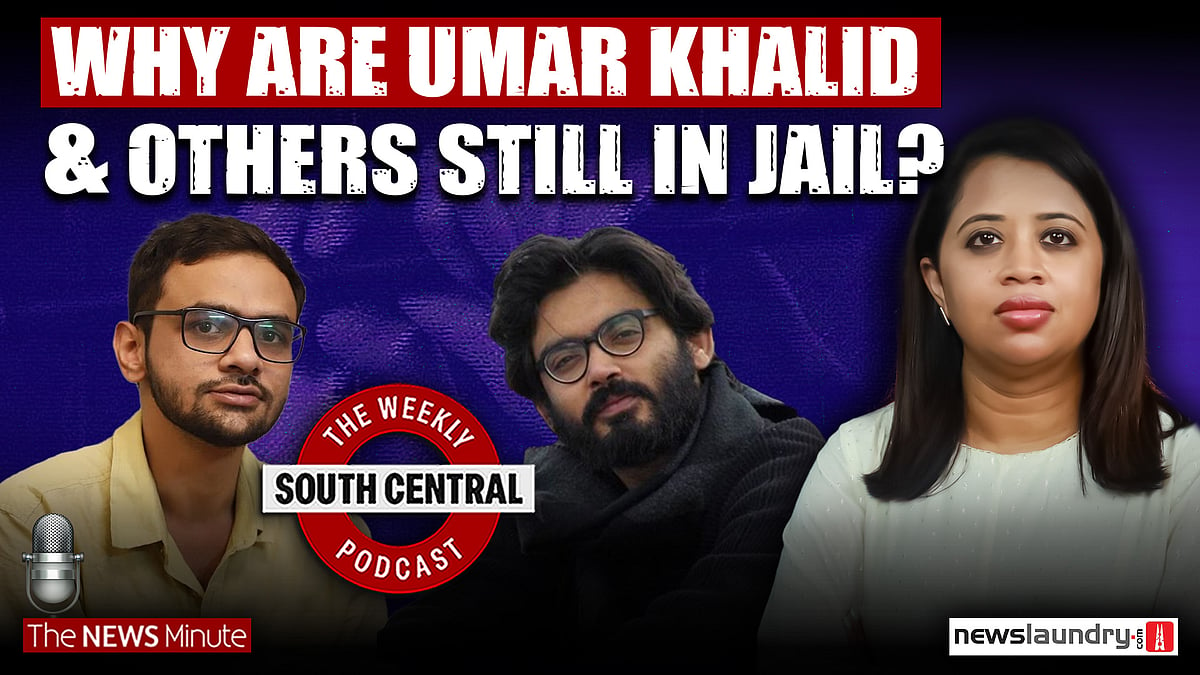 South Central 43: Umar Khalid’s UAPA bail rejection and southern leaders' secularism dilemma
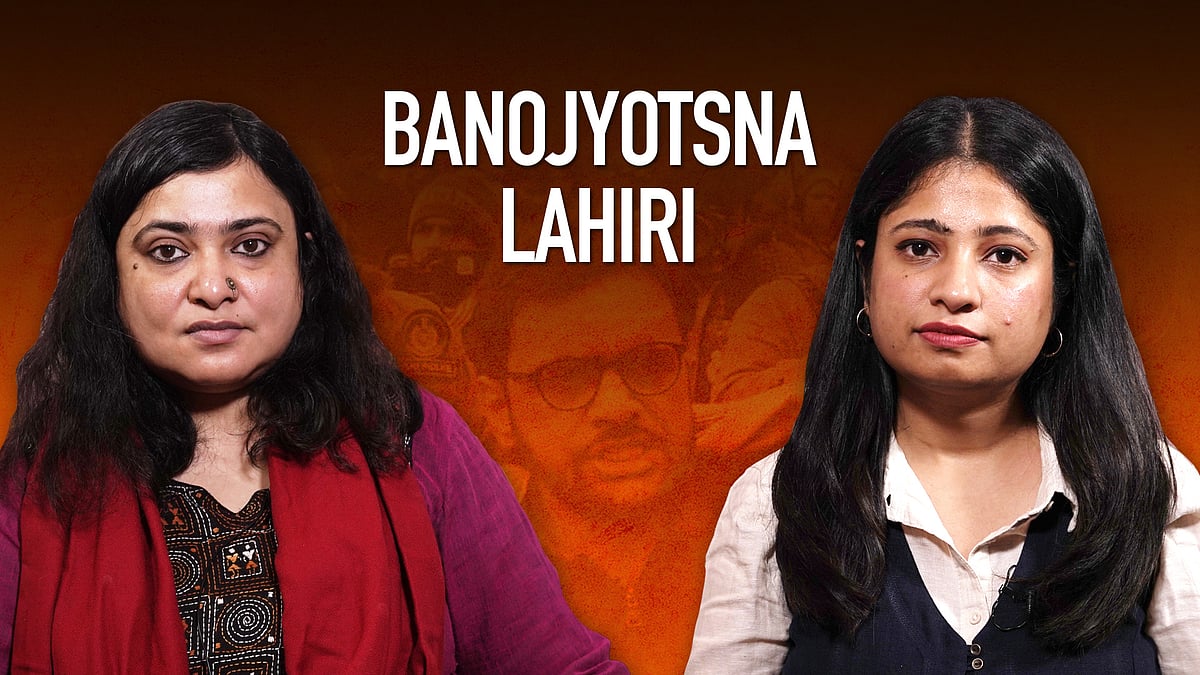 ‘Keeping hope alive a struggle’: Banojyotsna on Umar Khalid’s incarceration, political upheaval post 2014