SC’s baffling bail order rattled the press. Voter rolls exercise should terrify it
There is enough to give anyone reason to be disturbed.

It is rare for India’s mainstream media to speak with one voice on an issue that makes the government uncomfortable. It is remarkable, therefore, that almost every major newspaper made strong editorial comments about the recent Supreme Court ruling granting bail to five of those implicated in the 2020 Delhi riots but making an exception in the case of two of them.
While the ruling party at the Centre, the Bharatiya Janata Party, lauded the court’s decision, newspapers ranging from The Hindu to Times of India as well as The Telegraph, Indian Express, Hindustan Times, Deccan Herald and several more questioned the reasoning behind the court’s ruling.
The Deccan Herald, in its long editorial, states upfront: “Supreme Court's no-bail ruling risks branding of dissent as terrorism, may normalise incarceration without trial.” Its main argument is that the court’s ruling denying bail to Umar Khalid and Sharjeel Imam, who have already spent more than five years behind bars without trial, expands the definition of terrorism to include acts that “disrupt services and threaten the economy”. This would allow the government to declare any protest or demonstration as a terrorist act, the editorial argues.
The editorial in The Hindu questions the court’s reasoning of the “hierarchy of participation” to deny bail to Khalid and Imam even as it granted bail to the other five incarcerated on the same charges. It points out that the evidence for this has not been examined in court. Like the Deccan Herald, it points out that the court’s expansion of the definition of terrorism to include other protests would have a “chilling effect”.
Interestingly, even a business newspaper like Economic Times made a critical comment on the Supreme Court’s ruling. Questioning, as the others have done, the court’s reasoning about the role played by the two denied bail, the paper writes that “the court makes it seem that a battle of ego is brewing between the state and those it has identified as its enemy.”
Much more has been written on this ruling of the Supreme Court in specialist legal websites and in op-eds in newspapers. Most crucial for the media is the broadening of the definition of terror in a law that has already been used to incarcerate critics of the government for years without trial.
Apart from this important Supreme Court ruling, which should concern any citizen who believes that the Indian Constitution grants them the right to protest, there is another story unfolding that begs for more detailed media follow up.
This is the Special Intensive Revision (SIR) of electoral rolls now being conducted in several states including Uttar Pradesh and West Bengal. The number of voters disqualified is staggering. In UP for instance, out of 15.44 voters, 2.7 crore names have been removed. Although there is time for voters to appeal, the sheer numbers raise several questions worth following up. Who are these voters? How many are women? What are the reasons given for their disqualification?
Some of these answers have been provided by an op-ed by Yogendra Yadav and Rahul Shastri in Indian Express based on earlier SIR exercises that were conducted last year. Examining in detail the data from Bihar, the authors come up with the startling revelation that more women have been disenfranchised than men and that as a result the gap between male and female voters has increased in Bihar.
To quote from the article: “Bihar gave us the first glimpse of what was to come. Before the SIR, the gender ratio in Bihar’s population was 932 — for every 1,000 men in Bihar’s adult population, there were only 932 women. The voters’ list made it worse. For every 1,000 men on the voters’ list, there were only 914 women — fewer than their share in the population. The list should have had 7 lakh more women if the share of women was the same as in the population. After the SIR, the gender ratio in the final voters’ list of Bihar fell sharply to 890. Thus, thanks to the SIR, the number of ‘missing women voters’ increased from 7 lakh to 16 lakh. In Bihar, the SIR wiped out a whole decade’s gain in the gender ratio of electoral rolls.”
This is something that the media can surely follow up as the SIR exercise continues to be conducted in states like UP, Tamil Nadu, Madhya Pradesh and others. Why is this happening? If indeed more women are losing their right to vote than men, surely there is a need to question the process.
Also disturbing is the investigation by Reporters’ Collective about the software being used by the Election Commission during the SIR exercise.
According to the writers, not only is this software untested but that it is being used “without written instructions, protocols and manuals “and that it “red-flagged 1.31 crore voters in West Bengal and 2.35 crore voters in Madhya Pradesh as suspicious, putting their voting rights in jeopardy. These voters earmarked as suspicious comprised a whopping 17.11% of the voting population in West Bengal and 41.22% of the voting population in Madhya Pradesh.”
The article goes on to point out that while the commission “tweaked” the algorithm so that the numbers came down, there is no explanation about the process used to change the numbers of suspicious voters. The authors state that “the ECI has not made public any records, protocols, data or orders about this failed attempt to use an undocumented and untested software to test the voting rights of crores of voters at risk”.
The details in this article raise important questions that need to be addressed. Is the SIR exercise really about cleaning up the electoral rolls or something else, a question that has been raised repeatedly last year in the context of Bihar.
In fact, The Hindu in this forthright editorial on January 8 asks whether the role of the Election Commission is to detect “foreign nationals” who have managed to get onto electoral rolls or to ensure that legitimate Indian citizens get their right to vote. While pointing out that there are other institutions that determine a person’s citizenship, the editorial argues: “The litmus test of an electoral process — very much like a judicial process — is whether the side that loses still trusts the process. Unfortunately for India, the current ECI has its priorities turned on their head when it frames its constitutional duty as the removal of foreigners, and not the enrolment of every Indian citizen.”
Read together, Yogendra Yadav’s article, the investigation by the Reporters’ Collective, and the editorial in The Hindu should push the media into following up the SIR exercise in as much detail as was done in Bihar. There is enough to give anyone, who still has some faith in India’s election process, reason to be disturbed.
Let me end with a conversation I had with a Mumbai taxi driver about the forthcoming municipal elections in Mumbai. I asked him which political party he thought had the edge. He replied, “What is the point in thinking about this? We know now that only one side will win.”
In times of misinformation, you need news you can trust. We’ve got you covered. Subscribe to Newslaundry and power our work.
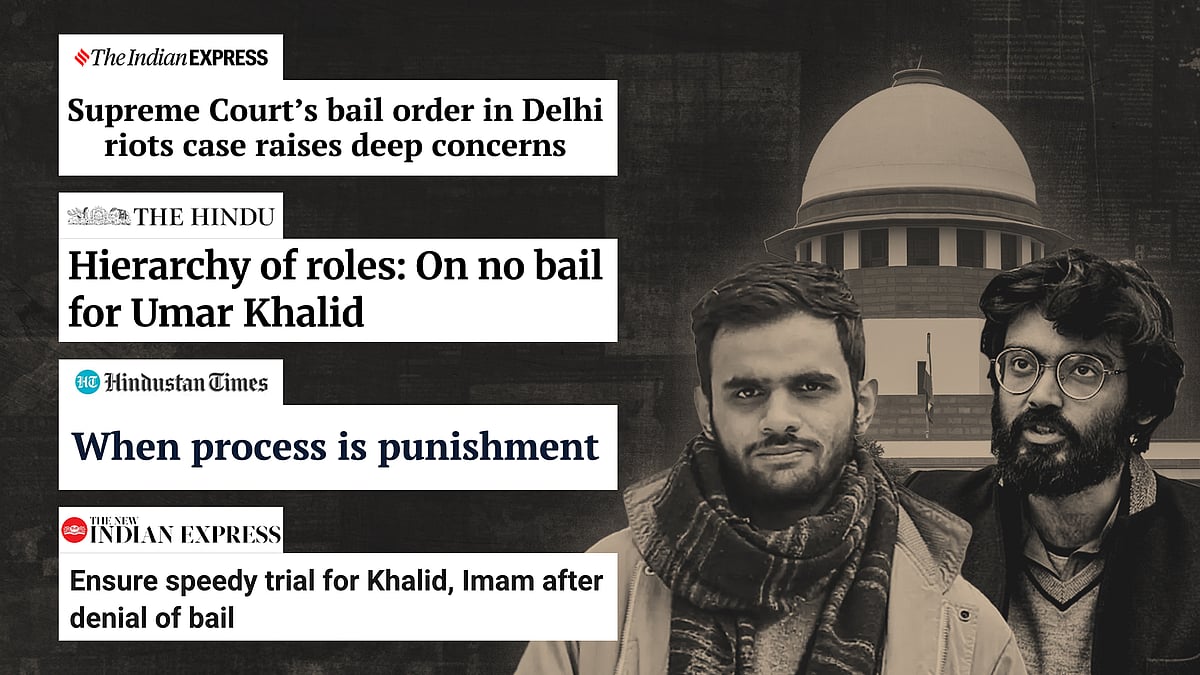 ‘Raises deep concerns’ and ‘disturbing questions’: Newspapers on SC decision to deny Umar Khalid bail
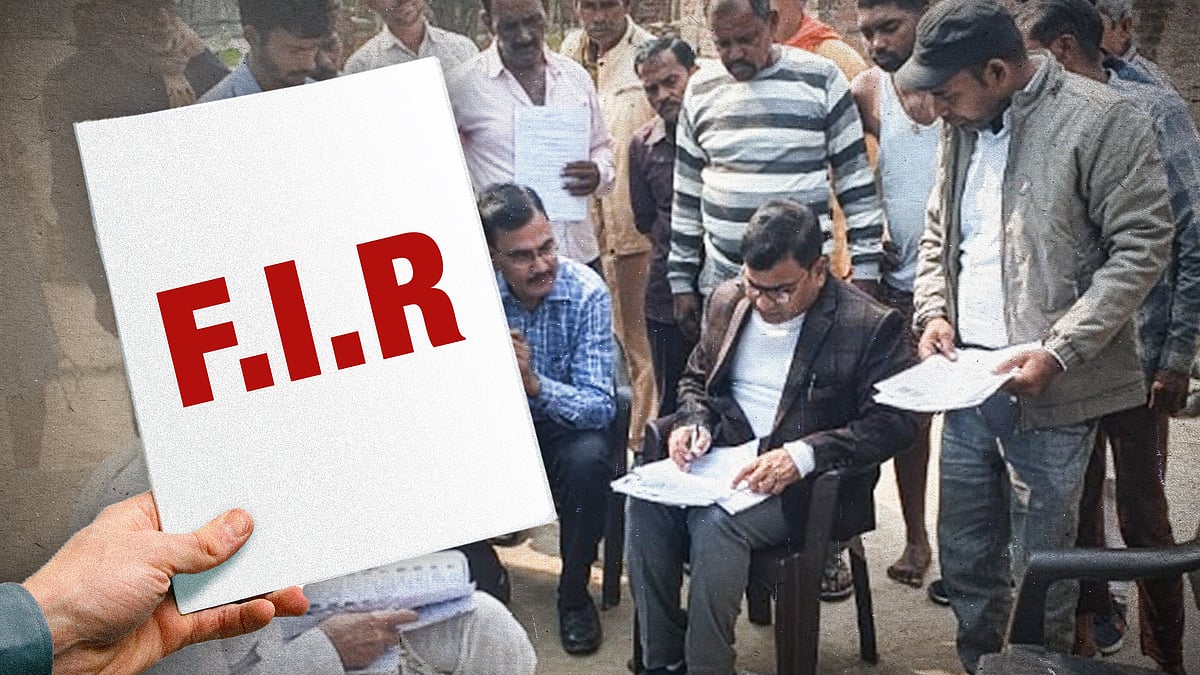 ‘Denied medical leave’, booked for ‘not signing attendance’: BLOs say UP SIR is inhumane