When the truth needs 'authorisation': Why General Naravane’s book exists and doesn't at the same time
By keeping General M.M. Naravane’s unpublished memoir in a state of ‘administrative purgatory’, the government has found a way to disqualify the debate without ever disputing the facts.

There is something oddly familiar about the way General M.M. Naravane’s memoir is being handled. It exists in the same way smog does in North India. Everyone knows it’s there; it stings our eyes and makes breathing unbearable. But officially, on some days, it simply doesn’t exist.
Four Stars of Destiny was slated for publication in early 2024. Excerpts surfaced in late 2023, revealing previously undisclosed details about the Indian leadership’s response during the 2020 standoff with China in eastern Ladakh, as well as internal discussions preceding the Agnipath scheme. Shortly after, the Army initiated a review. Instructions were issued to the publisher to halt the circulation of excerpts.
Nearly two years on, it remains stuck in the administrative purgatory where files are neither rejected nor approved, only delayed until they no longer matter. The government hasn’t said the account is false. It hasn’t claimed the disclosures endanger current operations. It hasn’t explained what, precisely, is objectionable. The silence is total, but not accidental.
This strange half-life of a book came sharply into view when Parliament erupted over references Rahul Gandhi made to the memoir and The Caravan's detailed essay on it. The government objected sharply, and the Lok Sabha speaker invoked procedure. Rules were cited with the gravity usually reserved for constitutional emergencies. The issue, apparently, was not what the book said, but that it had not been formally published.
This is a neat trick, once you see it. Delay the book, then disqualify the debate because the book is delayed. Create the condition, then use the condition as justification. Anyone who’s ever chased a clearance through a government office recognises this instinctively. The system doesn’t need to tell you that you’re wrong. It only needs to ensure you’re never officially right.
The art of the unmoved file
What stands out in this episode isn’t what the government has said, but how carefully it’s avoided saying anything substantive at all. There’s been no direct attempt to dispute Naravane’s account. No clarification of which claims are allegedly problematic. No assertion that the disclosures threaten present-day national security.
Instead, we’re offered implications masquerading as logic. If the facts were correct, the book would’ve been published. Since it hasn’t been published, something must be off. This isn’t an argument. It’s closer to a bureaucratic suggestion, delivered with the expectation that authority will do the heavy lifting that evidence should’ve done.
The implications are serious. Truth stops being something established through explanation or contradiction. It becomes something that needs authorisation. Clearance turns into a proxy for credibility. Pending status becomes a quiet signal to treat the material with suspicion. The longer a file doesn’t move, the easier it becomes to dismiss what’s inside it without ever opening it.
This is a seasoned art form in the corridors of power. A file doesn’t need to be rejected. It only needs to stop moving. Over time, people stop asking. The absence of an official response starts to feel reassuring. If there was a real problem, surely someone would’ve said something. Since no one has, everything must’ve been handled perfectly.
This inversion should worry us. In any functioning democracy, the government's lack of explanation ought to sharpen scrutiny, not settle it.
The national security argument often wheeled out in defence of this silence collapses under closer inspection. Naravane’s memoir doesn’t compromise active tactical secrets; it reflects on decisions taken years ago during the 2020 standoff with China, decisions that have already shaped India’s strategic posture.
Acknowledging moments of uncertainty, restraint or lapses in planning doesn’t weaken a state. Pretending they never existed does.
Militaries learn by examining their hardest moments. Political leaders, on the other hand, often find embarrassment far more threatening than error. That discomfort shouldn’t be confused with a security doctrine.
When procedure becomes the point
It also helps to be clear about who Naravane is not. He isn’t a disgruntled former official scribbling gossip for clout after retirement. He’s a former Army chief. The same state that now treats his recollections as inconvenient once trusted him to command the country’s armed forces. To suggest that such a person can’t be allowed to speak honestly about his professional experience, while stopping short of accusing him of falsehood, is an extraordinary position to take.
Civilian control over the military is essential. But civilian control was never meant to evolve into civilian insulation. When a retired Army chief is effectively prevented from speaking about decisions taken above him, not through law but through delay, something has shifted. Control is one thing. Political immunity is another.
The parliamentary intervention revealed this more clearly than any official statement could ever have. Procedure wasn’t used to organise debate. It was used to keep certain questions off the record altogether, in the name of decorum. Rules meant to preserve order were deployed to avoid examination. This wasn’t a breakdown of the process; it was the process working exactly as intended.
What makes the entire episode absurd is how narrow the discussion about it has been. The focus has been on parliamentary theatrics, opposition strategy, and technical rules. All of this misses the larger picture. The real issue is whether a government can indefinitely withhold clarity and treat that withholding as an answer. Whether uncomfortable accounts can be managed out of existence simply by keeping them stuck in review.
The system doesn’t need to lie. It only needs to wait. Eventually, the waiting itself becomes the message.
That may be administratively efficient, may even be legally defensible, but it’s also corrosive. When a state stops explaining itself and starts relying on silence, it teaches citizens a dangerous lesson. Not that truth is complicated, but that it’s optional. Not that accountability is difficult, but that it can always be deferred.
This isn’t really about one unpublished book. It’s about a governing instinct that prefers delay to defence, implication to explanation, and silence to public record. That instinct, far more than any book, is what should trouble us.
After all, pending files rarely cause trouble. They just sit there quietly, gathering dust, waiting for everyone else to move on.
At Newslaundry, we believe in holding power to account. Our journalism is truly in the public interest – funded by our subscribers, not by ad revenue from corporations and governments. You can help. Click here and join the tribe that pays to keep news free.
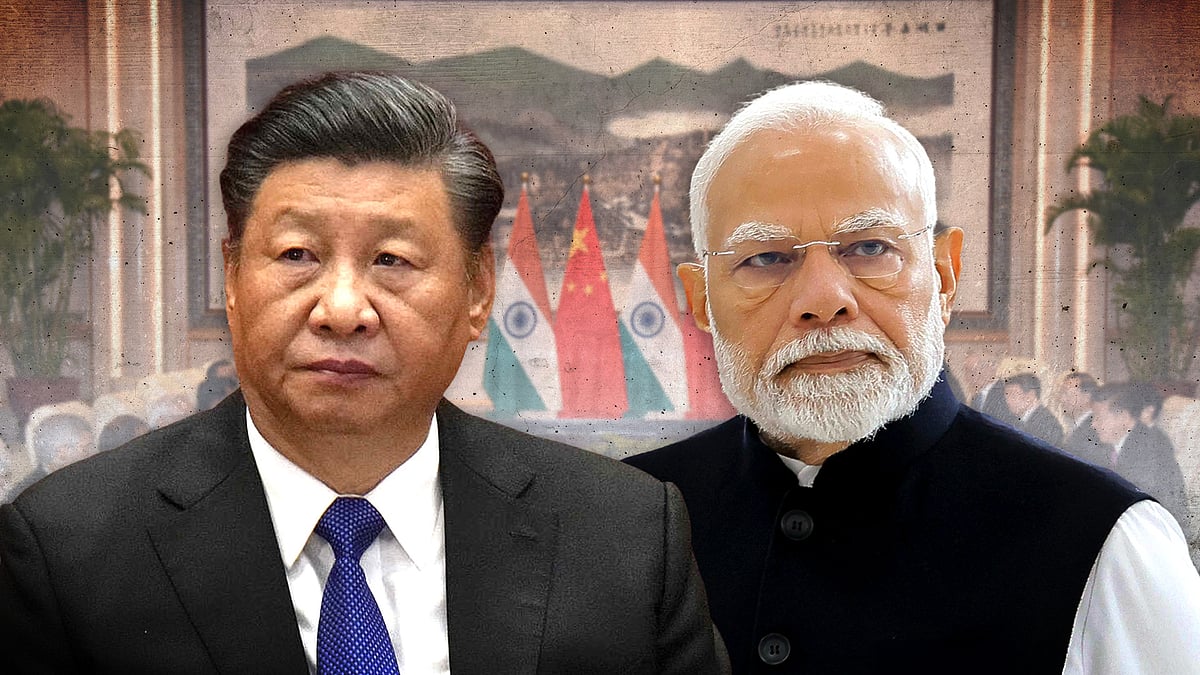 India-China ties are a study in competitive coexistence amid strategic caution