Can’t vilify any community through speeches, memes, cartoons: Supreme Court
Justice Ujjal Bhuyan made this observation while presiding over the case concerning the controversial Netflix film title “Ghooskhor Pandat”.

Presiding over the case concerning the Netflix film title “Ghooskhor Pandat”, the Supreme Court has observed that it is “constitutionally impermissible” for any person or entity, including state and non-state actors, to "vilify or denigrate any community” through “speeches, memes, cartoons or visual arts”.
These observations were made by a two-judge bench comprising Justice BV Nagarathna and Justice Ujjal Bhuyan in court on Wednesday.
The court closed the case after the makers changed the title, which translates to ‘Corrupt Pandat’ and was claimed by petitioners to be denigrating to a specific community, but Justice Bhuyan issued a separate judgment. While no formal adjudication was required following the actions of the filmmakers, he sought to “restate the constitutional principles governing fraternity and freedom of expression to avoid any misunderstanding,” according to LiveLaw.
Last week, Justice Bhuyan said he intended to pen a separate opinion after Justice Nagarathna accepted the filmmakers’ affidavit and ordered closure of the proceedings. When Solicitor General Tushar Mehta, appearing for the Union government, suggested that the dispute had been resolved and a quietus reached, Justice Bhuyan responded, “Don’t prevent me from expressing my views.”
On Tuesday, Justice Bhuyan observed that these constitutional principles were among the “foundational objectives” of the Constitution and part of the “guiding philosophy” of the Preamble, while making a reference to Article 51A(e), which talks about the fundamental duty to promote “harmony and brotherhood amongst all people in the country.”
"It is essentially an attitude of respect and reverence towards fellow human beings. Thus, cultivating a sense of brotherhood and respecting fellow citizens irrespective of caste, religion, or language is a constitutional dharma each one of us must follow.”
He also observed that public figures holding high constitutional offices bear a greater responsibility to uphold these principles.
“It will be violative of the Constitution to target any particular community on the basis of religion, language, caste or region by whosoever he or she may be. This is particularly true for public figures occupying high constitutional office who have taken the solemn oath to uphold the Constitution," he observed.
Concurrently, the court also underscored that filmmakers are protected by the fundamental right to freedom of speech and expression under Article 19(1)(a) of the Constitution. Justice Bhuyan noted that artistic mediums – including films and satire – are vital to democratic discourse and should not be suppressed solely because of objections from specific groups.
A marker against hate speech?
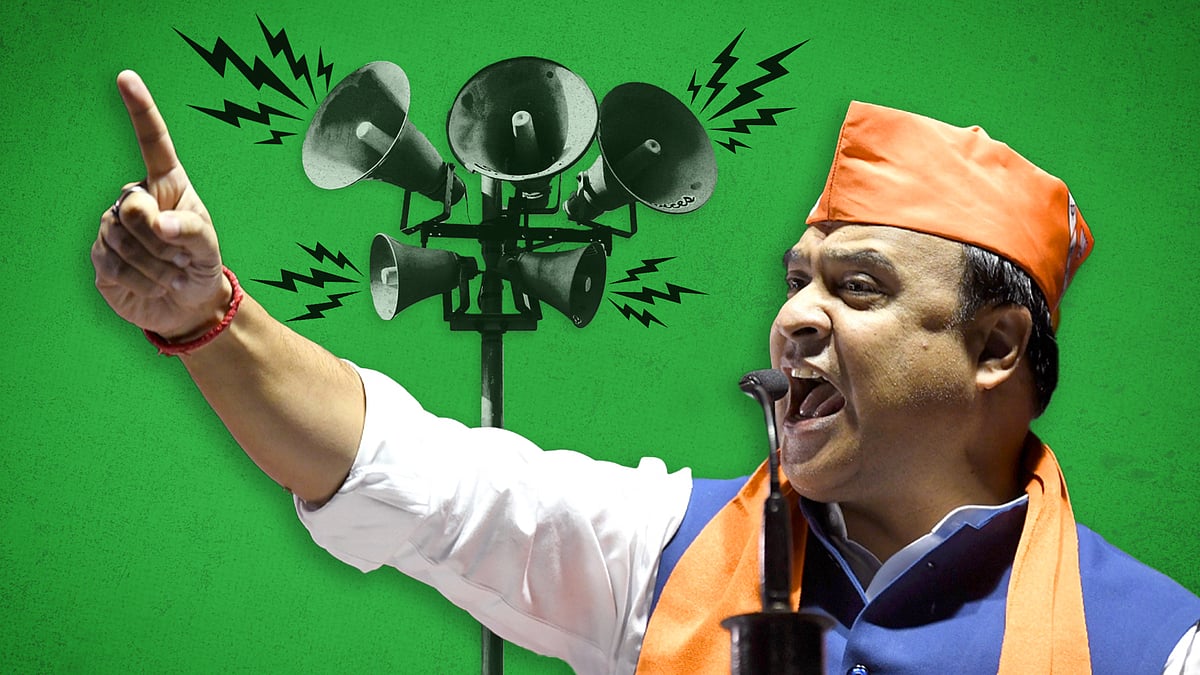
The court’s remarks are particularly relevant in the context of the recent controversy surrounding alleged hate speeches by Assam chief minister Himanta Biswa Sarma. Earlier this month, a bench led by the Chief Justice of India refused to entertain Article 32 pleas seeking a hate speech FIR against Sarma.
“All these issues can be effectively adjudicated by the jurisdictional High Court. We see no reason to entertain this here, and thus we relegate the petitioners to the jurisdictional High Court. We request the High Court Chief Justice to expeditious hearing,” the bench said, according to LiveLaw.
Furthermore, the court remarked that the decision of the petitioners to approach them was a “calculated” effort to “demoralise high courts.”
In the run-up to the assembly elections later this year, Sarma has been raising the temperature against the Muslim community in Assam with provocative hate speeches. In late January, his job was to “make the Miya people suffer”, while also declaring that Muslims would be made to face all sorts of troubles.
“Whoever can give trouble in any way should give, including you. In a rickshaw, if the fare is Rs 5, give them Rs 4. Only if they face troubles will they leave Assam… These are not issues. Himanta Biswa Sarma and the BJP are directly against Miyas,” he had said. ‘Miya’ refers to the Bengali-speaking and East Bengal-origin Muslim population of Assam. While the term is used pejoratively by the likes of Sarma, the community has also reclaimed it to identify itself.
On February 7, the Assam unit of the BJP shared an AI-generated video showing the chief minister firing at men wearing skull caps, triggering a police complaint and petitions before the courts, as the party later deleted the post and sacked one of its social media cell co-convenors.
In a column for LiveLaw, Supreme Court advocate Dushyant Dave noted while criticising the apex court for dismissing the petitions against Sarma, “First, every time elections come, [the] ruling party at the center and its High Functionaries, including the Prime Minister and its many Chief Ministers indulge in proactive speeches against secular principles of the Constitution. Though citizens have been seeing this, unfortunately not the Judges. Despite [the] Supreme Court holding in Ashwini Kumar Upadhyay versus Union of India, W.P (Civil) 943 of 2021 that hate speech would amount to contempt of Court.”
Small teams can do great things. All it takes is a subscription. Subscribe now and power Newslaundry’s work.
 ‘Deletion can’t be end of matter’: Indian Express, Telegraph editorials tear into Sarma’s hate video