‘The only dangerous thing about him is his ideas’: Inside the Manesar workers’ arrests
As police move to link the Manesar and Noida unrest, a Gurugram court has summoned Aaditya Anand — whom authorities have described as one of the “masterminds” of the Noida protests.

Industrial unrest over minimum wages swept across parts of the National Capital Region (NCR) in April, beginning in Manesar before spreading days later to Noida. In both industrial belts, protests over stagnant pay and increased cooking gas costs escalated into violence, followed swiftly by government-announced wage hikes.
But alongside the wage concessions came another response: conspiracy cases and the search for “masterminds”.
While the Noida unrest drew national headlines, six men arrested in Haryana's Manesar violence case have received far less attention. Police say they used WhatsApp to incite rioting, arson and attacks on specific individuals. Families of the accused deny this, alleging that known labour activists are being targeted. A judicial magistrate has already flagged that mandatory arrest procedures may have been violated — and ordered an inquiry.
The case is also widening beyond Haryana. On April 27, a Gurugram court issued a production warrant for Aaditya Anand, described by police as one of the key conspirators in the separate Noida unrest, in connection with the Manesar FIR — a move that appears to stitch the two protests into a single conspiracy narrative.
Newslaundry spoke to the families of five of the six men named as conspirators.
What the FIRs say
The unrest began in Industrial Model Township (IMT) Manesar, where workers at Honda Motorcycle and Scooter India began mobilising on April 3. Following this, protests broke out across several companies, including textile exporters Richa Global and Modelama Exports.
On April 9, the protests turned violent with stone-pelting and arson taking place in the region. Reports of lathi charge, tear gas firing, and arrests followed.
Two main FIRs were registered in Manesar — FIR 94 and FIR 95.
According to FIR 94, filed on the complaint of Ramveer Singh, AGM (HR) at Richa Global Exports Pvt Ltd, workers at three company units in IMT Manesar had been protesting outside factory gates for three to four days over wage demands.
The complaint states that on April 9, around 200–250 workers gathered outside the company's Sector 7 unit, which allegedly turned violent at around 10:30 am — pelting stones at management and police personnel, setting vehicles on fire, vandalising property, and attacking officials “with the intention to kill”.
Police said repeated announcements were made ordering the crowd to disperse, after which “mild force” was used to clear the area. The FIR says the violence also spread to two other Richa Global units in Sector 4 and Plot No. 11, where machinery and parked vehicles were allegedly damaged. It records injuries to two women employees and damage to several private and police vehicles. Along with rioting, unlawful assembly and other offences, the case invokes BNS Section 109(1) — attempt to murder.
The complaint further alleges that protesting workers were instigated by organisations including Inquilabi Mazdoor Kendra and the Automobile Industrial Contract Worker Union.
The six people named in FIR 94 include: Akash Kumar (Rohtak), Harish Chand (Uttarakhand), Pintu Kumar Yadav (Bihar), Raju Singh (Uttarakhand), Shyambir (Uttar Pradesh), and Ajit Singh (Haryana).
FIR 95, filed on the complaint of Suresh Kumar, senior manager (HR) at Modelama Exports, similarly alleges that unidentified protesters turned violent at the company's Sector 4 unit on April 9, pelting stones and damaging property.
Families of the six accused in FIR 94, however, tell a different story.
‘The only thing dangerous about him is his ideas’
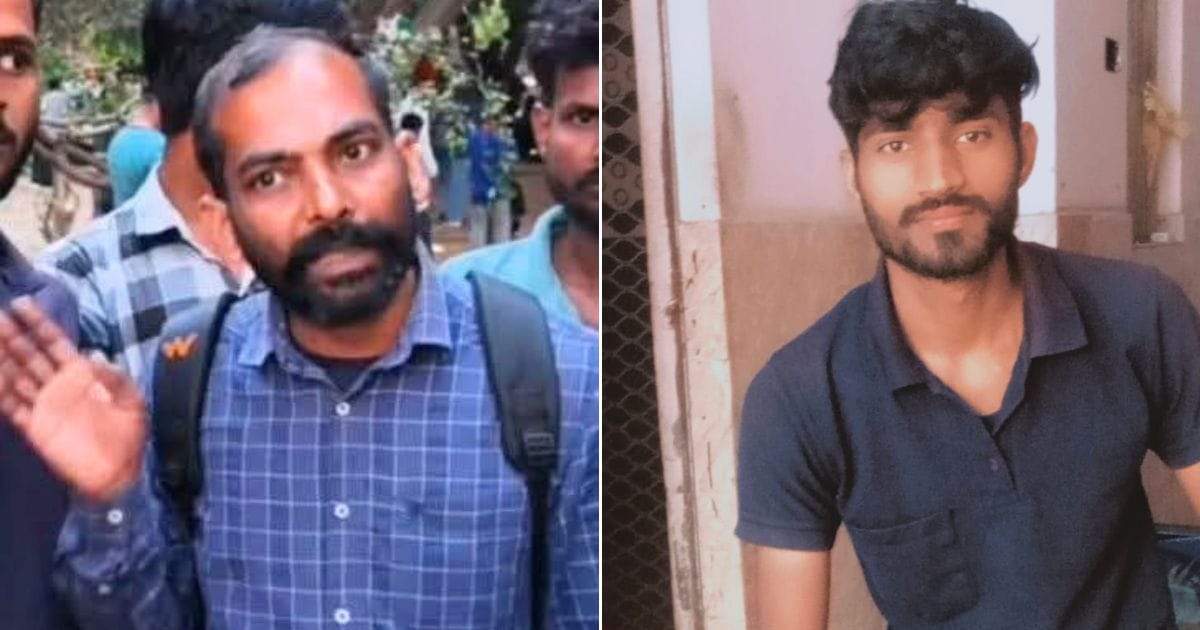
Amit (33), Ajit Singh’s younger brother, said Ajit (37) began as an apprentice at Maruti in 2007 and later joined Bellsonica Auto Component India Pvt Ltd in 2008.
“In 2014, when he tried forming a union there, he and many others were fired. Later, when the union was recognised in August 2016, they were taken back. But in 2023, when they began granting union membership to contractual workers, the union's number was revoked, and he was fired again. Since then, he and about 50 more workers have been fighting their case in the labour court,” Amit explained.
Explaining further, Belsonica Union President Mohinder Kapoor told Newslaundry that the conflict with management began years before the current crackdown. “In 2020, we brought an amendment to our constitution and started giving membership to contractual workers by 2021. A year later, when we submitted our annual file to the labour department, we started getting notices regarding the same. In fact, in 2023, contractual workers even voted in the union elections, while management was also present.”
Kapoor added, “But in March that year, Ajit, our general secretary, Sunil, and I were suspended pending enquiry. Months later, on September 23, the labour department deregistered our union, stating that it was illegal to give membership to contractual workers. It was a Saturday, so we only got to know this on September 25. Four days later, the three of us were terminated. Now, this matter is pending before the Punjab and Haryana High Court.”
As for how Ajit has been managing expenses since losing his job, Amit said: “We are four brothers from Jind with Ajit being the eldest. Back home, we have a farm, some cattle, and I also work as a motor mechanic in Gurugram. Another brother runs a computer centre helping people with money transfer.” He added that management had even tried to persuade Ajit to abandon union work and focus on his children. “He refused and said that he would take care of all 700 kids of the company's workers.”
Ajit's wife, Monica (35), who lives with their two children in Jind, denied that her husband had any role in the violence. “He was not even present at the protest site on the day of the violence. He was in his room,” she claimed. Defending his union activity, she added, “If workers are to fight, someone has to guide and organise them. He only showed them the way, like a teacher guides students.”
“All of the police's accusations are false,” she alleged. “The only thing dangerous about him is his ideas. The government is scared of such ideas. He is not roaming around with explosives, only ideas.” Monica added that Ajit has read Marx, Lenin, and others. “He gave me a few to read as well. I read them when I can get time from family chores.”
Ajit has two sons, aged 10 and 8. “The elder one knows, and I make him understand that Papa is not doing anything wrong — he is fighting for people's rights. Not everyone has the capacity to fight like this,” Monica said.
Amit, Monica, and Mohinder claimed Ajit had first been detained on the night of April 7, then again on April 9, when he was questioned and released around 2 am, before being picked up once more on April 12 and formally arrested. Akash Kumar, meanwhile, had been working at Munjal Showa Ltd — a manufacturer of automotive components with a plant in IMT Manesar — right up until his arrest. That sits awkwardly against the police claim that the six accused were “outsiders” or “external elements”.
‘Never objected to him protesting on these issues’
His wife, Divya (24), met Newslaundry on April 24 at Vikas Sadan, where families had come for the accused's police remand hearing.
“We had just had dinner and were getting ready to sleep when the police arrived in plain clothes and picked him up at 11.30 pm on April 12. But just days prior, he had come home at around 2.30 am and told me that the police had questioned him and other activists,” Divya said.
“His salary is Rs 11,500, but we always received a little less than Rs 10,000. We stay close to the Garhi Harsaru Junction railway station, which is 30 minutes away from Akash's workplace. Only his mother, he, my son, and I stay at the house. Now that he is not there, we are facing financial difficulties,” she said.
The couple have a 16-month-old son, who fell sick the day after Akash was picked up. The family pays Rs 3,000 in rent, around Rs 900 for electricity, and petrol for Akash's bike. “I never objected to him protesting or working on these issues. His salary was low, so I expected it to increase. But who knew it would happen like this? Since the arrest, the Inquilabi Mazdoor Kendra (a workers’ organisation) has helped us get gas when our cylinder runs out. But how long can that go on?”
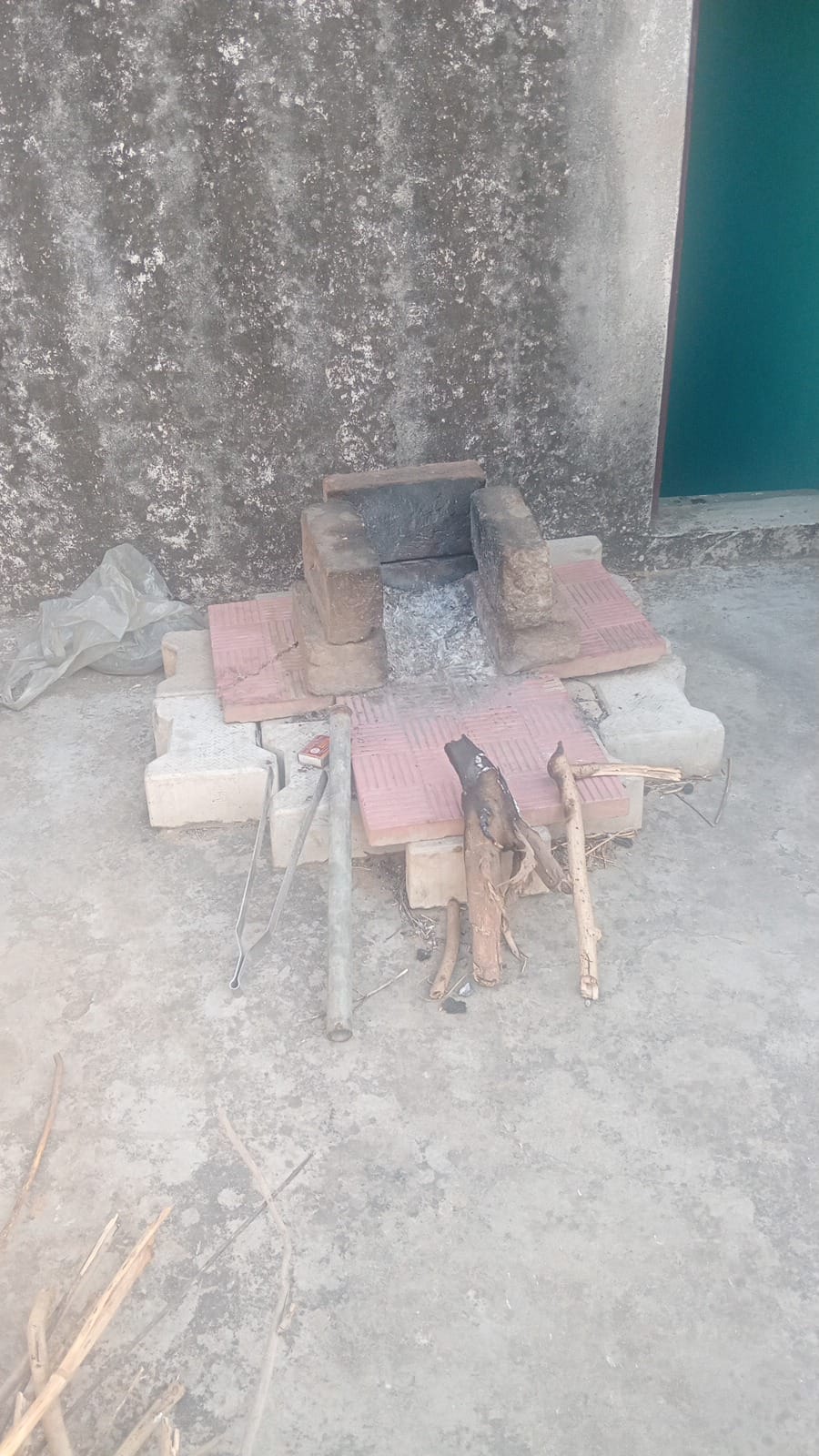
Days later, Divya told Newslaundry, “It’s been two days since our gas finished. Babu (her son) is young, so I can’t really cook on the chulha when he is around. I will drop him off at our neighbours’ to cook.”
‘Harish aaya nahi?’
Harish Chand's wife, who requested anonymity, said he has been associated with Inquilabi Mazdoor Kendra (IMK) for over 15 years, helping with publications and working among labourers without a salary.
“He does this work free of cost. So, I mainly manage the household finances — rent, school fees and other expenses,” she said. The family lives in Rohini, Delhi, while Harish (48) would travel to Manesar for two or three days at a time for organisational work.
She claimed he was first picked up for questioning on April 7, then again on April 9, before being released both times after his phone and belongings were checked.
“They told him, ‘You look like you come from a good family, stop doing all this. Next time you won't be spared.’ When he returned home on April 11, he told me that anything can happen in the coming days.”
Harish has a son aged 12 who has not been told of his father's arrest. His elderly parents — aged 80 and 75 — keep asking: “Harish aaya nahi?” (Harish hasn’t come?)
‘People like us are painted as conspirators’
Ranjana (37), a worker activist with IMK in Faridabad and the wife of accused Raju Singh (45), said both of them had spent years working among labourers while living modestly. “The organisation only supports us enough for day-to-day survival. Even in Gurugram, he was staying with a worker's family, not in a separate room,” she said.
She holds a Master's degree in economics and a BEd, and had previously taught in Uttarakhand before working in a factory in Haridwar. Both she and Raju came from modest families in Uttarakhand and were drawn to labour activism after witnessing the struggles of workers and farmers.
“As a contract worker, I earned Rs 5,000, while as a permanent worker, I earned Rs 12,000. We have seen these inequalities ourselves,” she said. “Companies sometimes get work done and then do not pay workers. I know a dozen cases like that. A worker alone can be dismissed, harassed or sent to court. But when an organisation goes, we can help them get justice, which can mean getting workers their dues, compensation after accidents, or challenging unfair dismissals.”
Alleging that the present case was an attempt to criminalise labour activism, Ranjana said, “The administration fails to get workers justice. That is where we fit in. But that is also why people like us are being painted as conspirators.” She added, “We do not have any media cell or IT cell to create violence. We were participants in these protests, not organisers.”
She claimed that Raju had first been detained on April 7 and released later that night, before being picked up again after their last phone call on April 12.
“Until the next afternoon, I did not know where he was. Then I got a call from the Crime Branch office asking for his Aadhaar card.” Questioning the conspiracy narrative, she asked: “If we instigated protests in Manesar, then why did protests also happen in Noida, Faridabad and Uttarakhand?”
‘He has not committed any crime’
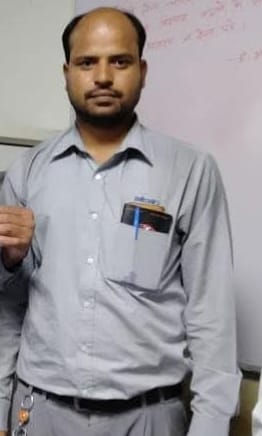
Ruby (26), wife of accused Pintu Kumar Yadav, said Pintu had worked at Bellsonica until 2023, when he was dismissed for union activity.
Pintu comes from Madhubani, Bihar, and was staying with his wife and children in a house of their own in Surat Nagar — built only last year through a loan with a monthly EMI of Rs 12,500. After losing his factory job, he began working as a bike rider, and had purchased an auto-rickshaw on loan just a month before his arrest. The family also received considerable emotional and financial support from Pintu's family during this period.
The couple have two children, aged seven and five. “We used to talk about what workers go through. He would say everyone works for their family, but the profits of that work go to capitalists,” Ruby said. “I am proud of him. He has not committed any crime. They suspected his ideology, so they picked him up.” She added that on April 9, the day violence broke out in Manesar, Pintu was at home working on a case he’s fighting in a labour court.
‘Targeted for his activism’
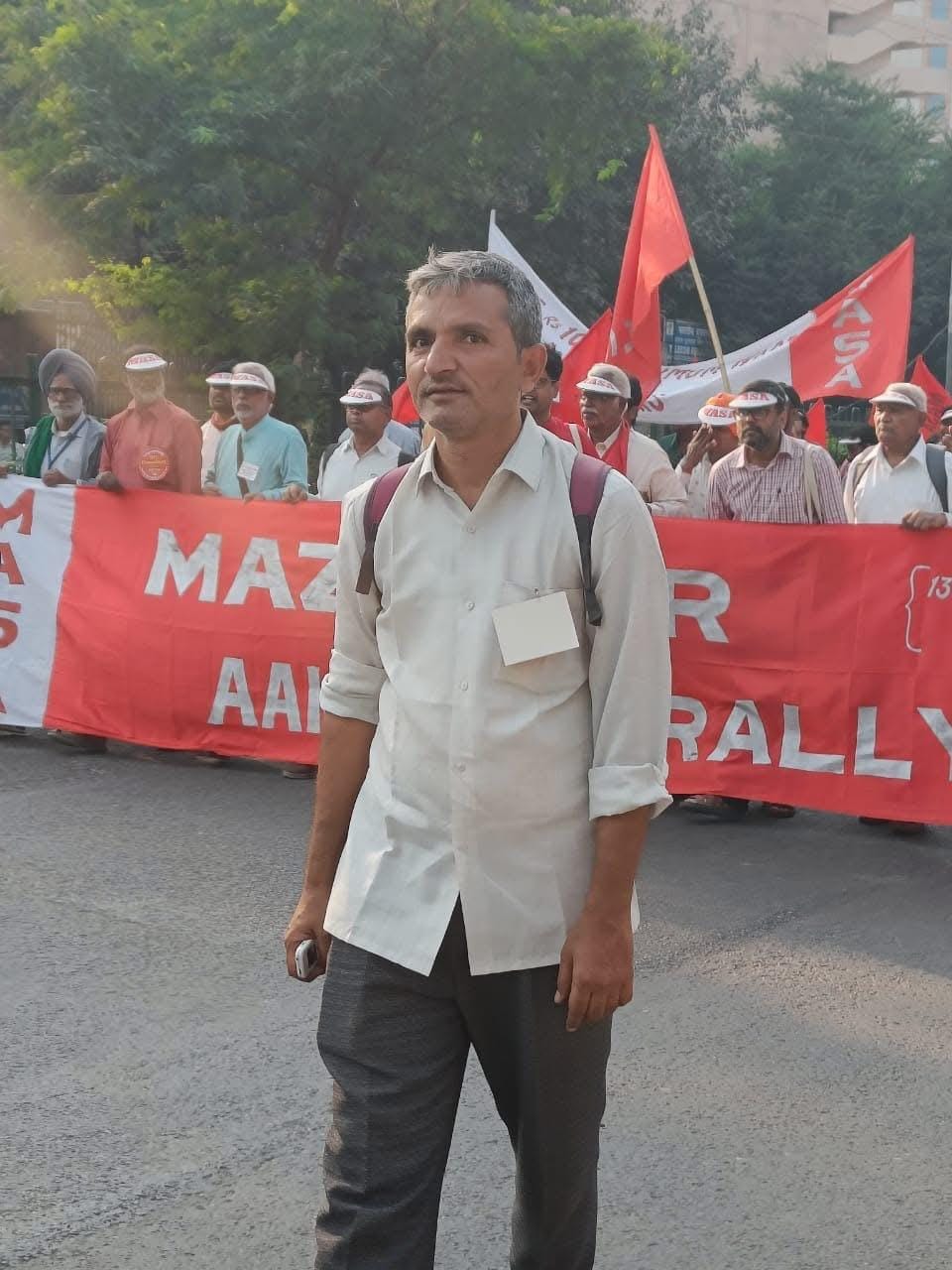
Richa Pandey, 44, a member of Pragatisheel Mahila Ekta Kendra, currently working in association with IMK, told Newslaundry, “Shyambir (50) has been working in Gurugram as an activist of the Inquilabi Mazdoor Kendra for nearly 14 years. He is originally from Badaun, UP, and is not married. He has helped trade unions in several companies, guides them and gives advice. All trade unions know him in Gurugram.”
“Before coming to Gurugram, he was in Uttarakhand. He started as a student activist and was associated with Parivartankami Chhatra Sangthan - Pachhas while studying at Bareilly College. After that, he joined IMK and continued his fight for workers,” she added.
Pandey deemed the allegations against her colleague Shyambir “fake”.
“He, along with Ajit and Harish, was picked up on the night of April 9. The police went through their WhatsApp and their phones but found nothing. They were then released on personal bonds,” she claimed, adding that the protests were “spontaneous” and the FIRs were filed to “repress those activists who stand with workers”.
Police claims, court findings, and contradictions
Gurugram police have denied allegations that any of the six were picked up before their formal arrest on April 12.
Speaking to Newslaundry, Gurugram Police PRO Sandeep Turan said their investigation had revealed WhatsApp chats showing attempts to incite rioting, plans related to arson, and messages provoking attacks on specific individuals.
He added that Section 307 (attempt to murder) had been invoked against some accused, while others were booked under applicable provisions.
But the families' accounts — of detentions on April 7 and April 9, phones checked, warnings issued, and releases before the formal April 12 arrest — directly contradict this timeline. The police have maintained that no such detentions took place.
A court order accessed by Newslaundry adds institutional weight to the families’ version. In an April 13 order related to FIR 94, Gurugram judicial magistrate Naveen Kumar flagged apparent discrepancies in the arrest records of three accused — Shyambir, Ajit Singh and Harish Chand — and ordered a departmental inquiry into whether mandatory legal procedures were followed.
The court noted that their arrest memos recorded that information regarding the arrests had been conveyed to a person named “Monu” on a listed mobile number. Upon inquiry in court, however, it emerged that the number belonged to the lawyer, Monu Kuhar, representing the accused, who stated he had received no such call and that, at most, a missed call may have been received later in the day, after he was already in court.
When questioned, the concerned police official initially denied informing “Monu”, but later stated that intimation had been given to other relatives instead. Citing these contradictions, the magistrate directed the concerned Deputy Commissioner of Police to conduct a detailed inquiry into whether due arrest intimation had been provided in accordance with law, observing that such communication is an important safeguard against arbitrary detention. The police officer's account, in other words, changed when questioned in court.
Speaking to Newslaundry, Kuhar noted that while procedural violations in the police crackdown were being widely reported in the media, the Manesar case was different – “in our case the magistrate has put this on record.”
Newslaundry reached out to DCP Manesar Prabina P about the status of the departmental inquiry ordered by the magistrate, but received no response.
A pattern, not just a case
The Manesar arrests do not exist in isolation.
On April 27, a Gurugram court issued a production warrant for Aaditya Anand — described by police as a “mastermind” in the separate Noida unrest case — in connection with FIR 94, directing his appearance before a magistrate in Gurugram on May 6. Anand, a BTech graduate from NIT Jamshedpur, is currently lodged in Luksar Jail.
Labour collective Mazdoor Bigul has alleged this is an attempt by Haryana and Uttar Pradesh police to stitch together a cross-state conspiracy narrative linking the Manesar and Noida protests. The group claims Anand had no presence at Manesar protest sites and no contact with those already arrested in the Gurugram case — and that neither family members nor friends were informed of the production warrant until lawyers conveyed the information.
Mazdoor Bigul has further argued that the Noida protests followed the earlier wage gains secured by workers in Manesar, rather than any centrally coordinated conspiracy — a point that echoes Ranjana's question from inside the case: if the six were masterminds of unrest, why did it spread independently to Noida, Faridabad and Uttarakhand?
Speaking to Newslaundry, advocate Kabir Ali Zia Choudhary, part of the team of lawyers representing the accused in the Noida conspiracy case including Aaditya Anand, said the state had placed no mandatory documents on record — no arrest memo, no seizure memo, no grounds of arrest in writing. “Most of the information lawyers receive comes from the press,” he said. “We go to court every time and ask them to provide these documents, but those applications are still pending.”
On the evidence against the accused, he said: “There is not a single piece of evidence, document, call, message, photograph, or anything on record which would point out that the accused incited violence anywhere. On the contrary, there are videos we have supplied to the police in which Aditya can be seen appealing for the protest to be carried out peacefully.”
Choudhary also alleged that two people who sent incendiary messages in a WhatsApp group were themselves police personnel.
“One person is saying, ‘Modi is coming, let's block the road.’ That person is the driver of the DCP of Noida. Another person has posted pictures of burning cars — that lady is an ASI in one of Noida's police stations. We have filed a complaint against them and now we will be going to court to demand an FIR against them.”
Newslaundry sent a questionnaire to the office of DCP Noida regarding these allegations and will update this report once a response is received.
Whether investigators can substantiate a cross-state conspiracy remains to be seen. Haryana Police has not publicly detailed the basis for linking Anand to FIR 94. But what is already visible is a pattern: labour unrest, sweeping crackdowns, and a conspiracy narrative that keeps widening — even as the courts have begun asking whether the police followed their own procedures to make the arrests in the first place.
Update on May 11: This report has been updated with additional details about the union Ajit was part of.
Complaining about the media is easy. Why not do something to make it better? Support independent media and subscribe to Newslaundry today.
 ‘At least tell us you have him’: Families search for ‘missing’ workers after Noida crackdown
 Noida violence: Times Now, CNN-News18 ‘unearth’ a dark ‘conspiracy’ of QR codes, WhatsApp groups