‘Let them drink water’: Media is burying the corporate plunder driving our climate crisis
While mainstream media newsrooms distract with prime ministerial visits and underreported death tolls, independent outlets are left to track the devastating toll of Adani’s coal expansions and redrawn wildlife sanctuaries.

India is at boiling point, literally. The world's hottest cities are all in India, and most are in Uttar Pradesh. It is a crisis that impacts the majority, especially the poor.
Yet, it is not the dominant story in Indian media. It appears and disappears. Random statistics of “heat-related deaths” are reported. Maps are printed in which India is shown in blood-red, illustrating the unbearably high temperatures.
And then media attention moves on to foreign visits by our leaders, to summits in Delhi, to the laughable “austerity” measures taken by members of the BJP in response to Prime Minister Modi’s call to cut back on petroleum-based products, etc.
Predictably, the story resurfaces when the Prime Minister urges people to stay hydrated and to offer water to others. Apparently, that's the best solution to beat the heat!
The deeper story of why we have arrived at this distinction, of a country literally at boiling point, is rarely pieced together, and even if it is, it finds little to no space in our overloaded mainstream media.
That reality has been staring us in the face for decades, and never more so than in the last decade, when every excuse to cut down prime forests for so-called “development” has been trotted out by the government and backed by a National Green Tribunal whose remit it was to do exactly the opposite.
Thankfully, independent news platforms and social media have created spaces for this story to be recorded and told. And the facts are alarming.
Social media also facilitated calling out such statements, including Modi’s advice to stay hydrated, as this report in The Telegraph records. For instance, some critics mentioned the extent of forest destruction in places like Hasdeo, the Andaman and Nicobar Islands, and the Aravali hills, which were not acknowledged even as Modi handed out advice.
The story also gives the official statistics of heat-related deaths, clearly a gross underestimation of the reality: “The heat crisis has already led to deaths across several states, with Uttar Pradesh recording the highest toll at 17, followed by Telangana (16), Madhya Pradesh (14) and Maharashtra (11), according to Union health ministry data and media reports.”
You only have to step out into the heat to see how many millions of people are compelled to work in these high temperatures, as they have no choice but to sit in the shade. And even those who have some shelter for the night often have no electricity to use, even the one fan they might have to cool this space.
Vidya Krishnan, journalist and author of ‘Phantom Plague’, a book about the scourge of tuberculosis that still survives in India, writes a scathing opinion piece on Al Jazeera, where she questions the data on heat-related deaths.
She writes: “While the newspapers record a few deaths here and there, the majority of heat-related deaths go unrecorded in India. I know, from my decades as a health reporter, that those who die early in any catastrophe – like the HIV patients of the 1980s, or COVID-19 more recently – become numbers. Only after we have a mountain of bodies do we think to raise a flag and give it a name, perhaps even its own day. India has reached that point.”
An interesting detail in her article is what Modi said in 2014 to students: “Climate has not changed. We have changed. Our habits have changed.”
Clearly, the understanding of the most powerful man in this country about why India has arrived at this boiling point has not changed in the last decade and more. In the meantime, according to many studies, including those cited in this article in the New Scientist, “Since 2014, the planet has been warming by about 0.36°C per decade, according to an analysis of five temperature datasets, raising fears that climate tipping points could be crossed earlier than expected.”
In 2026, we don’t need to repeat what has been known for decades, that one of the factors contributing to global warming is the destruction of natural forests. No amount of so-called “compensatory afforestation”, which is often no more than an empty gesture, will replace the role that natural forests play in mediating the effects of climate change and global warming.
Unfortunately, this wisdom has failed to percolate to current policymakers in India. Instead of conserving what remains of our forests, millions of trees are being cut down every day in India.
In cities like Mumbai, for instance, irreplaceable mangroves are being felled for a road that will serve only a small percentage of the city’s population. Protests by concerned citizens fall on deaf ears. There are similar examples in most of our cities, big and small, that create heat islands, where, once again, the poor pay the price even as the better-off can insulate themselves.
Away from the cities, and therefore of the media that doesn’t care to cover stories that do not cater to the interests of its viewers/readers, the destruction is inestimable. According to this report in The Indian Express, 1742.6 hectares in the “high conservation zone” of the Hasdeo forest in Chhattisgarh will be cleared for a coal mine owned by the Adani group. This is in addition to two large coal mines that already operate in an area once considered inviolate. “In the first five years, 97,837 trees will be cut; In phase II, between year six and ten, 59,712 trees will be cut”, according to the story. This is destruction on a scale that is hard to imagine if you are someone who has lived and grown up in an urban jungle.
Odisha is another state where hectares of forests are being cleared for coal and bauxite mines in Rourkela, Koraput and Angul. According to this investigative story by Reporters’ Collective, even the Karlapat Wildlife Sanctuary is not excluded. The forests in the southern part of the sanctuary, an important elephant corridor, are set to be handed over to the multinational company Vedanta for bauxite mining by redrawing the sanctuary’s borders.
There are many more such examples of the devastation being wrought on India’s forests. The stories are hard to find, often available only on independent digital news platforms. Together, they paint a picture of a government at the Centre that appears to deny the reality of climate change and is willing to go to any lengths to facilitate business houses. The price for such a policy is being felt every year, including this year. And the price is being paid by those whose voices are drowned out.
This is India 2026. You will never know this if you only read and watch the country’s mainstream media. You will never know this if you only rely on official statements. You will never know this unless you step out of your comfort zone.
We take no ads, bow to no government or corporation, and answer only to you, the reader. This Press Freedom Month, pay to keep news free.
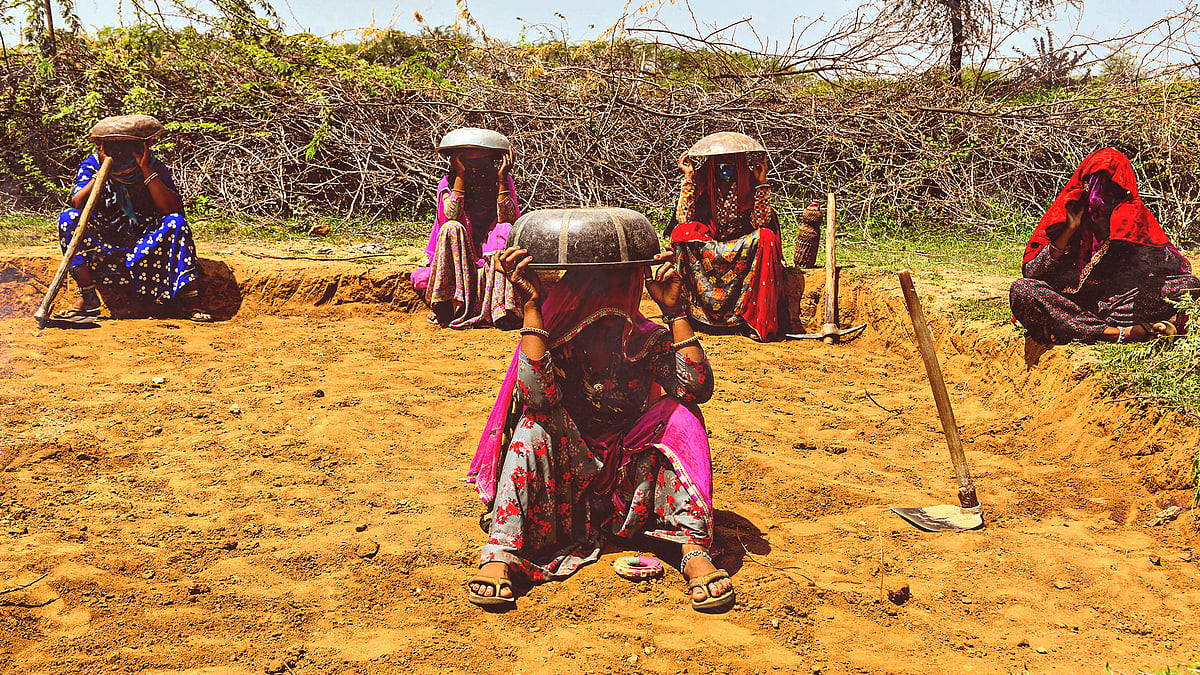 Extreme heat is quietly pushing women out of work
 Press freedom index puts focus on newsrooms telling India’s hardest stories