From 2014 to Kota: Why Rahul Gandhi is wrong about the IAS exam again
Politicians forget that the civil services examination was never designed to absorb; it was designed to select.

The retreating winter morning of February 11, 2014, began unusually in Mukherjee Nagar, one of Delhi’s hubs for civil services aspirants. Some young and some not-so-young candidates boarded buses to 12, Tughlaq Lane. They had come to thank Rahul Gandhi for his intervention in securing two extra attempts at the Civil Services Examination and a relaxation in the upper age limit.
Rahul Gandhi had responded to scattered agitations centred on demands for extra attempts and age relaxation to “adjust” to changes in the examination pattern introduced by the Union Public Service Commission (UPSC), the constitutional body mandated to recruit India’s higher civil servants.
At the time, much of the media framed the development as unambiguously welcome news for a large constituency of aspirants. Far less attention was paid to a more basic question: should recruitment to India’s higher bureaucracy be shaped by reasoned assessments of administrative needs or by the political mobilisation of those seeking entry into it? Can a top-tier recruitment process for the country’s administration be turned into an exercise in populist pandering? The problem lay in the assumption that a professional recruitment process could derive its legitimacy from the scale of aspiration surrounding it.
A little over12 years later, the same misunderstanding resurfaced in a different form. Speaking to students in Kota yesterday, Rahul Gandhi expressed concern about India’s narrow imagination of success and pointed to the long odds of entering the civil services. Only one in 3,000 aspirants, he said, would eventually become an IAS officer. Some statistics suggest that the figure is even lower.
He is stating the obvious when he laments the social consequences of excessive reliance on a handful of elite careers. But the premise underlying the argument remains flawed. In saying that the education system is a rejection system, he is either unaware of, or wilfully ignores, the very purpose of competitive examinations. Secondly, in the context of IAS recruitment, he is conflating the education system with the fiercely contested terrain of elite government hiring.
Just as his intervention in 2014 treated the Civil Services Examination as a mechanism that ought to accommodate the aspirations surrounding it, his remarks in Kota imply that the examination’s cut-throat competition is itself evidence of a problem. That is far from the truth and misreads the very purpose and nature of the civil services examination.
The fact that only a tiny proportion of aspirants eventually enters the civil services is not evidence of institutional failure. It is a consequence of the highly coveted nature of the positions on offer and the institutional requirement of identifying the best candidates to fill a limited number of annual vacancies. By design, it has to be a rejection process. It exists to select a few individuals to administer different spheres of governance.
We need to distinguish between two things here: the site of high aspiration and the temptation to turn that aspiration into a populist constituency.
The civil services examination is, by its very nature, aspirational. Few examinations in the world carry such social prestige and weight. For generations in India, entry into the civil services has represented far more than a job. It has signified instant social mobility, economic security, public prestige and access to influence. As one commentator observed, it is India’s class-changing examination, a rare ladder that allows individuals to make a near-vertical leap across social and economic hierarchies.
At the same time, it cannot be turned into a state instrument for accommodating aspirations. It must reject ruthlessly in order to select exactly the number of candidates required to fill vacancies each year. That is what fuels the intense competition it witnesses annually.
This has also meant that the UPSC and the Department of Personnel and Training (DoPT) must periodically introduce reforms to ensure that the structure of the examination remains aligned with the evolving needs of the administration. This is where the recommendations of expert groups and review committees become useful. Yet the populist instincts of political leaders, and their reluctance to withstand discontent among sections of aspirants, have often stalled such reforms.
In 2014, for instance, Rahul Gandhi’s intervention raised the upper age limit for general-category candidates from 30 to 32 years, where it remains today. This was the opposite of what successive expert bodies examining civil services reform had recommended over the preceding decades. From the Y K Alagh Committee in 2001, which recommended an upper age limit of 26, to the Tenth Report of the Second Administrative Reforms Commission in 2008, experts consistently argued for lowering the age of fresh recruits. In 2011, the Arun Nigavekar Committee echoed a similar view, suggesting that the upper age limit for fresh intake should not exceed 25 years.
That, however, mattered little politically. Rahul Gandhi succumbed to the populist allure of reversing the process. Rather than lowering the age limit, it was increased to 32.
By stalling such reforms and reversing them instead, Rahul Gandhi, like many other politicians, sidestepped public reasoning in favour of cultivating a populist constituency among a section of the electorate.
Rahul Gandhi’s remarks in Kota were not limited to the IAS. He also expressed concern about the intense competition surrounding entry into top-rung educational institutions such as the IITs and medical colleges. But here too, he misreads the purpose of competitive examinations.
India has dramatically expanded access to elite technical and medical education over the past two decades. The number of IITs has increased from six at the turn of the century to 23 campuses. The network of AIIMS institutions has also expanded substantially. Yet competition remains fierce. Admission to IIT Bombay, IIT Delhi and IIT Madras is still more coveted than admission to newer IITs. AIIMS Delhi continues to command a prestige that newer institutions aspire to match. Even when capacity expands, competition does not disappear. It merely shifts to more sought-after institutions, courses and outcomes.
In different ways, this process of rejection as a means of selection can be observed across the world. Admissions to Ivy League institutions in the United States, or to Oxford and Cambridge in the United Kingdom, are highly selective. Rejection is simply the other side of the selection process. Closer home, China’s Gaokao remains among the world’s most competitive entrance examinations. These institutions are not judged by how many applicants they accommodate. They are judged by the fairness, transparency and integrity of their selection processes.
Competition, therefore, is not an accidental feature of the race to enter elite services such as the IAS or institutions such as the IITs. It is an inevitable consequence of selecting a small number of candidates by rejecting the rest. Elimination, differentiation and scarcity are built into the process.
The problem, therefore, is not that only one in 3,000 aspirants, or perhaps even fewer, cracks the civil services examination. The problem is that India has increasingly come to treat a recruitment examination as a referendum on social mobility. That is where politicians forget that the civil services examination was never designed to absorb; it was designed to select.
Its legitimacy rests not on how many people it accommodates, but on whether it selects fairly, transparently and effectively. By that standard, it is entirely justified in rejecting ruthlessly.
Complaining about the media is easy. Why not do something to make it better? Support independent media and subscribe to Newslaundry today.
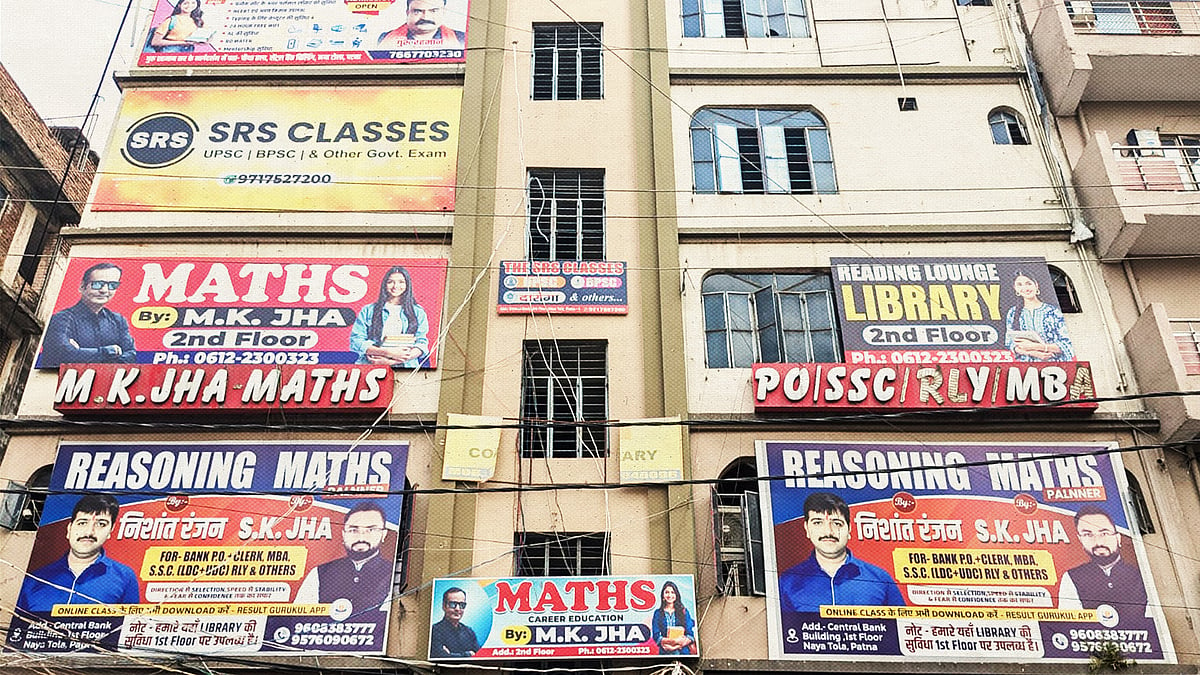 Bullets, Thars and toppers: Inside Bihar’s crazy coaching wars
 ‘Getting panic attacks’: College deadlines loom with students trapped in CBSE chaos