‘One more interview and you’ve recorded the audiobook’
Anand Vardhan on the relentless chatter of the modern book tour, where an author’s public performance increasingly threatens to sideline the actual text.

Buried among hundreds of comments below yet another podcast featuring a recently published author was one line that seemed amusingly true. “One more interview,” someone wrote, “and you’ll have recorded the audiobook.”
Amid many potshots and snarky takes that social media throws up, this one stayed with me. It registered pithily as something that has quietly become normal. Authors today speak so much about their books that the conversation surrounding a book sometimes threatens to sideline the actual text and reading of the book itself. In some ways, the idea of authorship in an age of the attention economy has meant that many authors are seen and heard far more on screens than they are actually read.
The comment came back to me a few weeks later when I watched another author move from one podcast to the next, repeating familiar stories, similar anecdotes, and the same explanations of what had inspired the book. Different interviewer, a different studio setting, but the conversations travelled over remarkably familiar, and much-travelled, ground. It isn’t watching publicity in the conventional sense. Instead, it is like looking at a checklist of literary performance in a loop.
About a decade and a half ago, I wrote an essay about an experience that left me mildly disappointed. Ramachandra Guha’s Makers of Modern India, published in 2010, had just been launched in Delhi. The launch was followed by an introductory lecture and a conversation before an invited audience. Soon afterwards, I attended another event at Delhi University where Guha delivered virtually the same lecture again. I remember sitting there with an odd feeling. It wasn’t that a historian was speaking twice; writers having a public presence do that all the time. The odd part was the almost theatrical reproduction of the same performance because the promotional calendar demanded it. The lecture appeared to have become part of the book’s marketing itinerary.
I did not think much of it afterwards. Looking back now, it feels less like an isolated episode and more like the beginning of something much larger. The book launch has since gone beyond the mere event optics of the auditorium. It has pervaded the digital space, becoming ubiquitous with every other author speaking about his work on every other platform.
The launch travels through YouTube channels, Spotify playlists, literary festivals, Instagram reels, newsletters and podcasts that stretch for two or three hours. The publicity managers of the publication houses ensure that the cycle begins before publication, gathers momentum around the release, and often continues for months afterwards. Gone are the days when books arrived quietly; now they announce their advent with many similar conversations about what they are about.
This may be the new impetus for finding an audience before finding a readership. The demands of which have meant that digital pitching has integrated easily into their marketing strategy. Time isn’t much of a constraint there either. A television discussion on new books, more so if you aren’t a celebrity writer, struggled to survive beyond 20 minutes. In that sense, interviews on digital platforms or podcasts have changed the time frame to fit in. Fiction as well as non-fiction writers – historians, economists, novelists, pop culture and even pop sociology or psychology writers – now dwell on their work at their own pace, sometimes running into hours.
But every medium creates its own habits. Watch any known author during the months following publication. The settings change, but the script gradually settles into a familiar rhythm. Why did you write the book? Which discovery surprised you the most? Which chapter was the hardest to write? What do you want readers to take away? Every interviewer asks the questions a little differently. Every author answers them a little differently. Slowly, almost without noticing it, the writer develops a parallel text. Not another book, but another version of the book told through speech. The joke about the authors releasing audiobooks in such interviews begins to sound less absurd.
Last year, I heard a well-known YouTuber say something that was revealing in its casual confidence. He remarked that he no longer had to pursue authors for interviews. They were perfectly willing to come to his studio. There was no arrogance in the statement. It was presented almost as a matter of fact. Yet it revealed how dramatically the relationship between writers and publicity has changed. The interview itself has become a destination.
There was a time when a publisher’s publicity department arranged a handful of reviews, perhaps a newspaper interview or two, and a book launch. The author returned to the desk and began working on the next manuscript. That rhythm has altered. Visibility has become an essential part of the publishing process. Authors are expected to remain present long after their books reach the shelves.
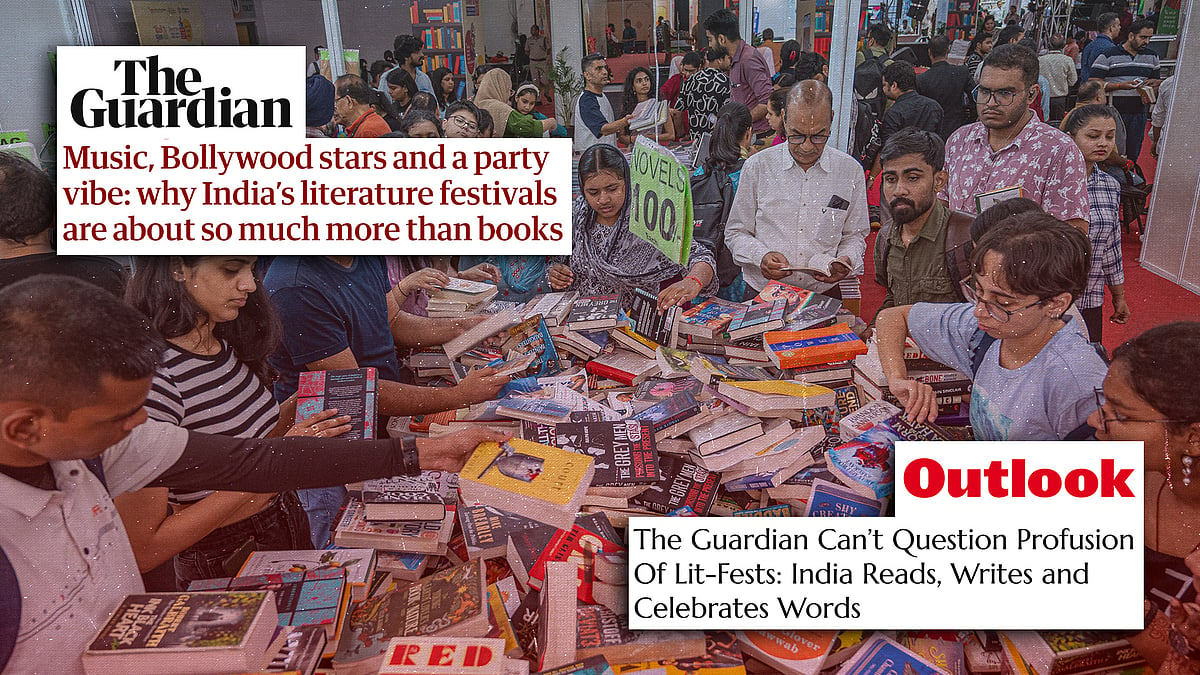
The pressures are hardly confined to India. A 2024 report in The Guardian described how many writers in Britain now find promotion woven into the profession itself. Maintaining newsletters, building an online following, travelling to literary festivals, appearing on podcasts and sustaining a public presence are no longer occasional demands. They have become part of what publishers increasingly expect from authors. Several writers interviewed for the report spoke of spending as much time cultivating visibility as producing prose. One novelist remarked that writing the manuscript once felt like the principal task. Today, it is only the beginning.
That observation deserves attention because it points to something deeper than changes in marketing strategies.
The publishing industry has always needed readers. There is nothing objectionable about trying to reach them. Every generation has found its own methods. Book reviews, radio interviews, literary supplements, television appearances, bookstore readings and festivals have all served that purpose. The difference today lies in scale and continuity. Publicity is no longer an event surrounding the book. It increasingly becomes an extension of authorship itself. That extension has consequences which are only beginning to reveal themselves.
The modern writer is expected not merely to write well but to speak at length, perform comfortably before cameras, sustain conversations for hours, remain active on social media, produce short clips that circulate independently of the interview, travel constantly and participate in promotional campaigns that sometimes continue long after the first print run has disappeared.
None of these activities is illegitimate, even in a literary sense. Yet one cannot entirely dismiss the small unease that accompanied that social media joke.
It raises a question that extends beyond publishing and touches on the very nature of reading, which can sometimes be performative.
Reading has always been an unusual form of communication. A writer spends months, sometimes years, arranging words in solitude. The reader, perhaps years later and thousands of miles away, encounters those words in another solitude. The meeting is intimate precisely because it is unmediated. The author is absent. The page carries the burden of persuasion. In essence, publicity has never threatened that relationship.
It merely announced the arrival of the book. The current moment feels different because an explanation now accompanies the text at every stage. Before opening the first chapter, a reader may already know why the book was written, how the research was conducted, which passages gave the author sleepless nights, what the publisher believes is the central argument, and how half a dozen interviewers have interpreted it. The book arrives wrapped in layers of commentary.
Some readers welcome that familiarity. Others may feel it narrows the freedom that literature has traditionally offered. One of the pleasures of reading lies in discovering meanings that even the author may not have consciously intended. Endless explanation does not destroy that possibility, but it inevitably changes the atmosphere in which reading takes place. The change becomes even more interesting when one looks at the economics behind it.
Publishing has entered an unforgiving attention market. Thousands of books appear every year. Book pages in newspapers have shrunk. Television rarely discusses books unless they already possess a news peg. Algorithms decide what surfaces before readers. Every hour competes with streaming platforms, social media and short-form video. In such a crowded landscape, publishers naturally look for ways of keeping a book alive after publication. Marketing departments are expected to justify increasingly tight budgets. Authors become partners in that effort. Promotional schedules are discussed almost as carefully as editorial schedules. In many publishing contracts today, participation in publicity is no longer an informal expectation. It is built into the relationship between publisher and author.
None of this should surprise us. Publishing is a business as well as a cultural enterprise. Books have always needed readers, and readers have always needed to hear about books.
But, there is another side to the story. When publicity becomes continuous, the public personality of the author begins to acquire a momentum of its own. Readers start recognising the voice before they encounter the prose. A memorable podcast clip circulates independently of the chapter from which the idea originated. A sharp exchange on YouTube receives more views than the book sells in its first week. The promotional performance develops an audience of its own.
Sometimes the repetition produces curious effects. Authors who appear on 20 or 30 podcasts over a few months occasionally contradict themselves, forget what they had said in an earlier conversation or begin polishing anecdotes that grow smoother with every retelling. That is hardly surprising. Repetition alters every performance. It also reveals that the promotional circuit has become a parallel form of labour, demanding its own stamina, memory and discipline.
The pressures are visible even beyond publishing campaigns. Earlier this year, the novelist Helen DeWitt attracted attention after declining a prestigious literary prize, partly because of the extensive programme of interviews, filming and public appearances that accompanied it. The discussion that followed was not really about one writer’s decision. It was about a profession that increasingly expects writers to remain permanently visible. The episode suggested that the public performance attached to literature is no longer incidental. It has become part of the institution itself.
I often wonder whether the solitary author was ever as solitary as we imagine. Charles Dickens filled lecture halls. Mark Twain toured tirelessly. Ernest Hemingway carefully cultivated a public image. Literary celebrity did not arrive with podcasts.
The difference, perhaps, lies elsewhere.
Those writers moved between periods of visibility and periods of withdrawal. The book eventually reclaimed the centre of attention. Today’s media environment rewards uninterrupted presence. The interview leads to another interview. One podcast generates invitations to three more. A short clip travels across platforms and acquires a life independent of the conversation from which it was extracted. Visibility has become cumulative. It feeds upon itself.
That may simply be the new bargain between literature and the attention economy.
There is no virtue in romanticising silence, just as there is little wisdom in dismissing every form of publicity as vulgar commerce. Many thoughtful conversations have introduced readers to books they might otherwise never have discovered. Podcasts have revived long-form discussion at a time when much public discourse has become hurried and fragmentary. Authors have every reason to welcome serious interviewers who have actually read the book.
But every gain carries its own question. When does the conversation around a book begin to rival the experience of reading the book itself?
The answer will differ from one reader to another. Some will happily consume both. Others may prefer to approach the text untouched by explanation. Neither choice is inherently superior. The point is not to prescribe a correct way of reading. It is worth noting that the ecology of reading has changed.
The joke about the audiobook returns one last time.
It works because it exaggerates a reality that many readers instinctively recognise. We have entered a literary culture in which authors are increasingly expected to keep speaking long after they have finished writing. Their words circulate through studios, festivals, newsletters, social media feeds and podcast microphones before, during and after the book's journey into the world.
Perhaps this is the inevitable price of being read in an age when attention is the scarcest commodity. Perhaps every generation discovers its own way of introducing books to readers.
A book has often invited us into a private conversation between the page and the imagination. If authors are now expected to accompany us throughout that journey, speaking at every stage, explaining, interpreting and revisiting the work, does the written word lose a measure of its old solitude? Or does it simply acquire another voice, one more suited to an age that finds silence increasingly difficult to sustain? These have no easy answers, and far less do they say about what it means to be an author in an age of constant chatter under a camera, hoping studios will talk one more time.
Small teams can do great things. All it takes is a subscription. Subscribe now and power Newslaundry’s work.
 The Guardian, Outlook, and the elite delusion of ‘reading for pleasure’