Dear Cockroaches, please make Sonam Wangchuk’s sacrifice count
Performing the aesthetics of a protest without any of its substance is unlikely to compel the Modi government to act.

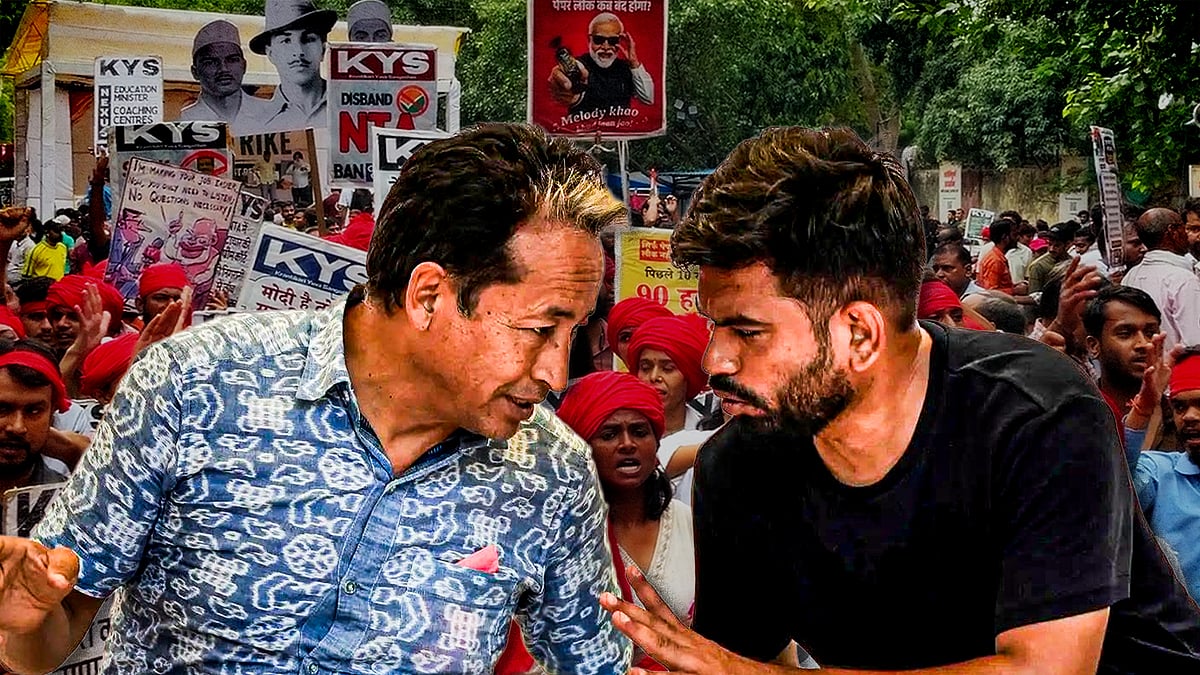
Sonam Wangchuk has now lost 8.2 kilograms. His blood glucose has dropped to 67 mg/dL. He has been on a hunger strike at Jantar Mantar since June 28, and the protest around him is in its fourth week. When people begged him to stop, he had a one-line answer: “Don't ask me to end my fast. Ask the government why they won’t even have a dialogue.”
That is a fair question to put to the government. But it is worth putting an equally uncomfortable one to the Cockroach Janta Party (CJP), the movement Wangchuk has lent his fast to: what, exactly, have you done to make his suffering count?
My concern here is not with the legitimacy of the anger.
The NEET paper leak was a real scandal, parents lost their children to despair and suicide, and the National Testing Agency’s failures have been well documented. And the Modi government has shown no empathy for the millions of students it has failed. My concern is tactical. CJP has spent more than three weeks performing the aesthetics of a Gandhian protest without any of its substance, and Wangchuk’s body is paying the price for that gap.
Consider what CJP has actually asked for, in public, at volume. Founder Abhijeet Dipke’s own framing to various media outlets keeps returning to one line: we are here until Dharmendra Pradhan resigns. The party’s spokesperson Saurav Das said much the same in a recent interview, boiling the entire protest down to two things – the education minister’s resignation, and Rs 1 crore in compensation for the families of students who died by suicide. Those are the two demands that get repeated at rallies, on Instagram, and in every interview. They are also, notably, demands that ask nothing substantial of the system itself.
This is where CJP breaks from every serious protest movement in recent Indian history. The Jan Lokpal agitation demanded a specific anti-corruption law. Shaheen Bagh and the anti-CAA-NRC protests demanded the repeal of the Citizenship Amendment Act (CAA). The farmers’ protest demanded the repeal of three farm laws and got it. The political movement in Ladakh, which Wangchuk himself has previously fasted for, has centred on Sixth Schedule protections and statehood. These are structural demands that survive any single minister’s reshuffle.
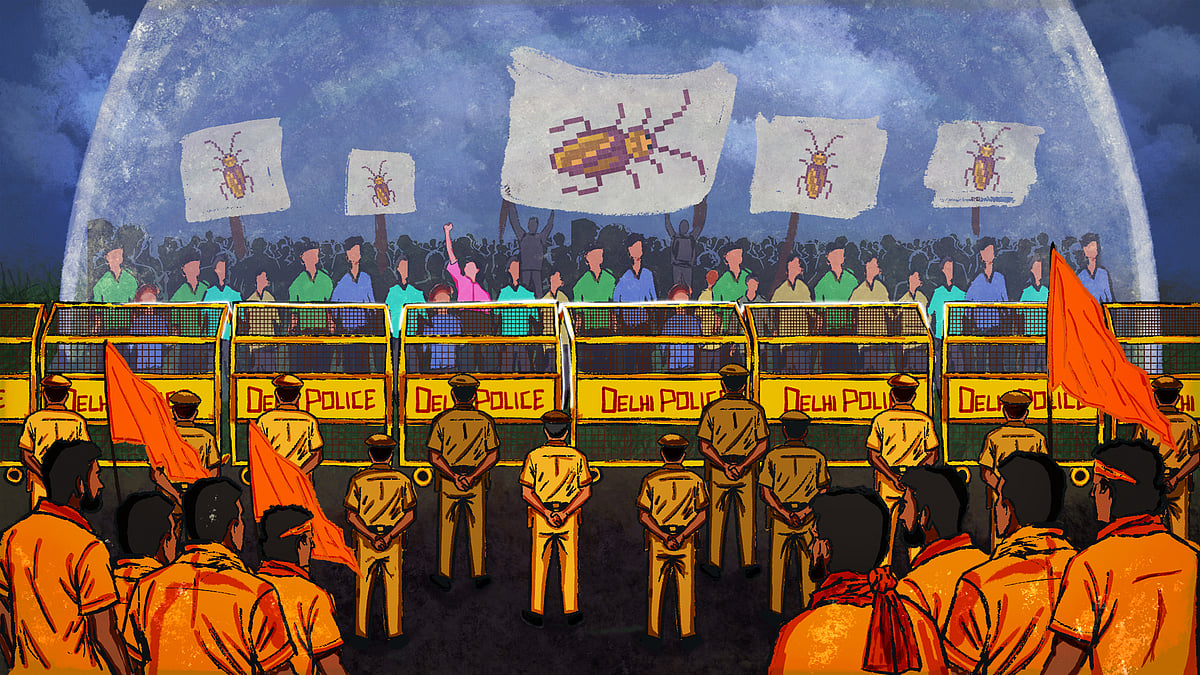
Moreover, each of these movements did something CJP has pointedly avoided: it inconvenienced the government. The major protest movements cited above blocked highways, shut down cities, inconvenienced the public and directly confronted the state. CJP has caused no comparable disruption. They have played well within the rules set by the governing dispensation, sitting within the confines of a ‘designated’ protest site.
More critically, it has organised no comparable base beyond the online sphere, except a few left-affiliated student organisations, some of whose members are also on a hunger strike, and brief dalliances with farmers and labour organisations. It has, until very recently, not even seriously reached out to opposition parties for support, strictly adhering to Dipke’s own logic: “hume iss platform ko political platform nahi bana sakte hai” (we can’t make this platform political). What does this even mean? I fail to understand. That outreach only began in the last stretch, long after Wangchuk’s fast had already become the story. In other words, they have created no visible leverage that will compel the government to talk to them.
If the Modi government shifts Pradhan to another ministry tomorrow, ask yourself what changes? The NTA remains an unaccountable registered society rather than a statutory body. The exam system that produced this crisis is still standing, but the irony is that this government is not shy about dismantling institutions wholesale. For example, witness the VBSA Bill scrapping the UGC, AICTE, and NCTE overnight. The government just refuses to do so for the one institution, the NTA, that students are actually dying over.
That is precisely the problem of personalising a demand around one man’s resignation. It lets the government solve the “problem” with a reshuffle while the underlying rot survives. And without clearly setting the terms of the discussion that the CJP people want to have with the government, what are they actually hoping to achieve even after, by some miracle, Pradhan actually decides to resign?
The frustrating part is that CJP does have access to a structural programme. It simply hasn’t put its full weight behind it. Its “exam manifesto”, unveiled at the Pune rally, asked for compensation, physical evaluation of answer sheets, transparent testing, and an audit of government contracts with private exam vendors. And the 40-point “Jantar Mantar Declaration”, though released by the Krantikari Yuva Sangathan rather than CJP itself, goes furthest of all: disband the NTA outright, order a Supreme Court-monitored probe into its mismanagement, and rebuild it as a body with representation from state education boards.
You may disagree with these demands, but ultimately they’re pushing for change that is structural and systemic in nature. That declaration is the only demand in this entire protest cycle with real teeth, and it is not even CJP’s own document. Two doctors’ bodies, FAIMA and the United Doctors Front, are separately litigating similar demands in the Supreme Court. That is where the real fight over India’s exam system is happening, not in the daily press-the-flesh demand for one man’s job.
None of this is to say CJP hasn’t achieved anything. It forced a paper leak that most of the country had already moved on from back into the headlines. It got Wangchuk, one of India’s most credible public figures, to stake his health on the cause. But credibility and a media cycle do not generate leverage, and Wangchuk’s fast is not a renewable resource.
Celebrities and opposition MPs who have only just come to express solidarity are doing nothing but giving oxygen to a movement that is frankly not meeting any of its objectives. This stream of celebrities and MPs who have come to show their support is asking the government to not let Wangchuk die. It’s a genuine ask, although I’m not sure this government can be shamed into responding. But what almost no one in that chorus is raising is what the CJP is doing to alter the status quo.
If CJP wants that sacrifice to mean something beyond a viral moment, it could do three things it has resisted so far. One, stop letting the demand shrink to the fate of one minister. Two, ask for structural reform of NTA (at the very least) and push for the demands that other organisations are already fighting for. Make the fight big enough that no reshuffle can end it. And three, build genuine alliances across the political spectrum. If you can’t develop a cadre in this short period of time, lean on organisations that do and consistently engage with them.
On July 20, the CJP is planning to organise a peaceful march to Parliament on the first day of the Monsoon Session of Parliament to “appeal to our honourable MPs to take the issue up and find a lasting solution,” according to a post by Wangchuk. Whether this march will go beyond the aesthetics of the protest at Jantar Mantar remains to be seen.
Until then, the anger on display at Jantar Mantar is real, and so is Wangchuk’s declining health. What’s missing is a movement willing to match either with something the government actually has to answer. As for Wangchuk, he has already made his intentions clear. I wish he would call off his fast, but going by his own words and actions, it looks like he’s not going to back down. So dear cockroaches, make his sacrifice count.
Small teams can do great things. All it takes is a subscription. Subscribe now and power Newslaundry’s work.
 Cockroach Janta Party: 15 days later, bigger protest or bigger hype?
 Is the Cockroach Janata Party threatening the system, or just letting off steam?