The enigma of BlueKraft: The narrative factory behind Brand Modi
The final part of a Newslaundry investigation into Bollywood, power and the engineering of public opinion.

Read the previous instalments of this series here and here.
On September 24, 2025, thousands of people were on the streets of Leh demanding statehood for Ladakh, jobs and constitutional protection for a fragile high-altitude ecology. Within 72 hours, that was no longer the conversation.
A commentator named Richa Dwivedi had appeared on a platform called New India Junction to argue that the activist Sonam Wangchuk had inflamed the crowd by invoking the Arab Spring and Nepal’s Gen Z protests, after which the mob turned violent – and that Congress councillors had been “caught on camera” egging protesters toward stone-pelting and bandh calls. Around the same time another commentator, Ojas Bhandari, was posting videos calling Wangchuk “anti-national” and noting that he had reportedly been in Islamabad shortly before the Pahalgam attack. The trending question soon was whether Sonam Wangchuk was a foreign asset.
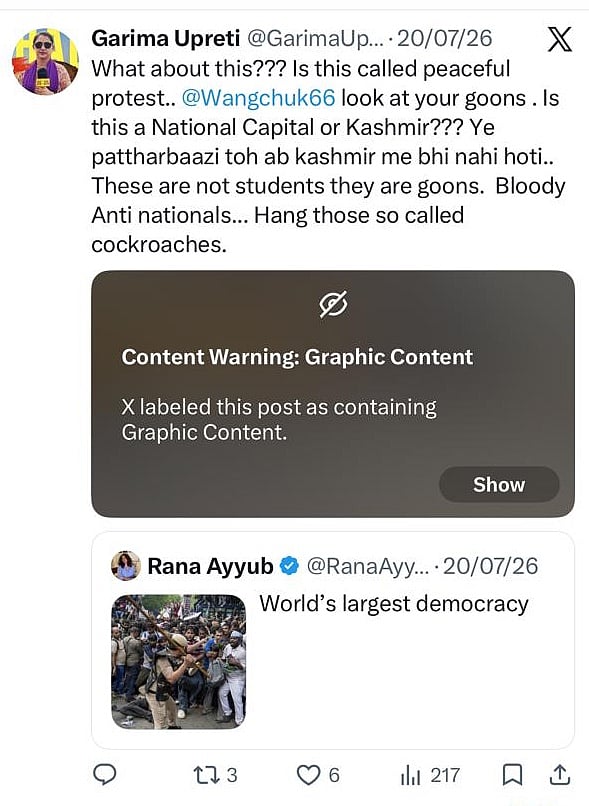
Then on July 20 this year, on the day of the ‘Chalo Sansad’ march, another content creator Garima Upreti questioned the violence at the Cockroach Janta Party protest and tagged Wangchuk to say “Look at your goons. Is this a national capital or Kashmir?”
Trace the accounts that drove the pivot, and the trail runs, again and again, to a single organisation – one registered, improbably, under “human health and social care services,” half-owned by a tech millionaire who says he wants nothing more to do with it, and followed, personally, on X, by the Prime Minister of India.
Its name is BlueKraft. And the question it has never answered is the simplest one of all: who pays for it all?
One address, many masks
BlueKraft does not look like much from the outside, which is the point. Its work surfaces under names that suggest grassroots energy or neutral journalism – New India Junction, The True Picture, Know The Nation, Modi Story – and almost never under its own. Newslaundry’s review of corporate filings, platform records and public profiles indicates that these platforms share staff, addresses and ownership with BlueKraft, and that the commentators who front them – Dwivedi, Bhandari, and others such as Garima Upreti – have each been associated with the organisation.
The fingerprints recur across episodes that look unrelated. Until you line them up.
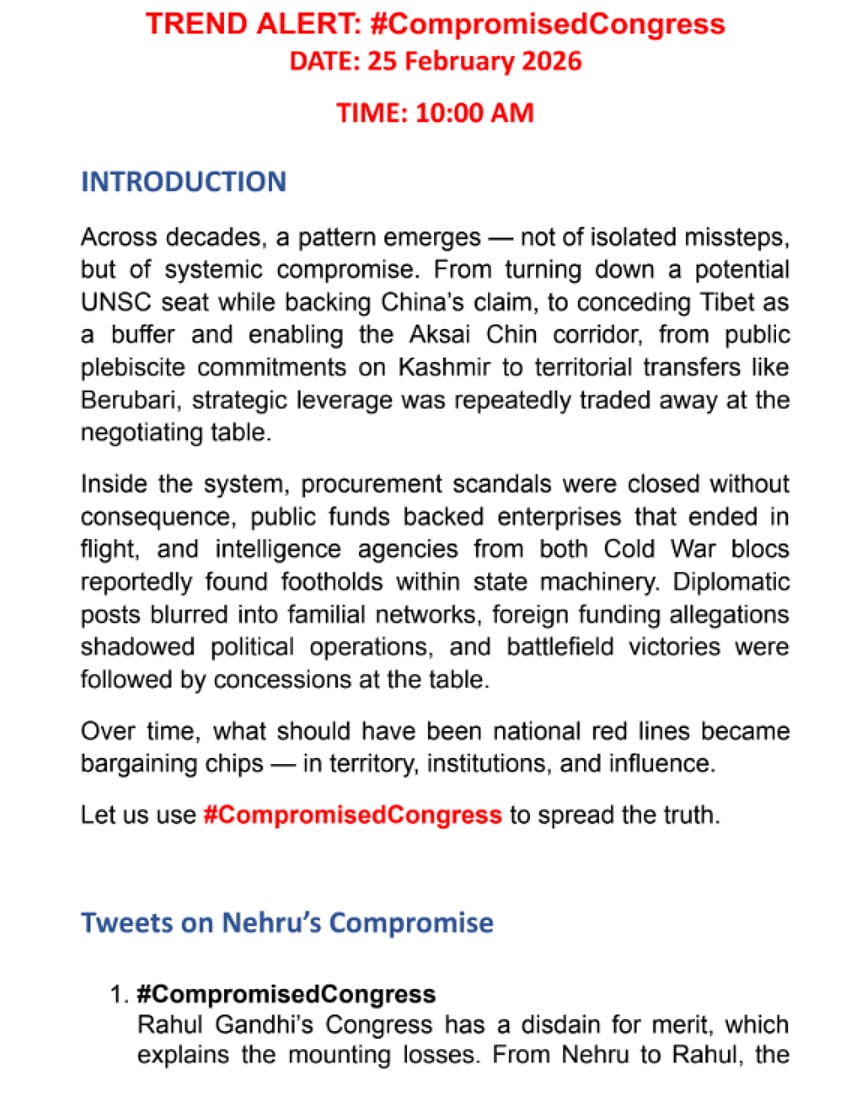
In February 2026, a tightly coordinated campaign under the hashtag #CompromisedCongress flooded social media with AI-generated visuals lampooning four generations of the Nehru-Gandhi family; BJP leaders and state units amplified it, and Dwivedi and Upreti released videos branding Nehru “compromised”. The entire campaign was made by BlueKraft. Years earlier, in April 2018, at least 13 BJP Union ministers – Piyush Goyal, Kiren Rijiju, Smriti Irani and Thaawar Chand Gehlot among them – spent two days promoting The True Picture as a fact-checking site, even as the site was dismissing as “fake news” two Indian Express reports the paper stood by: one on the caste-based murder of a Dalit youth in Gujarat, the other on a directive discouraging officials from attending a Dalai Lama event. The True Picture doesn’t seem to be active anymore though, with its last post on X in April 2022.
These seemed to be different masks with one face: a protest reframed, an opposition family mocked, and a fact-checker that checked in only one direction. Three of the people we found linked to the operation – Richa Dwivedi, Vasudha Madhogaria and Shiva Mudgil – are among the small number of accounts followed on X by Narendra Modi himself.
What BlueKraft sells, in Newslaundry’s assessment of the body of work reviewed, is not praise for the Prime Minister. Praise is cheap and obvious. What it sells is harder to see and far more valuable: the appearance that the praise is spontaneous – that it bubbles up from volunteers, from journalists, from filmmakers and athletes and ordinary citizens who simply, organically, arrived at the same conclusion about one man. Almost everything that follows is a variation on that single technique.
The man who built the machine and left it
To understand the factory, start with the engineer who designed it and then walked out.
Rajesh Jain belongs to the founding generation of India’s internet. An IIT Bombay graduate with a master’s from Columbia, he built IndiaWorld, one of the country’s first web portals, and sold it to Satyam Infoway in 1999 for around USD 115 million. His marketing firm, Netcore, brought him into contact with the BJP around 2008, when Piyush Goyal hired him for the party’s SMS outreach. Jain wanted to do more than vend software. In January 2009, with Goyal’s backing, he launched “Friends of BJP” – a network of professionals and volunteers to mobilise the middle class for that year’s election.
It is a small detail, but a telling one: the people who passed through that early experiment would go on to build the BJP’s entire digital apparatus. Hitesh Jain, his future BlueKraft co-founder, was there. So was Amit Malviya, who would come to run the BJP IT Cell.
Jain’s obsession was American campaign science – the data-and-targeting machine behind Barack Obama’s 2008 win. In November 2009 he hosted Pete Dagher, a Chief of Campaign hand from the Obama operation, for a closed-door session in Delhi; he devoured the literature, including the data-driven playbook later popularised in The Victory Lab. After meeting Modi in early 2010 – and accompanying him on a visit to China the following year – he decided he had found the leader worth building it all for. He told Modi he wanted to make him Prime Minister and would do it with his own money, not the party’s.
By 2014 he had built it. Under an umbrella called NITI – Network of Ideas for Transforming India – Jain stood up a suite of platforms: NITI Central, a pro-BJP website to counter what he saw as hostile mainstream coverage; IndiaVotes, which turned Election Commission data into a searchable, booth-level database his teams mined to find the BJP’s most winnable seats; and India272.com – named for the seats needed for a majority – which let supporters work for Modi without ever joining his party. Piyush Goyal, who chaired the BJP’s Information and Communication Campaign Committee, unveiled it publicly as “Mission 272+” at a July 2013 press conference in Delhi. Modi’s digital aide and officer on special duty Hiren Joshi apparently coordinated strategy from the Gujarat CMO. The tools, data and messaging systems were, by multiple accounts, shared informally with BJP workers and RSS-linked volunteers in the run-up to the vote. It was, at the time, the most sophisticated political machine India had built.
Then the architect lost faith. By his own account, Jain grew disillusioned within months of the 2014 victory, convinced the government had squandered its best window for reform, that its first budget merely recycled its predecessor’s, that nothing was being done for ordinary Indians’ livelihoods. His breaking point, he has said, was demonetisation. In 2017 he quit the public posts the victory had won him – a board seat at NTPC, a membership at UIDAI, the body that runs Aadhaar. In 2018 he stepped down as a director of BlueKraft, the foundation he had incorporated with Hitesh Jain in July 2016.
But he never let go of the asset. MCA records reviewed by Newslaundry show Rajesh Jain still holds 50 percent of the organisation he says he abandoned.
Rajesh Jain was asked about his account of breaking with the BJP, his continuing 50 percent shareholding in BlueKraft, and his knowledge of its current work. His response will be added here if received.
The man who stayed
Where one founder walked away, the other walked toward the centre, and brought an operator with him.
Hitesh Jain, a lawyer, emerged as the figure running BlueKraft, alongside its CEO, Akhilesh Mishra. Mishra’s résumé followed an unusual trajectory: party war room, to government platform, to a private foundation that promotes the government.
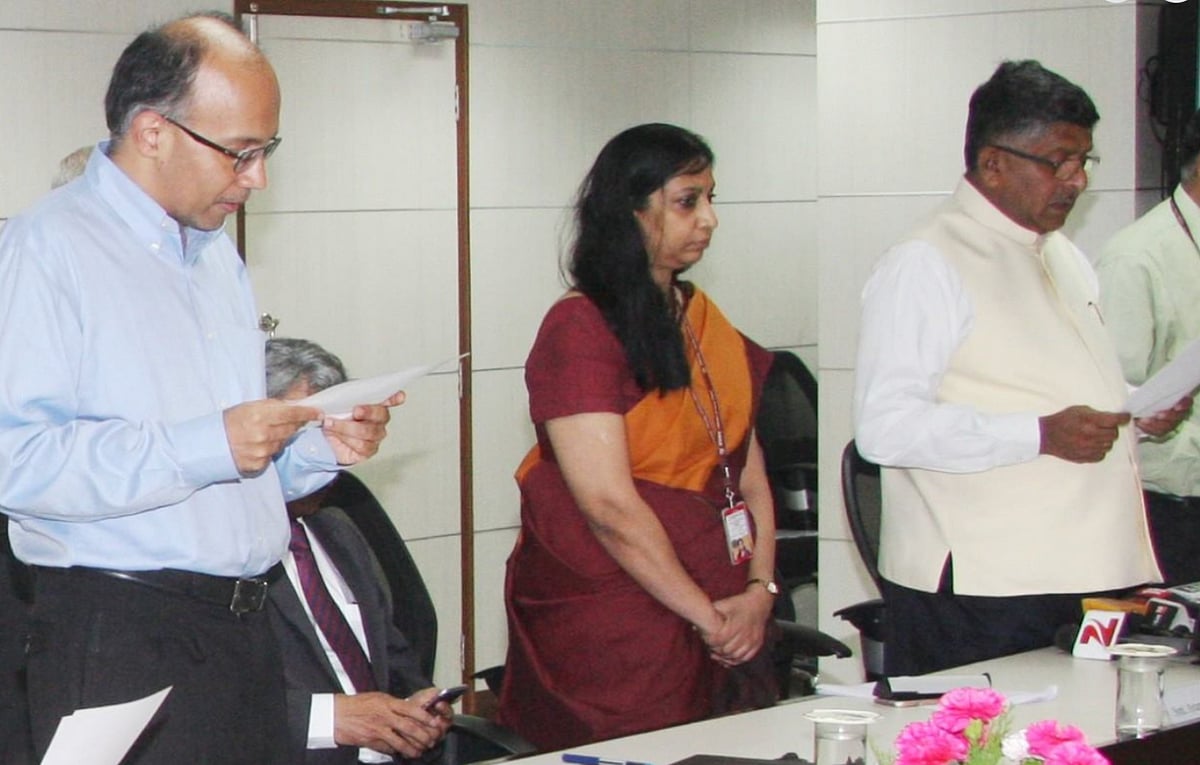
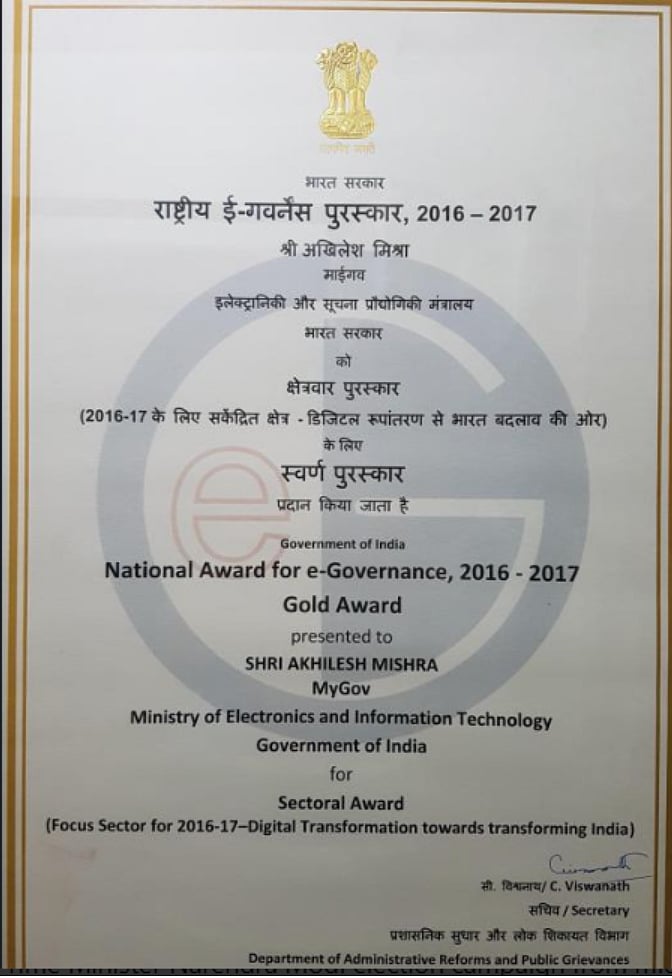
An IIT-Dhanbad engineer who began in corporate sales – Atlas Copco, Castrol, Tata Hitachi, Valvoline – Mishra left in 2012 to volunteer for Modi, then ran the content division at the BJP’s National Digital Operations Centre, the party’s central digital war room built to deliver the very “Mission 272+” target Rajesh Jain had first conceived. NDOC, which ran from roughly 2012 to 2015, monitored coverage in real time, crunched voter data and coordinated messaging. From there Mishra moved to MyGov, the government’s own citizen-engagement platform, where he spent about 22 months as content director before joining BlueKraft as CEO in November 2016 – a post he still holds, and for which he has since collected a digital-transformation award from the Ministry of Electronics and Information Technology.
The war room he came from has a contested reputation. NDOC has been the subject of allegations Newslaundry could not independently verify: that it ran or amplified campaigns against critics of Modi and the BJP, and targeted film actors including Aamir Khan and Shah Rukh Khan. The episode most often cited is the 2015 “intolerance” row, when Aamir Khan said his then wife had wondered whether the family should leave India, and a campaign followed pressing Snapdeal to drop him as an ambassador – which it did. That the pressure traced back to NDOC remains an allegation. But it sets the template the later operation would refine: less of a war room that attacks from the shadows, more a foundation that praises in the open, under a dozen friendly names.
Today Mishra and Hitesh Jain are the two faces most often on BlueKraft’s stages: at book launches, at youth rallies, at musicals about the Prime Minister. Mishra also writes newspaper columns defending government policy.
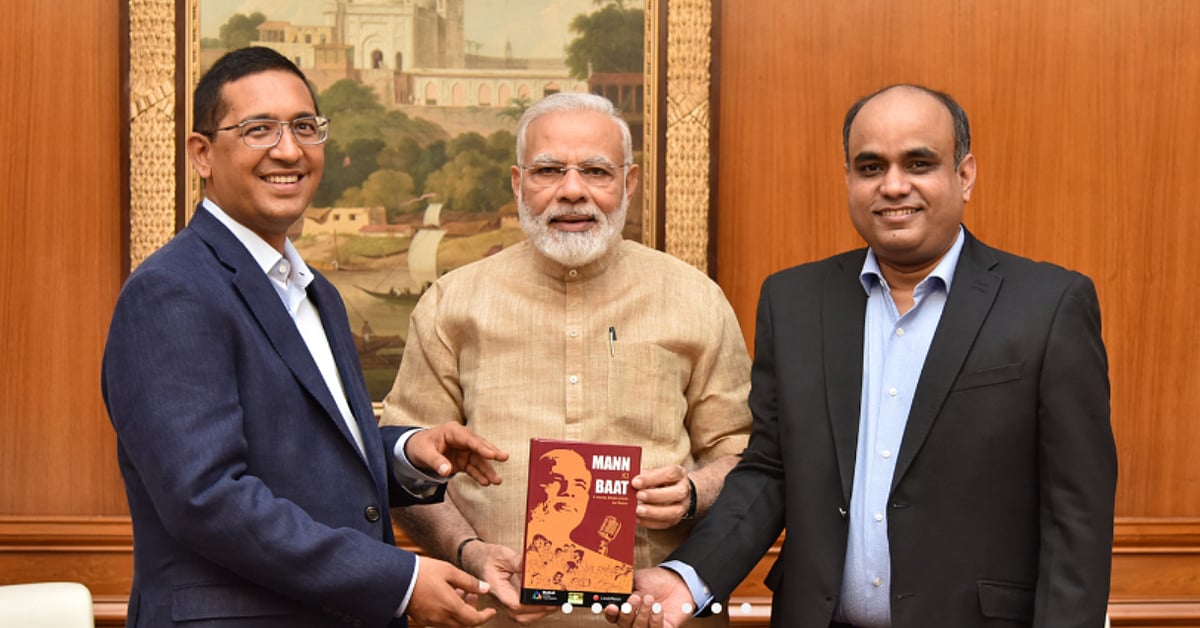
Hitesh Jain and Akhilesh Mishra were sent a detailed questionnaire on BlueKraft’s ownership and control, its revenue sources, its relationship (if any) with the BJP and the government, and the operation of New India Junction, Know The Nation, Modi Story and The True Picture. Their responses will be added here if received.
A ‘human health, social services’ foundation for one man
On paper, BlueKraft Foundation – earlier called BlueKraft Digital Foundation – exists to promote civic participation, research and digital literacy, and is filed, oddly, under “human health and social care services” in MCA records. In practice, Newslaundry’s review of its output found a body organised almost entirely around a single human being.
The same surnames, the same small circle, keep closing back on each other.
Of three lakh shares, the two founders held 1.5 lakh each. After Rajesh Jain’s 2018 exit, the directorship passed first to Yakshya Chheda – a lawyer who had worked with Hitesh Jain at ALMT Legal – and then, in 2021, to Pankaj Jain, described in filings as Hitesh Jain’s cousin.
The foundation first registered at Rajesh Jain’s office in Peninsula Towers, Lower Parel. In 2018 it moved a short distance to Lodha Supremus, an address that, per documents reviewed by Newslaundry, is owned through the firm Netsurf Communications by Hitesh Jain’s brother, Sujit Jain – who is also the second-largest shareholder, after Mahaveer Jain himself, in Mahaveer Jain Films. Most of its staff, meanwhile, work out of a second office at 9, Hanuman Road, Connaught Place, in Delhi.
And the money keeps climbing. MCA filings reviewed by Newslaundry show revenue of roughly Rs 11.5 crore in 2017-18, Rs 8.33 crore in 2018-19, Rs 2.84 crore in 2019-20, Rs 7 crore in 2020-21, Rs 10.95 crore in 2021-22, Rs 10 crore in 2022-23, Rs 17.5 crore in 2023-24 and Rs 22.03 crore in 2024-25 – with separate donations of Rs 5.75 crore in 2018-19 and Rs 2.5 crore the next year.
The curve climbs sharply in exactly the years the image-making intensified. What the filings do not show is where most of the money comes from. That is the hole at the centre of BlueKraft: how a foundation that churned out dozens of books praising Modi and a stream of Brand Modi content financed its operations. In December 2025 it quietly renamed itself BlueKraft Foundation, both Jains still on the share register.
So: what does the money buy?
Manufacturing the volunteer
It buys, first, the illusion of grassroots devotion.
Modi Story presents itself as a volunteer-driven effort to collect testimonials about the Prime Minister from people who have crossed his path. “The making of New India is the story of common Indians coming together,” its site declares. “If one Modi can give the country new momentum, imagine a nation with thousands of such inspired individuals.” But Newslaundry found Modi Story is no spontaneous citizen project: it operates from BlueKraft’s Delhi office, shares its staff, runs under an entity called Integrate M Power, and is linked in BlueKraft’s own MCA records to a transaction with BJP leader Anoop Anthony Joseph. The “volunteers” are an operation.
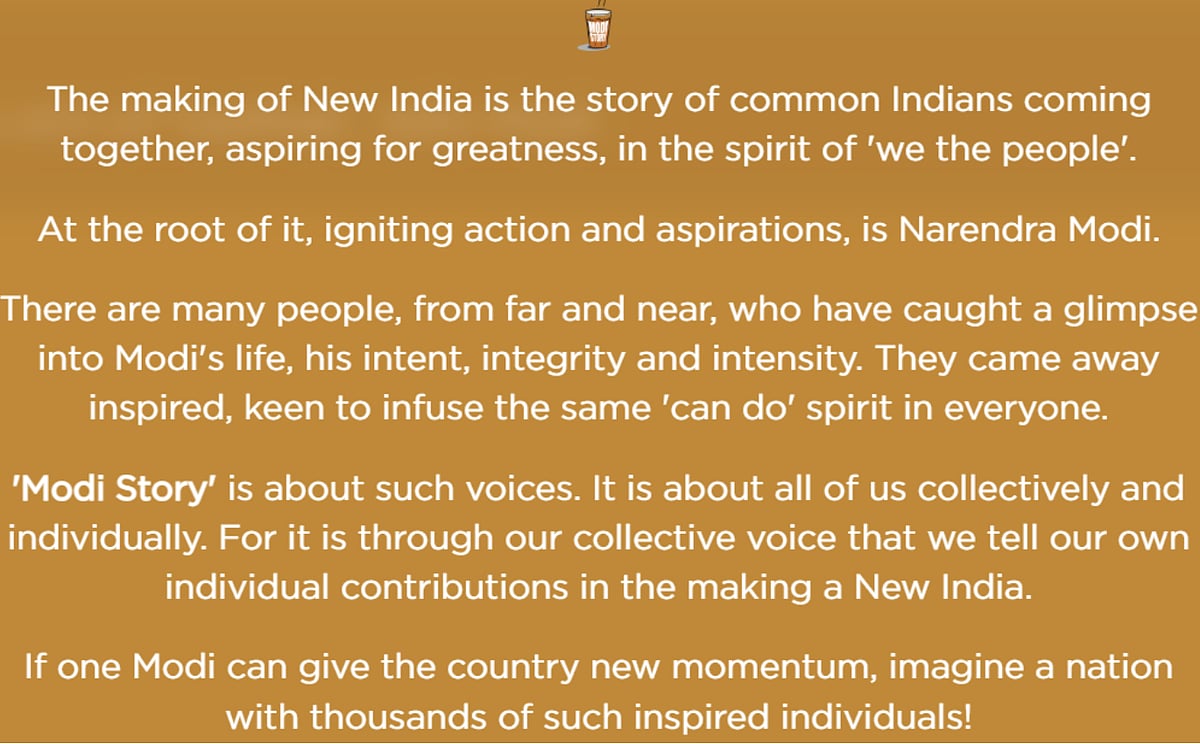
Their product is a stream of short, glowing testimonials, each praising Modi in seemingly personal terms. The narratives are calibrated to feel intimate and incidental – that ‘Pariksha Pe Charcha’ eased students’ exam stress, that a single Modi suggestion lifted tourism in Assam, that Ujjwala Yojana empowered millions of women, that he is a leader who connects “at a personal level”. The speakers span the spectrum of Indian celebrity: Olympians and athletes Neeraj Chopra, Abhinav Bindra, P V Sindhu, Manu Bhaker, Mithali Raj and Ravindra Jadeja; industrialists like Baba Kalyani and Apollo Tyres’ Onkar Kanwar; and film figures including Jackie Shroff, R Madhavan, Nagarjuna, Boney Kapoor, Madhur Bhandarkar, singer Kailash Kher and music director Anu Malik. Each clip is then amplified by the BJP’s official handles and by the speakers themselves.
It is, in effect, a coordinated content pipeline that arrives looking like a thousand unconnected people independently moved to speak. (A sister platform, Modi Archive, performs the same service for the past, curating photographs, audio and video from across Modi’s political life.)
The BJP leader linked to the operation, Anoop Anthony Joseph, is himself a useful node. In 2024, he organised a Christmas event in Delhi at which Modi met Christian religious leaders from Kerala – outreach and image-making braided into one.
Modi Story, Integrate M Power and Anoop Anthony Joseph were asked about the platform’s relationship with BlueKraft, its description of itself as volunteer-led, and the recorded transaction. Responses will be added here if received.
Manufacturing the ceremony
It nearly buys the appearance of state occasion.
BlueKraft has become a major publisher of pro-Modi books – Modi@20: Dreams Meet Delivery, The Emergency Diaries, Exam Warriors (written by Modi himself), Mann Ki Baat@100, 370: Undoing the Unjust, Ambedkar and Modi, among others – but the books matter less than their launches, which are staged to look like affairs of state.
Modi@20, co-published by BlueKraft and published by Rupa Publications, was released at Vigyan Bhavan by the Vice-President, with Amit Shah, S Jaishankar and Anurag Thakur present, Karan Johar and Sidharth Malhotra in the audience, P V Sindhu and Mary Kom on hand, and the whole thing carried on Sansad TV. Its 22 essayists were chosen for reach – Amit Shah and Ajit Doval beside Sudha Murty, Sadhguru, Uday Kotak, Nandan Nilekani and Devi Shetty. Mann Ki Baat@100 was presented to President Droupadi Murmu by Hitesh Jain and Mishra; copies of Modi@20 and Mann Ki Baat@100 were handed to Pope Francis. A foundation’s product, dressed in the full regalia of the republic and the diplomatic corps.
BlueKraft co-published Doubling Dreams: Transforming Agriculture in Modi’s New India, co-edited by an associate editor of the RSS mouthpiece Organiser, which advances the claim that farmers’ incomes have doubled under Modi – an assertion several reports have found is not borne out by the data. Ambedkar and Modi, meanwhile, drew a political backlash after composer Ilaiyaraaja, who wrote its foreword, asserted similarities between B R Ambedkar and the Prime Minister.
The seams occasionally show. In 2018, a PIB release credited Rajesh Jain as author of Mann Ki Baat: A Social Revolution on Radio – until former BJP leader Arun Shourie said Jain had privately told him he hadn’t written it but had merely read out a prepared speech at the launch, a version Jain then publicly confirmed.
BlueKraft titles have since travelled into the libraries of IIM Ahmedabad, IIT Gandhinagar, Jamia Millia Islamia and ILS Law College, and into NITI Aayog and the Institute for Defence Studies and Analyses – and even into competitive-exam preparation, where one Intelligence Bureau mock test asked candidates to name the publisher of Ambedkar and Modi (answer: BlueKraft).
Manufacturing the youth, the celebrity, the documentary
It buys the look of a generation choosing, of stars endorsing, of journalism investigating – when each seems to be organised from the same desk.
During the 2024 Lok Sabha elections, BlueKraft ran around 10 Viksit Bharat Ambassador events; in the single month before polling, it held close to 20, across Mumbai, Delhi, Varanasi, Bengaluru, Coimbatore and Kolkata. Pitched as non-partisan youth festivals about a “developed India by 2047,” several ended – amid a national election – with film stars urging thousands of first-time voters to the booths.
At the Yuva Samvad at Banaras Hindu University on May 3, Vikrant Massey and Sri Sri Ravi Shankar addressed a reported 4,000 first-timers; Hitesh Jain and Mahaveer Jain’s wife, Neetu Jain, were seen performing the Ganga aarti alongside them. Five days later, at a “Run for Viksit Bharat” at Delhi University, actor Rajkummar Rao and badminton star Saina Nehwal addressed 8,000 students from 80-odd colleges. “We will do whatever is possible to take our country forward,” Rao told them, “so I personally urge each one of you to go and cast your vote.” The Mumbai event was chaired by Union minister Ashwini Vaishnaw and drew Ekta Kapoor, Subhash Ghai and Shekhar Suman.
Ravi Shankar, chief guest at eight events, said in Varanasi: “Not a single politician in any country has worked so much. In just 10 years, the progress India has achieved is beyond imagination.” In Bengaluru, on the temple at the heart of the BJP’s politics: “For many years, the Ram Mandir issue was used mainly for political purposes. Our Prime Minister took a firm decision and made such a beautiful temple in such a short time.” Hitesh Jain and Mahaveer Jain recurred across the stages; at Bengaluru, Hitesh Jain told the crowd that under Modi “we have become dynamic instead of dormant... one of the world’s top five economies.”
Consider the endorsement appearing as celebrity enthusiasm. Through Know The Nation – a YouTube channel Newslaundry found is run by BlueKraft though it never says so – and around the 100th episode of Mann Ki Baat, the foundation gathered film figures to praise the Prime Minister on camera.
Aamir Khan: “The Prime Minister has done a historic thing by starting the Mann Ki Baat programme.” Producer Dinesh Vijan: “We have such a great Prime Minister who is connecting with India.” Then Viacom18 chief Jyoti Deshpande, now a senior Reliance executive: “One is to have thought leadership like our Prime Minister has, and second is to implement it.” Rohit Shetty: “We are fortunate to have a leader whom everybody listens to.” Shahid Kapoor: “That is the sign of a great leader.” Ekta Kapoor: “It’s beautiful, it’s my favourite show.” All of this was then pushed out by the BJP’s own accounts.
The same channel’s other half runs the opposite direction, in Newslaundry’s assessment. Titles like “OCCRP aur Soros ka Congress Connection,” “Is the Hindenburg Report a Congress Toolkit?” and “Itihas Mein Dafan Nehru Ka Sach” point to a clear editorial line. Some content, including a recent claim that most followers of a derogatorily renamed opposition party are based in Pakistan, traffics in unverified assertions.
The channel has also run interviews timed to film releases that critics have called propagandist: Vivek Agnihotri for Bengal Files, Yami Gautam for Haq, Akshay Kumar for Kesari Chapter 2.
A sister platform, New India Junction, appears to carry the same DNA: shows hosted by anchors including Priyanka Deo and Richa Anirudh, with titles such as “PM Modi’s Birthday Special: 10 Things That Make Him a Yugpurush” and “Delhi blast row: The similarities between Congress and Pakistan’s narratives on India”.
Consider, finally, the documentary – the format that most insists on its own independence. Not every glossy Modi special can be tied to BlueKraft, and this report does not suggest otherwise. But a number of them carry one of its markers: a theme lifted from its books, a host drawn from its platforms, a push from its CEO, or a thread back to the same Bollywood network mapped in earlier parts of this series.
Modi: The Untold Story (2023), a five-part History TV18 series tracing his rise from Vadnagar, overlaps with the themes and material of BlueKraft’s own publications.
Statue of Unity: Ekta Ka Prateek, hosted by Akshay Kumar, was directed by Aanand L Rai – the same filmmaker who, with producer Mahaveer Jain, co-presented Chalo Jeete Hain, the film about Modi’s childhood (Read more about it in the previous parts of this series).
Mann Ki Baat: Bharat Ki Baat was anchored by Manoj Muntashir Shukla, the lyricist behind the BlueKraft-linked musical Mera Desh Pehle, and built around the very programme BlueKraft has published books on and campaigned around.
The Evacuation: Operation Ganga, on the Ukraine rescue, was promoted on social media by Akhilesh Mishra; Jal Dhara: Har Ghar Jal was fronted by Richa Anirudh, an anchor for BlueKraft’s New India Junction; and Dharohar Bharat Ki, on Doordarshan, was likewise pushed online by Mishra.
Dharohar Bharat Ki aired on state broadcaster Doordarshan while the rest aired on History TV18.
At least two were shared by the Prime Minister on his own social media accounts: Statue of Unity and The Evacuation: Operation Ganga. At least four of the six were promoted by the BJP’s official handles or its senior leaders, among them Amit Shah and Piyush Goyal. At least three – Mann Ki Baat: Bharat Ki Baat, The Evacuation and Dharohar Bharat Ki – were pushed online by Akhilesh Mishra.
Some of these were further amplified by state bodies such as the PIB and the AIR.
When Newslaundry filed RTIs with the I&B Ministry and Prasar Bharati seeking details of the commissioning and funding of these films, both institutions refused to answer.
Per MCA records, Colosceum Media, a Network18 subsidiary, made four of these documentaries in 2023-24 – and that year posted its highest-ever revenue, Rs 71.80 crore, after years of Roadies-and-Splitsvilla work. Though this timing is a correlation, not proof of cause.
The same may be the case for Anupam Kher Studio, which has no traceable BlueKraft link. It reported no revenue at all in 2018-19 or 2019-20, then climbed past Rs 8 crore by 2022-23, the year it made Lal Qile Se Goonj — Nehru Se Modi Tak, flattering to Modi and critical of Nehru and Indira Gandhi.
Colosceum Media, Network18, Anupam Kher Studio, and the broadcasters and producers named here were asked about the commissioning, financing and editorial control of these documentaries, and about any role played by BlueKraft.
Anupam Kher refused to comment. Any other response, if received, will be added to this report.
The conduit to Bollywood
All of this converges on the film industry – a convergence that has a recurring host.
For example, in October 2019, when Shah Rukh Khan, Aamir Khan, Rajkumar Hirani, Boney Kapoor, Kangana Ranaut, Rakul Preet Singh and Jacqueline Fernandez, among others, gathered at the Prime Minister’s residence. BlueKraft’s New India Junction was granted access to film the stars’ impressions, anchor Priyanka Deo working the room; Hitesh Jain and producer Mahaveer Jain were present, alongside Modi’s OSD Hiren Joshi, to whom Hitesh Jain is considered close. The interviews New India Junction later published – with Fernandez, Hirani, Anurag Basu, Aanand L Rai and others – were, predictably, laudatory.
In 2025 came Mera Desh Pehle – The Untold Story of Narendra Modi, a musical biography credited to lyricist Manoj Muntashir Shukla and performed across Mumbai, Delhi, Hyderabad, Gandhinagar and Patna. The production recreated set-pieces of Modi’s story – his student years in Vadnagar, the Somnath-Ayodhya Rath Yatra, the Ekta Yatra to Kashmir, the Emergency, the building of the Ram Mandir – before audiences of chief ministers, Union ministers and the front rows of Bollywood: Akshay Kumar, Ranbir Kapoor, Vicky Kaushal, Janhvi Kapoor, Tiger Shroff, Raveena Tandon and Arjun Kapoor, with Mukesh and Anant Ambani in attendance. Stars supplied bytes the BJP’s handles shared.
Raveena Tandon: “The world has not seen a leader like him.” Shefali Shah: “When it comes to PM Modi, words are never enough. His greatest quality is his transparency.” Jackky Bhagnani: “I consider myself lucky as an Indian that he is our Prime Minister.” Filmmaker Ashoke Pandit: “Very few countries are fortunate to have such a powerful leader.” Senior BJP figures including J P Nadda, G Kishen Reddy and Amit Malviya promoted the show online.
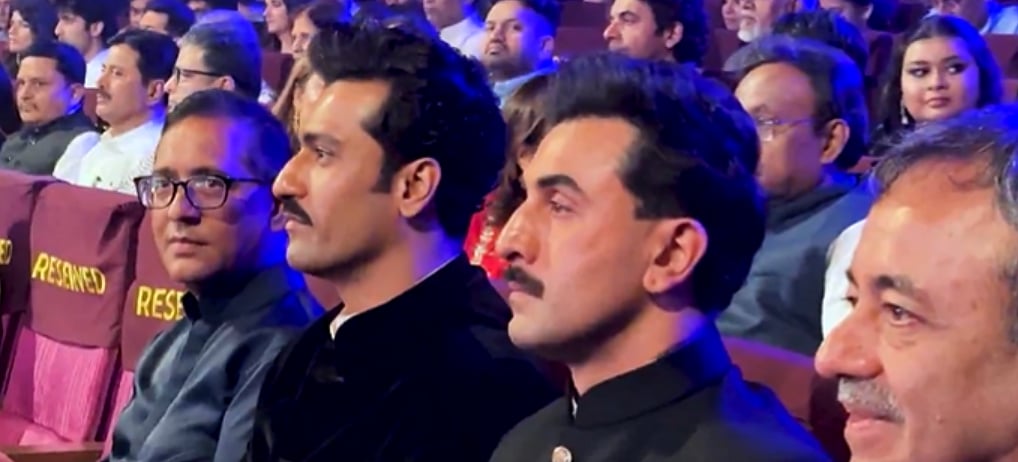
Manoj Muntashir Shukla and the producers of Mera Desh Pehle were asked about BlueKraft’s role, if any, in conceiving, financing or organising the production. Responses will be added here.
Though it was publicly credited to Shukla, Hitesh Jain was present at every single staging – sharing the lamp-lighting with Maharashtra CM Devendra Fadnavis in Mumbai, on stage with M Venkaiah Naidu and G Kishan Reddy in Hyderabad, with deputy chief ministers Vijay Kumar Sinha and Samrat Choudhary in Patna, in the front row beside Delhi CM Rekha Gupta, and next to Gujarat CM Bhupendra Patel in Gandhinagar. His presence on or beside the stage at every venue, and the production’s arc from Vadnagar to the PMO – tracking BlueKraft’s own books closely – suggest, in Newslaundry’s assessment, that this was less an independent production than an extension of the foundation’s content machine.
So strip away the employees posing as volunteers, the state ceremonies dressed as product launches, the election-timed youth festivals, the recycled testimonials, and the documentaries. And the hole at the center of this story stays. That the trail traces the machine, and the man it builds. Not who is paying for it all.
Newslaundry sent detailed questionnaires to BlueKraft Foundation, Hitesh Jain, Rajesh Jain and Akhilesh Mishra, and sought comment from the other individuals and entities named in this report. As of publication, no response had been received. This report will be updated if any response is received.
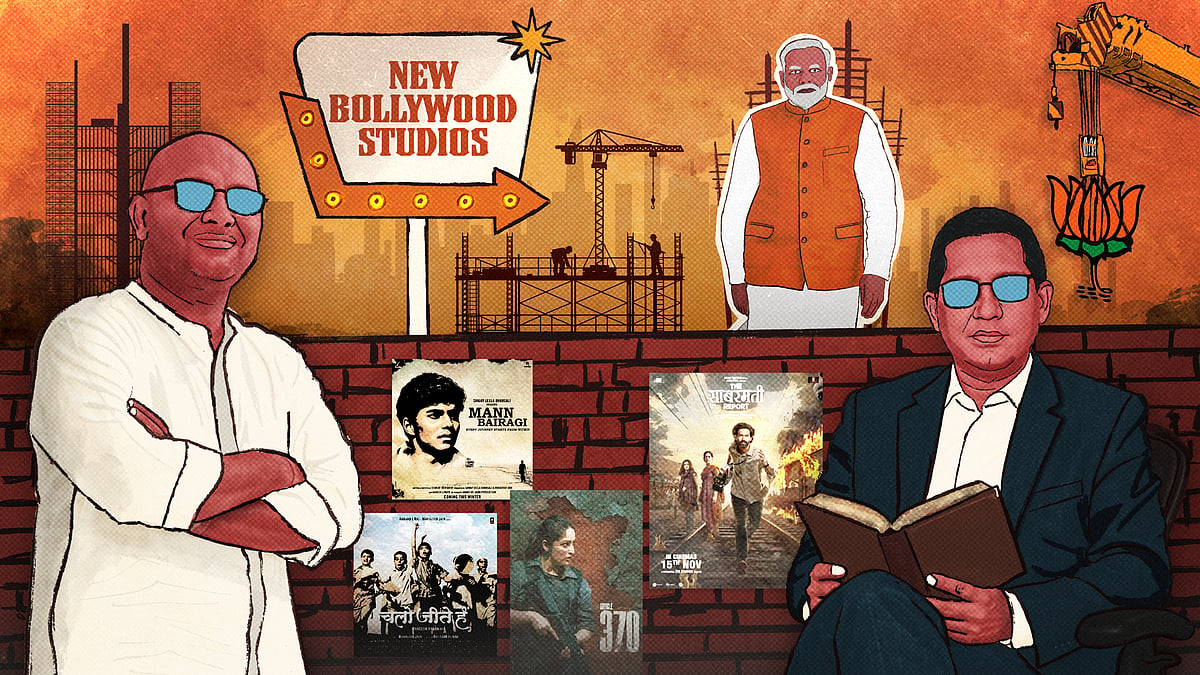 The Bollywood pracharaks who found their place in Modi’s orbit
 ‘The film will make you Rs 100 cr, look at Kashmir Files’: Inside the quiet capture of Bollywood