Rs 428 crore in, Rs 1 crore out: How Chinese capital and public money vanished into Gurugram’s garbage
A Chinese waste-to-energy firm poured hundreds of crores into its Indian business hired to make Gurugram landfill-free, and so did the public purse. Little of it reached the ground.

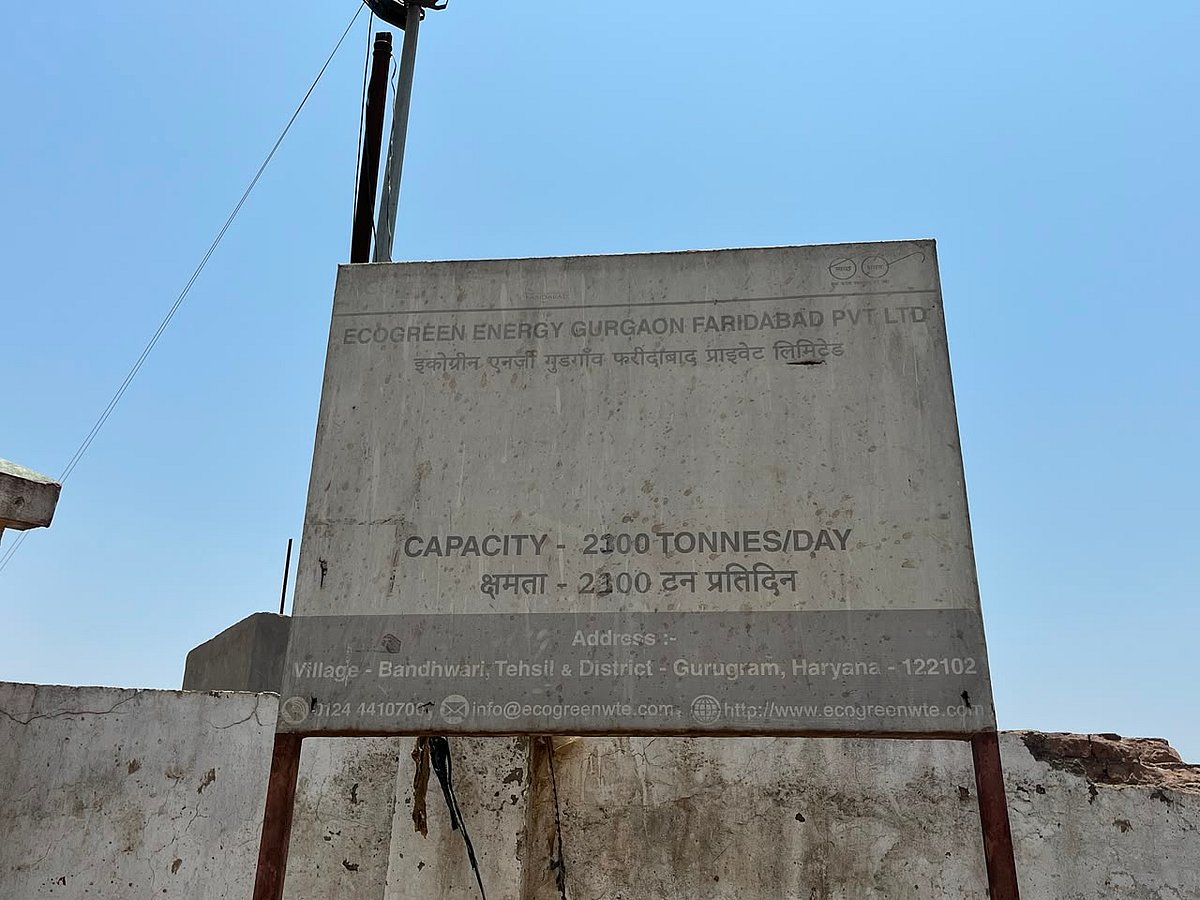
In 2017, Ecogreen was hired to collect and process garbage in Gurugram and Faridabad, and to reduce the enormous Bandhwari landfill. A Chinese company invested Rs 428 crore in Ecogreen, and the government paid it another Rs 157 crore.
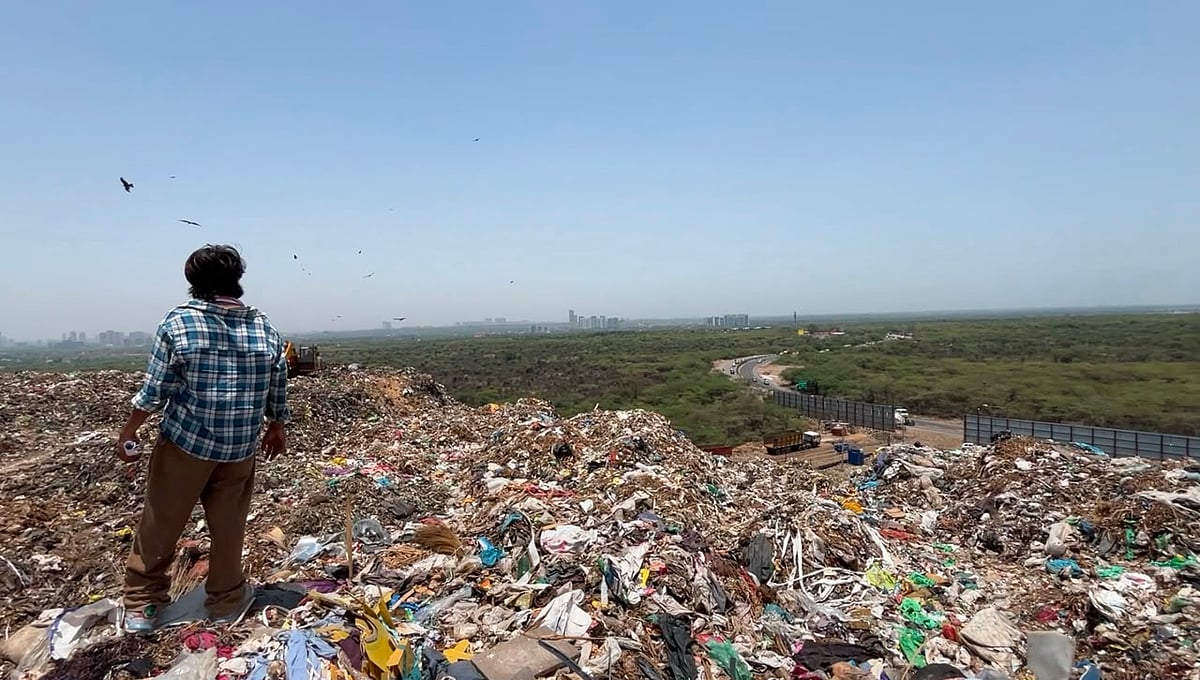
But the promised waste-to-energy plant was never built and the landfill grew into a 38-metre-high garbage mountain, polluting the groundwater of nearby villages.
Company records show that large sums went to related companies, consultancy fees and advances for machinery that never arrived. In 2024, the government cancelled Ecogreen’s contract and its Chinese owner sold the company for just Rs 1 crore.
Ecogreen is only part of a larger problem: waste management in Gurugram has become an endless garbage contract, with one company after another failing to deliver as public spending and garbage pile up.
***
Start at the end.
In the summer of 2024, a Chinese firm that runs waste-to-energy plants sold its entire Indian business for Rs 1 crore – about the price of a modest flat in the city it had been hired to clean. Seven years earlier it had bought that same business, pumped in roughly Rs 428 crore, and promised to shrink the growing landfills in Gurugram and Faridabad.
Somewhere between the Rs 428 crore that went in and the Rs 1 crore that came out is the story of too many backers disappointed. And it is not a simple one, of an Indian company taking foreign investors for a ride.
This is the story of that Indian firm, Ecogreen Energy Pvt Ltd, failing to deliver the Indian expansion that China Jinjiang Environment Holding Co Ltd had made it the anchor of.
It is the story of a web of firms linked to Ecogreen – some the promoters’ own – in effect absorbing money meant for waste plants and garbage processing into consultancy fees, rent and inside deals.
It is the story of the Bandhwari landfill, which the company was hired to shrink, climbing instead towards a mountain taller than the Aravalli slope beside it. Of the processing plant that was to transform the city, and that exists to this day only as a model made of wood and plastic.
And it is the story of the bill, which the public paid whether or not anything worked.
More than Rs 325 crore of taxpayers’ money went for targets that were barely met. Gurugram paid Ecogreen Rs 157 crore before it terminated the contract. Money flowed despite similar violations in other cities. Lucknow paid the company Rs 169.21 crore, according to Uttar Pradesh’s 2025 CAG report, including for a stretch when the plant it was running was shut. Gwalior in Madhya Pradesh eventually paid other agencies to do work Ecogreen was initially contracted to do.
Ecogreen failed on many counts. But it is only the largest specimen of a wider habit.
In the assembly, Haryana’s urban local bodies minister Vipul Goel put the government’s waste-management commitments for Gurugram and Faridabad between 2017 and 2026 at Rs 862 crore across 10 companies. When Ecogreen finally collapsed, the state had hired nine more companies on Rs 532 crore of fresh tenders simply to claw back the pile the firm had left behind – and six of those nine were themselves penalised for missing deadlines.
Penalties, throughout, ran to a small fraction of payments. Blacklistings were handed down to two firms, then reversed for one. A fresh Rs 600-crore tender is already on the street.
In Gurugram, the contracts pile up the way the garbage does, and to much the same effect. This is one thread of that larger account, pulled all the way through.
A dormant company’s right moment
The company at the centre of it was born small and stayed idle. Two brothers from Ghaziabad, Nitin and Ashish Agarwal, registered Ecogreen Energy Private Limited in January 2011 with Rs 1 lakh. For the next five years it did essentially nothing. On the record, it was dormant, with no active business.
Then the ground shifted. In 2016, the Centre notified the Solid Waste Management Rules, which turned “dump it” into “process it” and sent cities across India scrambling for integrated waste systems. Demand for waste-management firms spiked, and the Agarwals had a dormant firm sitting ready.
In November 2016, Nitin and a third brother, Ankit, floated two more companies with Rs 10 lakh apiece: Geron Engineering and Clean India Environment. Ankit joined the Ecogreen board. In February 2017 their father, Rakesh Kumar Agarwal, came on as a director too. One family now had a dormant company, two freshly minted sister firms, and a hot market.
On March 15, 2017, the Chinese waste-to-energy group China Jinjiang Environment Holding Co Ltd – later renamed Zheneng Jinjiang Environment Holding Company after a 2019 takeover – bought 99.98 percent of Ecogreen through its wholly owned subsidiary Lamoon Holdings. The price for control was Rs 6.25 lakh: 62,490 shares at Rs 10 each. Ten shares stayed with Nitin Agarwal, purely to satisfy the Indian requirement for a minimum of two shareholders.
For a foreign player, buying a ready-made Indian entity is an ordinary way in; it lets you bid without building a company from scratch. Jinjiang was clear about what it had bought. In its own filing it called Ecogreen “dormant,” noted net liabilities of about Rs 5.14 lakh, and said the firm would be its platform for future business in India.
Three states, one summer
For a company that had been inert weeks earlier, Ecogreen moved with startling speed.
On March 21, 2017 – six days after the acquisition – it signed an agreement for solid waste and a waste-to-energy plant in Lucknow, not by winning a fresh tender but by stepping in as a substitute after the company originally allotted the contract failed on various counts. That same week, a new BJP government had taken office in Uttar Pradesh under Yogi Adityanath. In April, Jinjiang publicly announced that this would be its first overseas waste-to-energy project.
May brought a fresh waste management agreement for Ecogreen worth Rs 254 crore in Gwalior, Madhya Pradesh.
And on August 14, 2017 came the largest of the lot: a 22-year, roughly Rs 330-crore concession agreement for the Gurugram-Faridabad cluster, signed with the two municipal corporations and the state’s urban local bodies department. The company was to develop the plant under the DBFOT – design, build, finance, operate, transfer – framework, with the Gurugram municipal body as the designated urban body. Then chief minister Manohar Lal Khattar nearly became a fixture at Ecogreen’s events.
For each city, Ecogreen created special purpose vehicles: Ecogreen Energy Lucknow Pvt Ltd, Ecogreen Energy Gwalior Pvt Ltd, Ecogreen Energy Gwalior C&T Pvt Ltd, Ecogreen Energy Gwalior WTE Pvt Ltd, and Ecogreen Energy Gurgaon Faridabad Pvt Ltd.
None of this proves anything improper about how the contracts were awarded, and this piece makes no such claim. But it is a fair question, and the record itself invites it: how did a company dormant weeks earlier land three integrated waste concessions across three states in a single summer?
Paid to fail
Whatever Ecogreen was doing with the money, it was not doing the job, even though the contract was unambiguous.
In Gurugram and Faridabad, Ecogreen was to collect, segregate and process 100 percent of both cities’ waste, so that only inert residue – at most 20 percent of total input – ever reached the landfill.
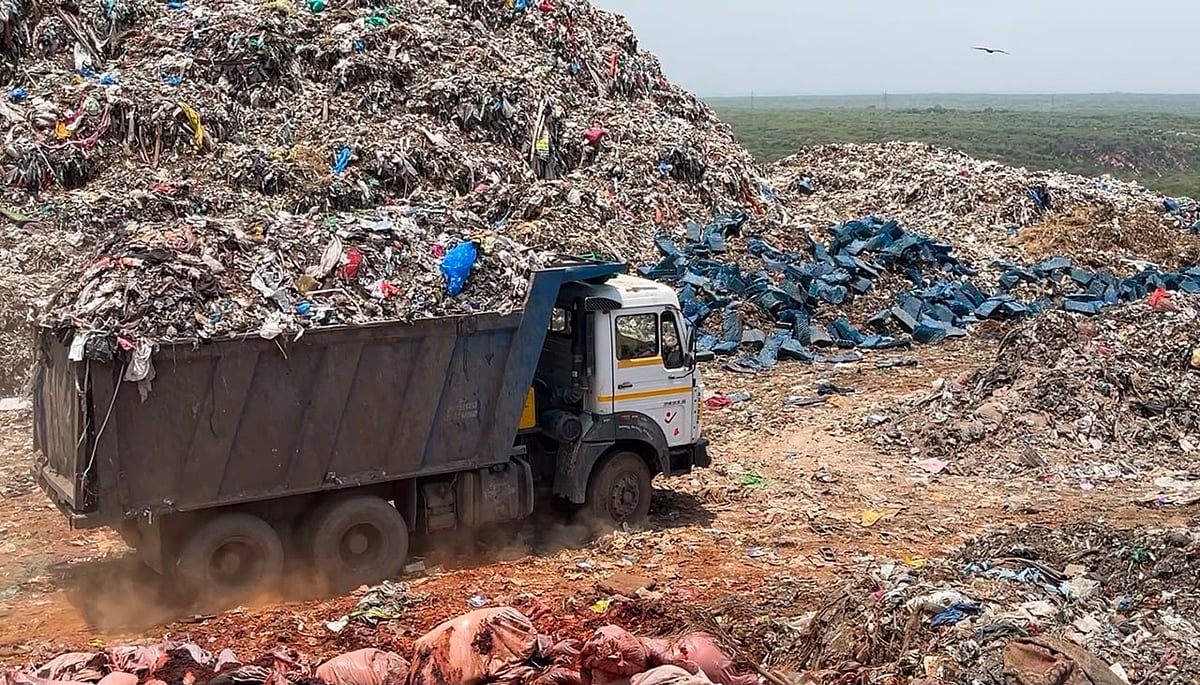
A year in, door-to-door collection stood at merely 35 percent. Between November 2017 and August 2018, the Gurugram corporation issued the company 43 notices and levied Rs 6.33 crore in fines, some for something as basic as not clearing bins on time, according to media reports. By August 2022, only about 40 percent of the two cities’ waste was being segregated on a given day. Some 2,200 tonnes were still going daily to Bandhwari, where the pile climbed past 33 lakh metric tonnes and 38 metres high, according to a committee formed by the National Green Tribunal.
Underneath the failure appeared to be an economy the contract had never contemplated.
Instead of Ecogreen paying workers to segregate waste, ragpickers allegedly paid Ecogreen – between Rs 5,000 and Rs 10,000 a truck for the right to pick recyclables out of it. “The payment depended on the material,” claims a contractor who says he supplied those workers in Badshahpur. After 2019, according to the company’s former senior general manager Ravi Trivedi, Ecogreen stopped doing its own collection altogether and outsourced it to the local “scrap mafia,” in an alleged breach of the agreement.
The plant that was meant to end all this exists only as a wood-and-plastic concept model, still standing in the garbage near the Bandhwari landfill gate – a green-drawn vision of tidy landscaping, an incinerator turning dry waste to power on the left, a composting zone making manure on the right, trees dotting the lanes, Ecogreen’s green logo in the middle, like a signature on a promise. Khattar had laid the foundation stone for that 25-MW plant twice, in 2018 and again in 2021.
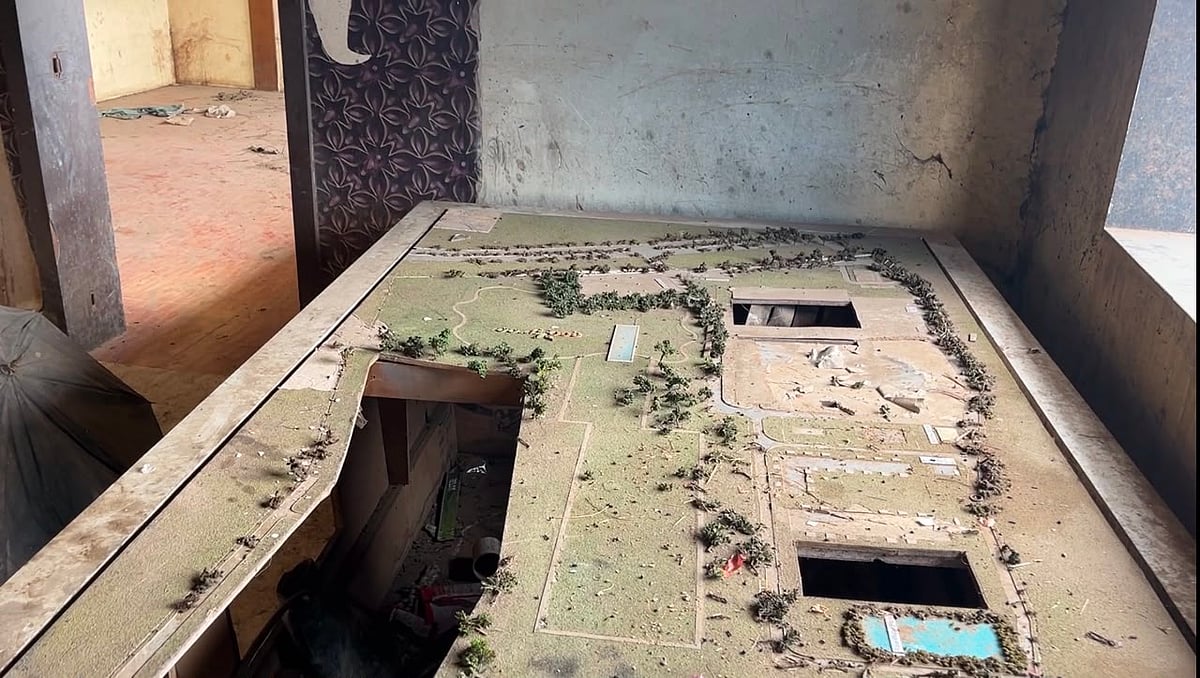
This plant was never built, but the part that could sit more uncomfortably with anyone who pays taxes in Haryana is that none of this stopped the payments. Through the missed targets and the mounting notices, the state kept paying Ecogreen – Rs 157 crore in all by the time it terminated the contract in August 2024. The penalties it imposed over the same stretch came to just Rs 11.46 crore, roughly a fourteenth of what it had handed over to the firm.
The mountain, and the people living under it
What Gurugram got for all of it was the swollen landfill at Bandhwari. The people who live in its shadow see none of the Millennium City’s shine.
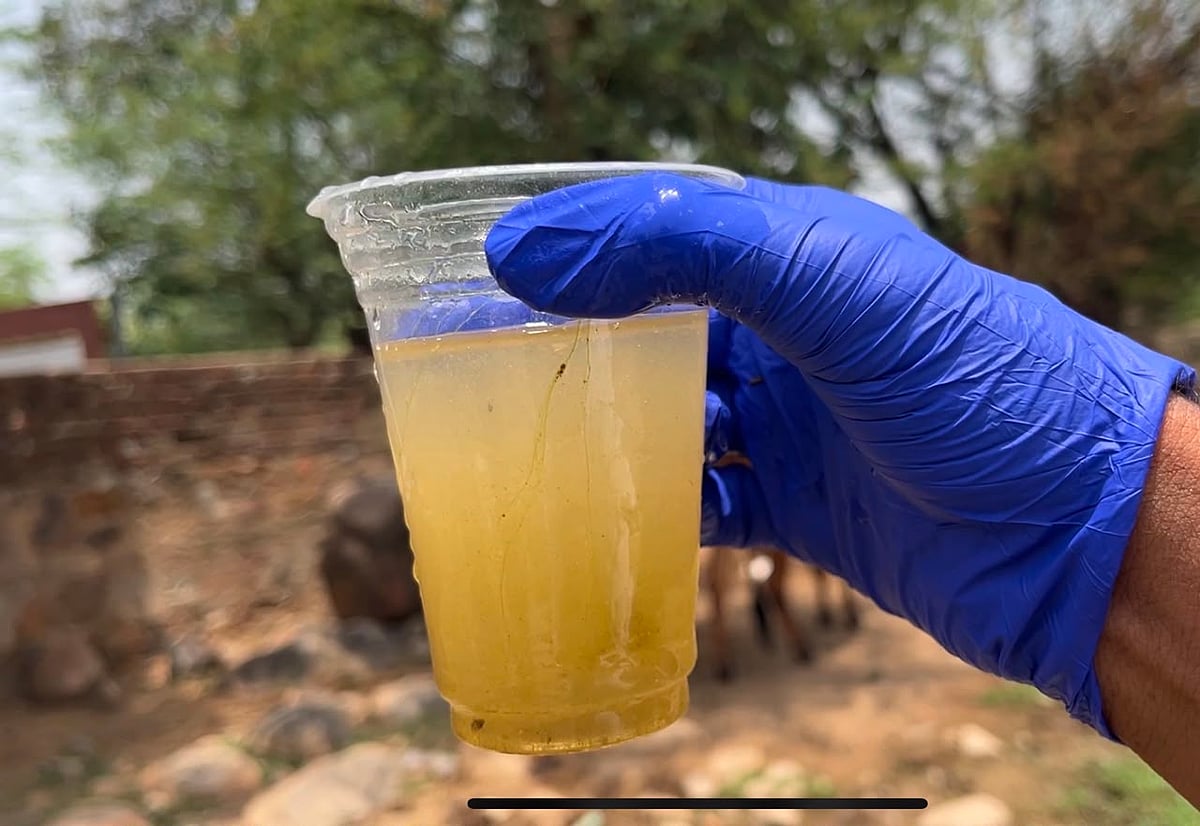
Residents of Bandhwari village buy RO water; their livestock still drink groundwater. “They call this water,” says Sanjay Kumar, cupping a handful from a borewell, “but in reality, it is poison – unfit for drinking”. He points to a black sludge under the tank. “This is leachate – it seeps from the landfill into the groundwater and eventually finds its way into our tubewells.”
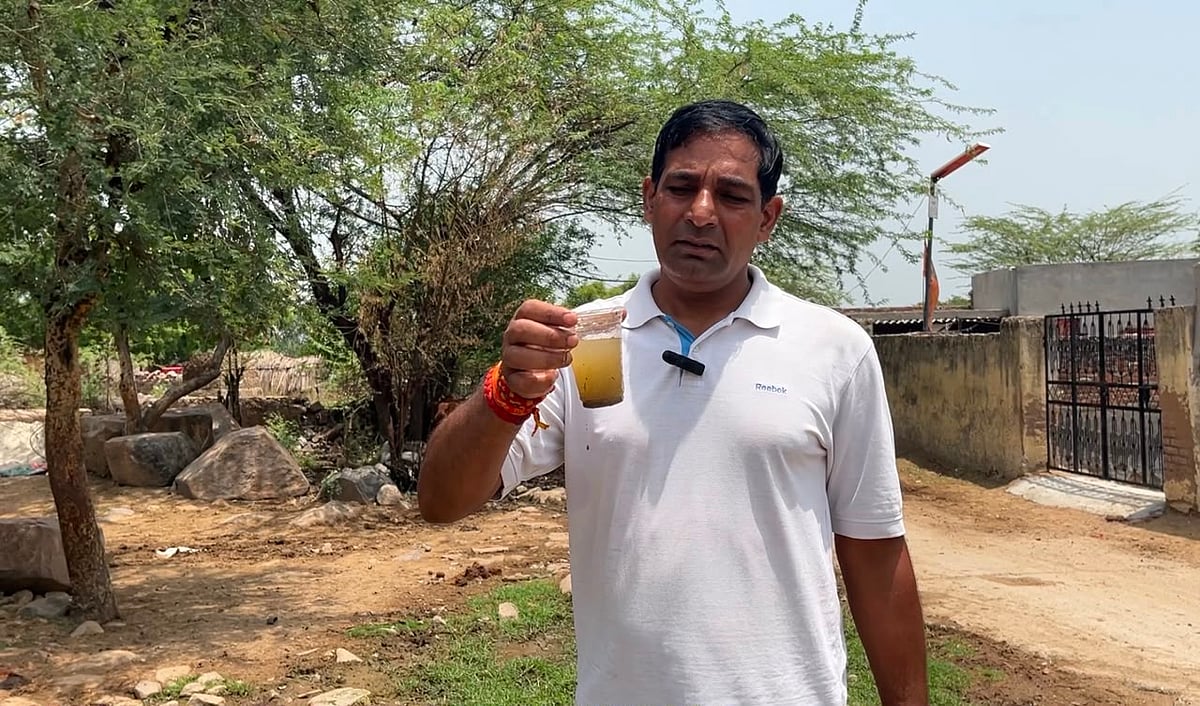
A 2022 Centre for Science and Environment study of samples from the site found heavy metals – lead and zinc among them – well above safe limits, heavy loads of pathogenic bacteria such as faecal coliform, and high biochemical oxygen demand and chemical oxygen demand readings. “The amount of pollutants in landfill leachate was 100 more than that of urban wastewater,” said the CSE report. All of it, the study noted, was a documented threat to the Aravalli ecosystem and the water table.
Villagers claim the polluted water is leading to health problems. “Our children remain ill,” says another resident, Hemraj.
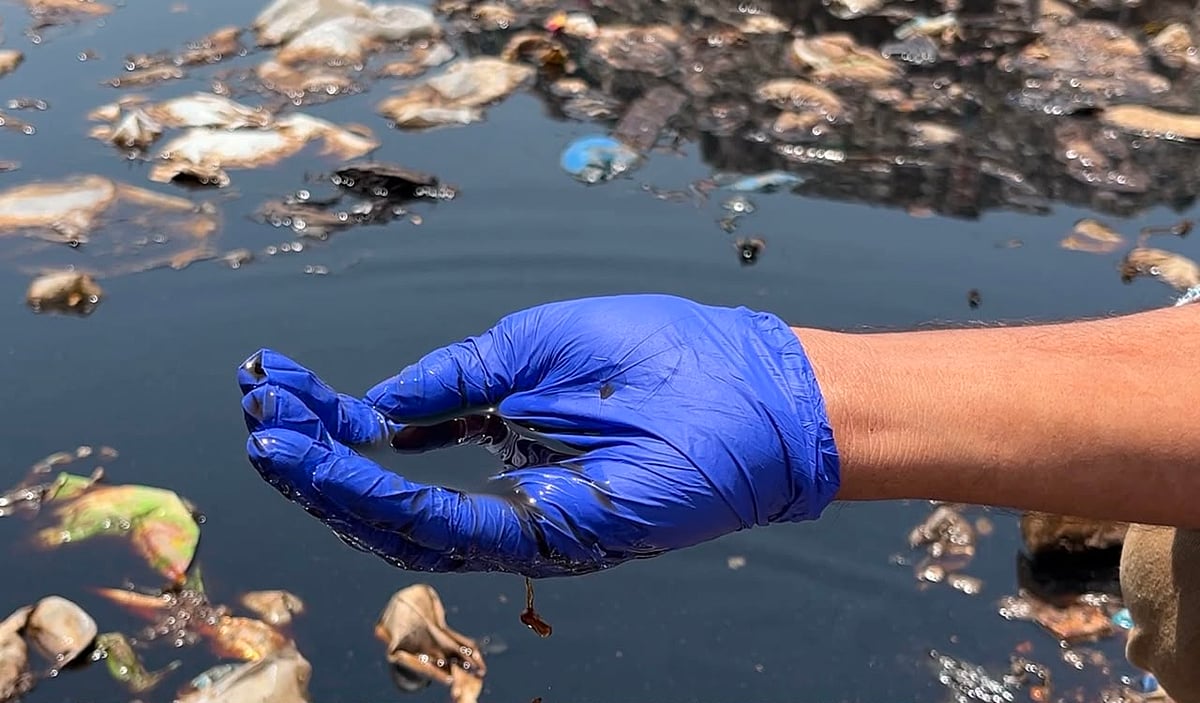
The contamination itself is not in dispute. Treating the damage as serious, the National Green Tribunal fined the Haryana government Rs 100 crore. This amount was to be paid to the Haryana pollution control board.
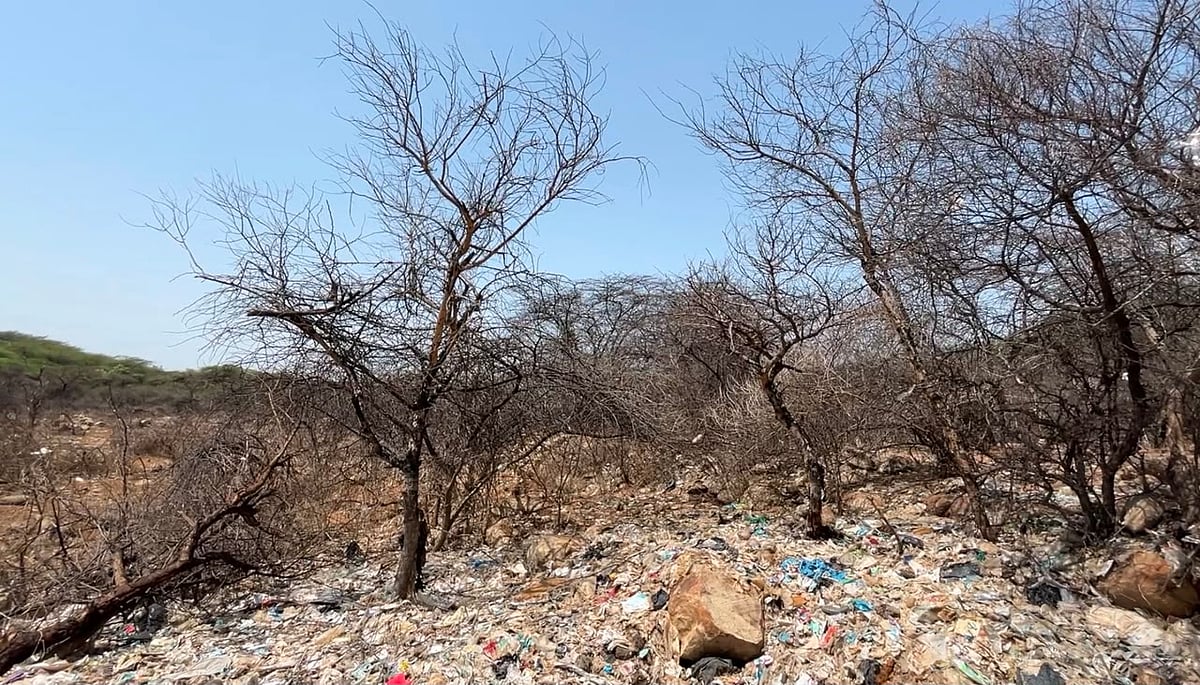
So from the public spending perspective, this meant taxpayers paid Ecogreen Rs 157 crore to keep waste out of Bandhwari and then they had to pay Rs 100 crore again since the waste continued to reach Bandhwari.
In Lucknow, a plant ruined
In Lucknow, the company had to collect and segregate waste, set up a waste processing plant, and operate an existing plant at Shivri.
But the CAG report on Uttar Pradesh said that door-to-door collection there never hit 100 percent either. It recorded coverage of 47 percent of households in 2017-18, climbing to 58, 67, 78 and then 79 percent by 2021-22. Which is another way of saying that five years in, roughly 1.20 lakh households – 21 percent of families in the state capital – still had no doorstep collection, a service the Solid Waste Management Rules, 2016 made mandatory for every household at source.
Then there is how the company got paid. Under the agreement, Ecogreen was to receive a tipping fee of Rs 1,604 per metric tonne – but only after the waste quantity had been verified by corporation officials and an independent engineer. No independent engineer was ever appointed, for the entire duration of the project, according to CAG. The company was paid Rs 169.21 crore anyway, between January 2018 and March 2022.
Some of that money was paid for work that wasn’t even possible. Between September 2019 and September 2020, a period when the Shivri waste processing plant in Lucknow was found to be non-operational, Ecogreen was paid Rs 5.28 crore for processing 3.20 lakh metric tonnes of waste. The plant was set up by the UP Jal Nigam and Lucknow Municipal Corporation and Ecogreen was tasked to operate it in 2017.
In September 2020, the National Green Tribunal found serious deficiencies at Shivri: the waste-to-energy plant had not started operations, leachate was pooling on the premises, waste was not being disposed of scientifically. The tribunal directed the UP Pollution Control Board to impose environmental compensation on the Lucknow Municipal Corporation, noting the corporation could recover it from Ecogreen if it chose to. The board subsequently established that the plant had stayed shut for 409 days, from September 3, 2019 to October 28, 2020, and levied Rs 39.74 crore in environmental compensation: Rs 14.41 crore for a 107-day closure and Rs 25.33 crore for a 302-day closure.
When the corporation terminated the agreement in July 2023, it alleged that Ecogreen had not merely failed to build the promised waste-to-energy plant but had ruined the processing plant it was given – poor operations, the corporation said, had left more than 20 lakh metric tonnes of waste accumulated on site and caused severe environmental damage to the city.
Lucknow blacklisted the company in July 2023.
In Gwalior: Double money for same job
Similarly, in Gwalior, there was a 22-year agreement covering 16 urban local bodies. Ecogreen Energy Gwalior Private Limited was to do door-to-door collection, dispose of waste scientifically, run awareness campaigns, dispose of animal carcasses, and build a waste-to-energy plant.
It did not build the plant. It did not achieve 100 percent door-to-door collection across the city’s wards. Employees struck work repeatedly over delayed salaries, disrupting collection. Internal disputes dragged on operations.
The more striking finding in the CAG’s audit was the work for which the public paid twice.
For example, carcass disposal: it was Ecogreen’s contractual responsibility, and the agreement required it to install an incinerator. The audit found carcasses were not being incinerated at all but buried in the ground. The Gwalior Municipal Corporation instead engaged another agency for the job between December 2017 and June 2020, spending Rs 4.49 crore.
Public awareness campaigns were also Ecogreen's responsibility. In 2018-19 the corporation paid Rs 1.25 crore to other agencies for TV advertisements, documentaries, wall paintings, hoardings and other promotional work. The government’s explanation was that this work had been outsourced because Ecogreen was failing to discharge its responsibilities.
The CAG mentioned that the government could not show that any of this extra spending was recovered from Ecogreen or deducted from its payments.
In January 2021, Gwalior terminated the agreement, citing the missing waste-to-energy plant, the shortfall in door-to-door collection and other unfulfilled obligations. It forfeited the company’s bank guarantee of Rs 12.73 crore.
Where the money went
If you trace the Chinese investor’s capital through the filings at the Ministry of Corporate Affairs, much of it appears to become a payment to a related party.
Take the Gurugram-Faridabad SPV. In and around 2017-18, its parent Ecogreen put around Rs 60 crore into it to kickstart the project. Out of that, it gave a large sum – Rs 33.26 crore – to Prime Gain Investments, described in the accounts as an associate of Jinjiang, as an “advance for fixed assets”. A further Rs 4.67 crore flowed straight back to the parent as “professional fees”. About Rs 9.2 crore went to the Agarwal family’s Geron Engineering, part for fixed assets, advances and repairs. Smaller sums – roughly Rs 15.7 lakh and Rs 8.25 lakh – went to the family's Clean India for subletting and consultancy. And the two Indian directors, Rakesh and Ankit Agarwal, personally drew Rs 45 lakh in consultancy fees.
Add it up: about Rs 47.83 crore, or 79.57 percent of the money meant for Gurugram’s waste project, was transferred to related parties in a single year, with little clarity on how much of it was used to put together a functioning system. Because the duration of these payments was precisely the window in which the corporation was issuing notice after notice for failures as elementary as uncleared bins.
Zoom out from one SPV to the whole group and the pattern holds at scale.
Between 2017 and 2020, Ecogreen took in about Rs 428 crore from Jinjiang. The physical assets it actually created on the ground – property, plant and equipment across three cities and seven years – came to Rs 59.80 crore. The rest sat in line items that never turned into anything you can weigh or switch on: roughly Rs 114 crore parked under “intangible assets under development,” a comparable sum under “other non-current assets”. The waste-to-energy plants promised to Gurugram and Lucknow were never built; the Gwalior processing plant was reportedly dysfunctional for long stretches.
Three destinations account for most of the Rs 317.61 crore of the Chinese capital that had arrived by the close of 2018-19.
Rs 217.50 crore went on operational costs, including director remuneration, salaries and wages. Auditors flagged irregularities here, including large payments to directors-of as much as Rs 55 lakh from each SPV- that were recorded as employee benefit expense. They also paid salaries amounting to Rs 10 crore to employees in cash, with no documentation to show for it.
Rs 67 crore went to Prime Gain Investments as capital advances for fixed assets, from all three SPVs. No corresponding machinery or equipment was ever received by any of them, as per the company’s financial reports.
Around Rs 30 crore went to Geron Engineering for plant machinery and vehicles – a supplier whose directors had, until weeks earlier, been Ecogreen’s own directors. Ecogreen would later allege the goods were substandard and issue a legal notice demanding Rs 28 crore back. Geron denied the allegations and counterclaimed about Rs 10 crore with 18 percent interest and damages.
Ecogreen reported a loss almost every year, on revenues running into crores from user charges, government payments and scrap sales. The only exceptions were small profits of Rs 2.9 crore in 2020-21 and Rs 1.74 crore in 2021-22, when Covid pushed operational costs down. In 2018-19, its own auditors recorded Rs 1.66 crore of managerial pay drawn by directors with no contract or provision authorising it, Rs 10 crore booked as cash salaries to employees with no supporting evidence produced, and the year’s board minutes left unsigned. It was also the year the machinery showed too many signs of rot, and the year Chinese directors took the company over completely.
In November 2018, both Indian directors, Rakesh and Ankit Agarwal, quit. Ankit would later send a legal notice of his own, claiming Rs 15 lakh in unpaid salary – a departing promoter-director suing the company his family had built and sold.
Responsibility here is not tidy. Some of the self-dealing that drained the Gurugram-Faridabad SPV – the payments to Geron, Clean India and the directors – happened in 2017-18 and 2018-19, while the Agarwals sat on the board and the family’s firms were on the receiving end. But the years of open, documented non-performance – the alleged outsourcing to the “scrap mafia” after 2019, the notices, the terminations in Gwalior, Lucknow and finally Gurugram – all played out under a board the Chinese parent alone had appointed. Roughly Rs 110 crore of Jinjiang’s money arrived after the original promoters walked out.
Geron’s factory is located at Bulandshahr Road Industrial Area, Ghaziabad, according to its latest financial report. When we visited the address, we found another company operating at the location. The director of the company told us that they had rented out the space to Geron, but the firm exited the location four years back.
The unwinding, and a Rs 1 crore exit
By March 31, 2020, Ecogreen and its affiliates had drawn over 10 legal and tax notices – from an e-rickshaw supplier, a former director chasing unpaid salary, a conveyor-systems firm over a Rs 1.17-crore bill, landlords over rent, consultants over fees, the Income Tax Department over returns.
The agreements with urban local bodies fell one after another: Gwalior in 2021, Lucknow in 2023, Gurugram-Faridabad in 2024. By 2020-21, the network’s contingent liabilities and commitments had reached Rs 666.20 crore, and its net worth had been wiped out entirely.
In 2024, the Chinese parent, now Zheneng Jinjiang Environment, cut its losses. On June 1, through Lamoon Holdings, it sold its whole stake in Ecogreen – once its grand “platform” for India – to Cube Bio-Energy Private Limited for Rs 1 crore. An independent valuer had already put the fair value of those shares at “nil” as of March 31, 2024, citing the liabilities, financial distress, repeated write-downs and doubtful future.
Reached by Newslaundry, the Chinese parent – now identifying in correspondence as Zheneng Jinjiang Environment – confirmed only its exit. It said it had disposed of its entire stake in Ecogreen on 1 June 2024, as announced through the Singapore Exchange, and that “following completion of the disposal, the Group ceased to hold any shareholding interest in Ecogreen Energy, and the relevant businesses have been divested from the Group”. Everything else, it said, was in its public filings; it was “not in a position to provide further interviews or additional comments at this time”.
Meanwhile, the state’s answer to a failed contract was another contract.
Having watched Ecogreen underperform for years and paid it regardless, Haryana handed contracts to nine fresh firms totaling Rs 532 crore merely to reduce the pile Ecogreen had left behind. Six of the nine were then penalised for missing their own deadlines, drawing about Rs 20 crore in fines between them – against Rs 311.5 crore of public money already paid to these nine for the work.
Look at the individual stories. Bhumi Green Energy Pvt Ltd received over Rs 130 crore and was penalised Rs 1.83 crore. Adarsh Bharat Environ Pvt Ltd received Rs 26.02 crore against a Rs 4 crore penalty. Patheya received Rs 30.61 crore against Rs 6.21 crore. Green Concrete Constructions received Rs 20.35 crore and was penalised Rs 41 lakh. Zigma Global Enviro Solutions received Rs 15.99 crore against Rs 1.77 crore. Greentech Environ Management Pvt Ltd was penalised Rs 5.80 crore.
In July 2025, two firms were blacklisted. By January 2026, one of them had been taken off the list on “technical grounds”.
Newslaundry reached out to the Agarwals, the other companies named in this report, the MCG, the Haryana ULB minister’s office, and the civic agencies of Lucknow and Gwalior. This report will be updated if a response is received.
The Gurugram corporation has now floated yet another waste-management tender. This one is worth over Rs 600 crore.