‘Go back to your country’: Manipuri musician’s killing reignites concerns over racism against Northeasterners and govt inaction
In July 2014, the Bezbaruah Committee submitted its recommendations to the Modi govt for addressing concerns of NE people. The most crucial component was never implemented.

What is the cost of a life? For the wife and 20-year-old son Chongtham Vikram Singh, it is the lifelong grief and trauma of losing a family member. For Manipur, it is the loss of a homegrown musical talent, who began practicing his craft when he was a child, and made his way from Imphal to the big stages of Delhi. And for the rest of India, it is a reckoning with the systemic racism that has historically exposed Northeasterners living in other parts of the country to racial discrimination, harassment, bullying and violence.
The concerns are not new, nor were solutions entirely out of reach. The Bezbaruah Committee, set up by the Manmohan Singh-led UPA government to address the discrimination faced by people from the Northeast, had made a series of recommendations to the Modi cabinet in 2014. A key component of the proposals was making changes to the Indian Penal Code (IPC). Twelve years on, this is yet to be implemented.
Accused ‘Wanted to Teach a Lesson’ to the Manipuri Guitarist
Singh, a 55-year-old Manipuri guitarist, was allegedly beaten to death by a group of young men outside his home in Kilokari village of Southwest Delhi. On September 6, around 11:30 pm, Singh had objected to the loud noise and commotion being created by the accused outside his apartment.
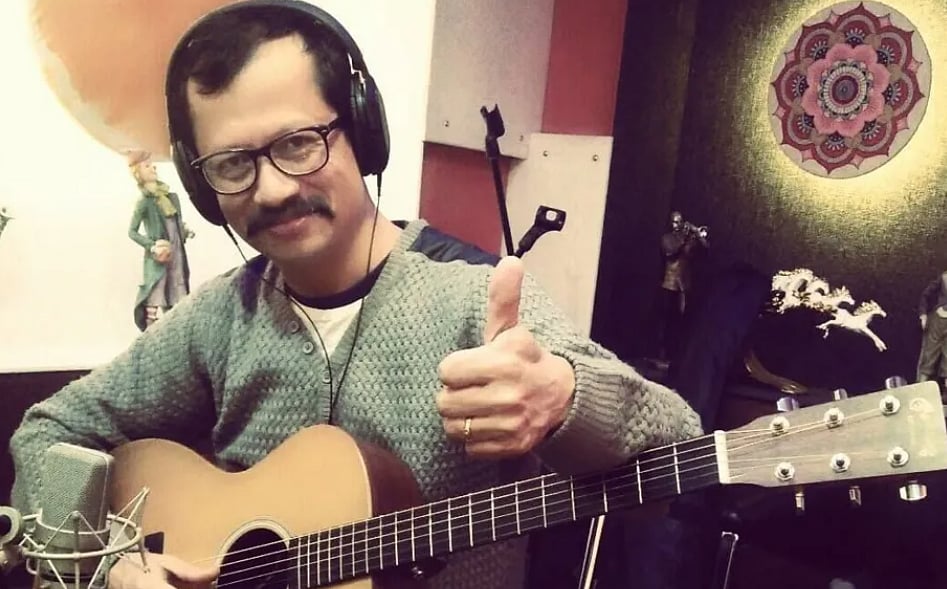
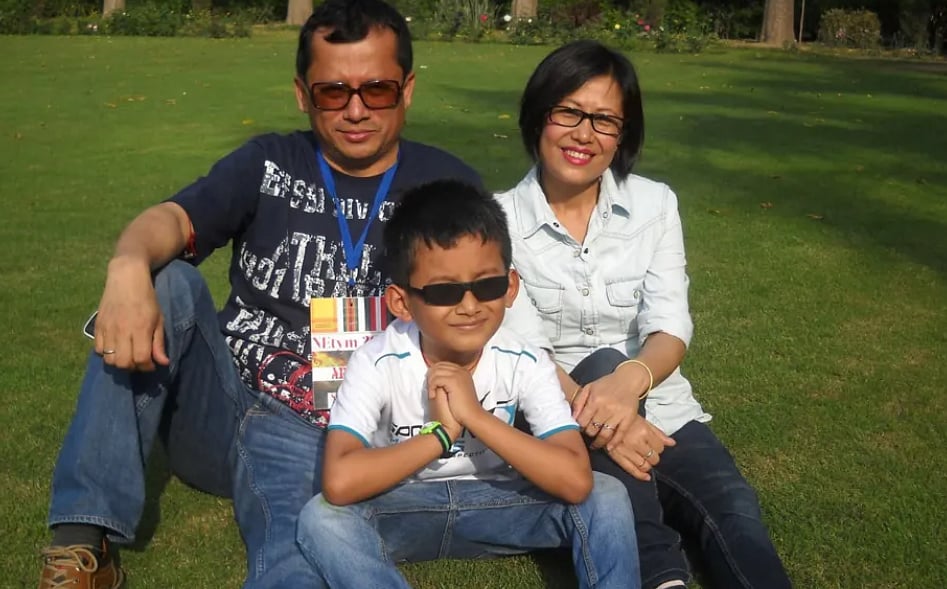
According to the police complaint, when his son heard him shouting, he opened the door to see the group of men violently attacking Singh. After the altercation, Singh returned home but complained of breathlessness, he was then taken to Holy Family Hospital where he succumbed to his injuries at 6 am on September 7. CCTV footage showed the accused leaving the building. Seven men and a minor have been arrested in the case so far.
The autopsy report revealed that Singh died of massive internal bleeding caused by severe physical trauma to his chest and abdomen. The accused allegedly kicked him on the chest and abdomen after he fell to the ground. During questioning, they told the police that they wanted to teach Singh a lesson.
While the police investigation so far has not revealed any racial motive behind the violent attack, his death has brought to the fore larger concerns around hate faced by people from the Northeast in the nation’s capital and beyond. It also brings the Bezbaruah Committee’s recommendations, and the fate of those recommendations, back into focus.
The Bezbaruah Committee and Administrative Inaction
The Bezbaruah Committee was formed in February, 2014, after the killing of Nido Tania, a 20-year-old hailing from Arunachal Pradesh, who was beaten to death with iron rods and sticks by three men after a verbal altercation in Delhi. The accused hurled racial slurs at Tania during the attack. The committee was constituted “to look into the various concerns of persons hailing from the Northeastern states who are living in different parts of the country, especially the Metropolitan areas, and to suggest suitable remedial measures which could be taken by the Government.” It submitted its report to the MHA of the BJP government in July, 2014. It can be read here.
The most crucial among the recommendations, perhaps, was a proposal to amend the provisions of the then IPC by adding Sections 153C and 509A. Section 153C would criminalise words, signs or acts that promote discrimination or violence on grounds of race or place of origin, with up to five years’ imprisonment and a fine. Section 509A would criminalise any word, gesture or act intended to insult a member of a racial group, with up to three years and a fine.
On January 2, 2015, then Union home minister Rajnath Singh said that the amendments were accepted and Sections 153C and 509A would be added as recommended by the Committee. However, In 2017, minister of state, home, Kiren Rijiju said in the Rajya Sabha the proposal was still under examination, with states’ views being sought. Later, when the IPC was being officially changed to the Bharatiya Nyaya Sanhita (BNS) in 2024 and discussions were being held from 2023, the recommended amendments were entirely overlooked. The provisions were never enacted.
On September 8, 2026, two days after Singh’s killing, the MHA’s monitoring committee on Northeast issues convened a meeting to discuss the recommendations made more than a decade ago. Joram Maivio, a special invitee to the monitoring committee, MHA, and member of the Bezbaruah Committee, spoke to Alt News.
“We were expecting most of the recommendations of the Bezbaruah Committee to be slowly implemented after we received a confirmation from the MHA in 2015. We deliberated extensively on this with the judicial division of the MHA, after which the recommendation was sent to the law commission and the law ministry. It kept going from one department to another. We were verbally, or in principle, informed that it had been accepted and that it would be included when the comprehensive amendment of the IPC took place,” Maivio said.
“The discussions continued through 2017, 2018 and 2019 as the Supreme Court had ordered the committee to meet at least every three years and in serious instances, meetings can be called at any point. In every meeting we kept discussing the issue of racial discrimination and questioning when the law would be amended so as to criminalise racism against Northeasterners. So when the comprehensive criminal law amendments came in 2023 — the BNS, BSA and BNSS — we were expecting this recommendation to be included. But surprisingly, it did not come up,” he added.
Maivio said that he had flagged this on the two or three MHA monitoring committee meetings and questioned the ministry why the amendments had not taken place, but did not receive any concrete answer.
Meanwhile, Delhi police data accessed by The Indian Express in June 2026 showed that more than half of the accused in cases registered over the past 12 years for crimes against people from the Northeast in Delhi remained “untraced” despite “the creation of a specialised police unit intended to address such cases”. Out of the 2,656 FIRs filed between 2014 and April 30, 2026, in 1,465 (or 55%) cases, the accused were classified as untraced. Only 33 cases resulted in conviction, producing a conviction rate of 1.82 per cent.
Asked about what transpired at the September 8 review meeting, Maivio said, “The committee director and joint secretary said that the amendments would be taken up but we were not given any clear timeline as to when.”
“We will keep following up to ensure justice to people from Northeast as incidents of racial violence are chronic and recurring. There is no quick-fix solution, but by denying the reality, we cannot solve the problem. The Government must continue to act decisively to address it and prevent such incidents,” he asserted.
Maivio noted that some measures were implemented in Delhi, including the creation a Special Police Unit for North East Region (SPUNER) with the helpline number, 1093, two special Delhi Police recruitment drives in the Northeast, and plans for a Northeast Social and Cultural Institute in Dwarka. However, he acknowledged that implementation has largely remained confined to Delhi, with little progress in other states.
Northeasterners Condemn Killing, Speak out Against Discrimination
The North Eastern Students’ Organisation (NESO) condemned Vikram’s killing and demanded an impartial probe. Chairman Samuel B Jyrwa, who in 2024 also demanded that Prime Minister Narendra Modi “breaks his silence” and visits the crisis-struck Manipur, told the media: “It is deeply disturbing that a person can lose his life merely for raising an objection to disturbance outside his own home…For years, Northeastern citizens living, studying and working outside the region have repeatedly reported being subjected to racial slurs, verbal abuse, physical attacks, social discrimination and other forms of humiliation because of their appearance, identity and place of origin.”
“It is a very big loss not just for us but also for the music fraternity…We want justice and we want the government to ensure that people from the Northeast are treated as Indians in Delhi,” said Singh’s brother, Chongtham Vivek, as the former’s mortal remains were brought back to Imphal.
Speaking to Alt News, the convenor of Delhi-based The Mizo Welfare Association, Thangzamang Henry Simte, condemned the killing and said, “Our organisation was built to create a community and safe space for people from Mizoram and the Northeast living in Delhi, who regularly face racial discrimination and stereotyping in educational institutes, office spaces, or even while taking public transport. The root cause is lack of education in the rest of the country about the Northeast. Some people in Delhi don’t even know which part of India is Mizoram or Nagaland…they do not know the difference between foreigners from other Asian countries and Northeasterns of their country.”
Simte left Nagaland around 26 years ago and moved to Delhi due to ethnic conflicts in his region. He said in 2003, when he was still new to the city, he was routinely referred to as ‘Nepali’ by passerby on the road. “In one particular incident that stayed with me, a man in a suit and tie who was sitting next to me at a bike servicing centre, suddenly yelled ‘Nepali’ at me unprompted. When I retorted sharply, he asked me where I was from. As I replied ‘Mizoram’, he bluntly asked, ‘where is that? Is that in India?”
Alt News spoke to people from the Northeast living in various parts of India, who, like Simte, revealed the daily, oft-normalised patterns of racial stereotyping and harassment they continue to face.
Gopi Kishan Baro (28), who hails from Assam and is currently working as a graphic designer in Gurgaon, alleged that he was systematically discriminated against and bullied by a senior colleague at work. “A few weeks ago, when we were in the lift, he kept mocking me and said something which sounded rather like a warning, ‘Tumahari aankhein choti hai aur hum dikhte nahi, iska ye matlab nahi hum gayab ho gaye hai’ (Your eyes are small, so we are not visible to you but that doesn’t mean we have disappeared). It made me quote uncomfortable but I tried to laugh it off because I did not want to create a scene,” he alleged.
He continued: “Last Wednesday, when I was having tea by myself, he appeared and claimed I stayed aloof most of the time because I came from such a faraway corner. By the end of the conversation when I was leaving, he shouted at me, ‘Waapis chale jaa apne desh’ (Go back to your country). I wrote a formal email to the HR about his racist behaviour. They simply let him off with a warning, while I continue to live in anxiety and disgust, knowing that these insults are directed not just to me, but at my kin, my community, and the entirety of Northeast India as well.”
Heightened Racism During Covid-19
COVID-19 brought this prejudice into sharper focus, as Northeasterners in several places were subjected to racial slurs, harassment and stigma.
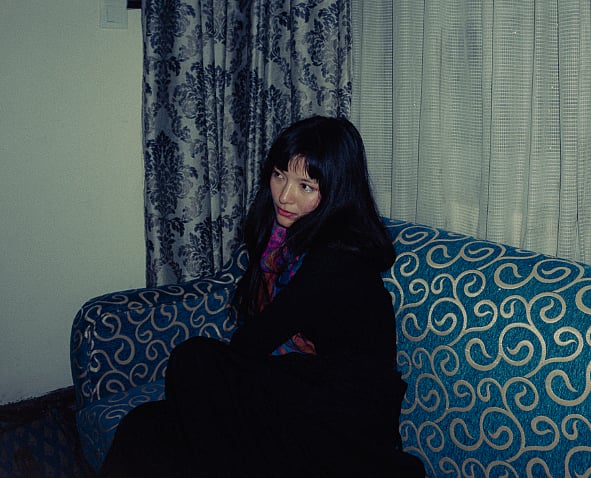
Twenty-eight-year-old musician Abhibyanjana, who hails from Sikkim, lived in Pune for her studies and later in Mumbai for work. “When I was studying, as part of my course we were required to visit several slum pockets for a survey in early 2020, during the beginning of the pandemic. I was constantly referred to as ‘Covid’ or ‘Corona’ by locals there. I was jeered at and humiliated but I continued my work regardless, I realised that if I cannot fight back deeply indoctrinated prejudice against people who look like me,” she said.
“I have to move to cities like Mumbai for opportunities because it is scarce in Gangtok. But as a musician working in Mumbai, I am often treated as an ‘outsider’. The discrimination and otherisation against the people of Northeast is pervasive and crimes against our people hardly receive national focus. On the flipside, this has created solidarity within our community, we look out for each other wherever we go,” she added.
A 2022 study, published in the International Social Science Journal, titled ‘‘You people have brought the virus here’: Othering experience of northeastern people amid COVID‐19 in Delhi, India’, focused on how the Covid‐19 pandemic exacerbated discrimination, violence, and othering against Northeasterners living in Delhi, by analysing nineteen qualitative interviews.
The study, conducted to understand their lived experiences in Delhi before and after the pandemic, found that the pandemic disproportionately impacted the Northeastern people living away from their home states. “The Mongoloid features make them ‘non‐belonging’ and outsiders. The experience of othering is an everyday phenomenon for northeasterners… Northeasterners’ experience amid COVID‐19 is dominated by stigmatisation and bullying, as they are being targeted and arbitrarily accused of spreading the virus,” the study highlighted.
An earlier study, commissioned by the Indian Council of Social Science Research (ICSSR) in 2021, further confirms the heightened harassment, abuse, stigmatisation and blatant labelling as ‘coronavirus’ that Northeasterners faced living in other parts of India during the pandemic. Over 60% of the respondents said that their studies, work, and psychological health was impacted by these experience.
“The highest number of incidents were reported from Mumbai (44.7%)…78% of the Northeast people believed that physical appearance was the most important reason for prejudice against them,” the study noted. Mumbai was followed by by Chennai (72%), Pune (67.3%), Delhi (64%), Hyderabad (48.7%) and Bengaluru (43.3%) in racial discrimination comprising offensive and abusive language against Northeasterners.
‘You Look Like a Chinese’
Caroline Devi-Singh (52), who hails from Manipur, moved to Delhi in 1994 to pursue her graduation at Delhi University. She later moved to Chandigarh and subsequently Chhattisgarh. She told Alt News that her experiences living in North India for so many years had been varied, but racial stereotyping was a constant. “In college, we were often called racial slurs, either ‘Chinese’ or ‘Chinki’ or ‘Momo’. As a young girl, I was always taught to be extra cautious, to a point where dressing how we do at home was a threat to my safety,” she said.
“So many years later, my son [now 25-years-old] faces the same racial attacks. He has grown up with the awareness of his rights, but the rest of India still lacks awareness… Nobody thinks twice before resorting to violence against Northeastern. We have been ignored by all the governments and the media has never paid attention to our issues. I stay in a small town now and I see that even educated people cannot differentiate between a person from China and a person from the Northeast… This comes from ignorance and a lack of information. I blame the overall education system and the government for this,” she asserted.
A former student of Ashoka University, who now lives near the campus in Sonipat, said, requesting anonymity, “I moved here in 2021 from Manipur. In university, I have faced racial slurs regularly. Whenever I have brought it up with the administration, they have simply let the accused go with a warning. Racism is not taken seriously on this campus, or in the NCR region at large.”
“When Northeasterners face racism, people think it is only our responsibility to speak against it… We are always on high alert because what happened to the Manipuri musician could’ve been me. It could’ve been any of us,” he added.
A Violent Pattern Entrenched in History
The cases point to a continuum of discriminatory mindset against the people of Northeast that stretches from racial slurs and stereotyping to intimidation, physical assault and, in the most extreme cases, death. In December 2025, 24-year-old Anjel Chakma, an MBA student from Tripura, died after being allegedly attacked by a group of men in Dehradun. Anjel and his younger brother Michael were reportedly subjected to racial slurs, including being called ‘Chinki’, ‘Chinese’ and ‘Momo’, before the confrontation turned violent.
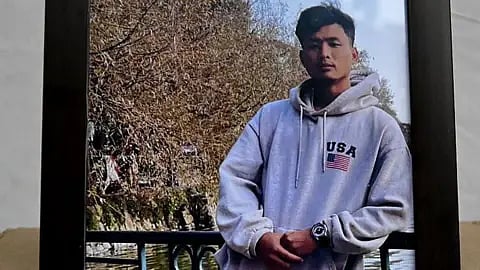
In July, 2014, 29-year-old Akha Salouni from Manipur was allegedly beaten to death by five youths in Delhi following a road rage incident. Following his death, the deceased’s family and members of the Northeastern community held a candlelight vigil at Jantar Mantar, which also saw the participation of the mother of Nido Tania.
In May 2013, 22-year-old Manipuri girl Reingamphi Awungshi was found dead in her home in Delhi under suspicious circumstances. Delhi police initially said she died by suicide, stating that severe injuries on her face and body were caused by rodents. However, her family and rights groups demanded a deeper investigation, claiming that she was sexually assaulted and murdered, pointing to local stalking complaints and police bias against Northeasterners. After 11 years, in March 2024, the Supreme Court ordered a CBI probe into Awungshi’s case. Two years on, no headway into the investigation has been publicly reported.
More recently, in February 2026, three women from Arunachal Pradesh alleged that their neighbours in Delhi’s Malviya Nagar subjected them to racial and sexist abuse during a dispute over repair work at their rented home. The women said they were called ‘dhandhewali’ and ‘momo’ and that ‘Northeastern people are shit’. In a viral video, the accused woman can be heard asking the Northeastern women, “Rs 500 mei massage parlour mei kaam karne waali dhandhewali (You work at massage parlours as sex workers for Rs 500). Are you sitting here to do business? Have you opened a massage parlour at home?” Delhi police registered an FIR and later arrested the neighbours, a couple, invoking provisions of the SC/ST (Prevention of Atrocities) Act.
While speaking to Alt News, Maivio admitted that lack of awareness about the Northeast was the primary cause behind cases of racial discrimination. “We had recommended inclusion of the history and culture of the Northeast in school curricula and textbooks throughout the country. In our last meeting, we called the NCERT to find out what had been done so far. They said that they have included some content in Classes 9 and 10 in certain cities and that they would share it with us, which they are trying to implement countrywide. They are also preparing a documentary to be released countrywide, building awareness on the Northeast. But these have largely been verbal assurances, and we will have to see what has actually been included and whether it is sufficient,” he added.
This story was originally published by Alt News and has been republished with permission.