Everyone’s talking about the slap. What about the road?
Amid the row over Delhi Deputy CM Parvesh Verma’s viral slap, Newslaundry walked the Outer Ring Road stretch in Vikaspuri to check the state of the road.

Delhi Deputy CM and PWD Minister Parvesh Verma slapped a man working for AAP MLA Jarnail Singh on Sunday. This happened during a surprise road inspection by Verma after Singh had uploaded videos alleging faulty work.
Their initial greetings turned into a confrontation followed by a series of police complaints and a political tussle.
But amid the political fight, the road lost all the attention that it deserves. Newslaundry went on the ground to walk this road and assess its condition.
The gurdwara service road
As per PWD’s work order, the project involved strengthening a total of nine roads under West Road Division 1. The estimated cost was Rs 35.5 crore. PWD awarded the project to a contractor named C P Arora Pvt Ltd for Rs 23 crore.
The project was supposed to be completed by July 26 this year, but the contractor missed the deadline owing to the unavailability of bitumen. Bitumen is a sticky, black petroleum-derived material used primarily as a binder in road construction. Tar, while similar in appearance, is produced from the destructive distillation of coal, wood or peat and behaves differently under changing weather conditions.
Now, the road where the controversy unfolded is a 2.7 km stretch of the Outer Ring Road in Vikaspuri – an arterial road on Delhi’s orbit connecting several densely populated parts of west Delhi, including Janakpuri, Paschim Vihar, and others.
In the middle of this stretch is the Mohan Nagar Gurdwara – in front of which the controversy took place.
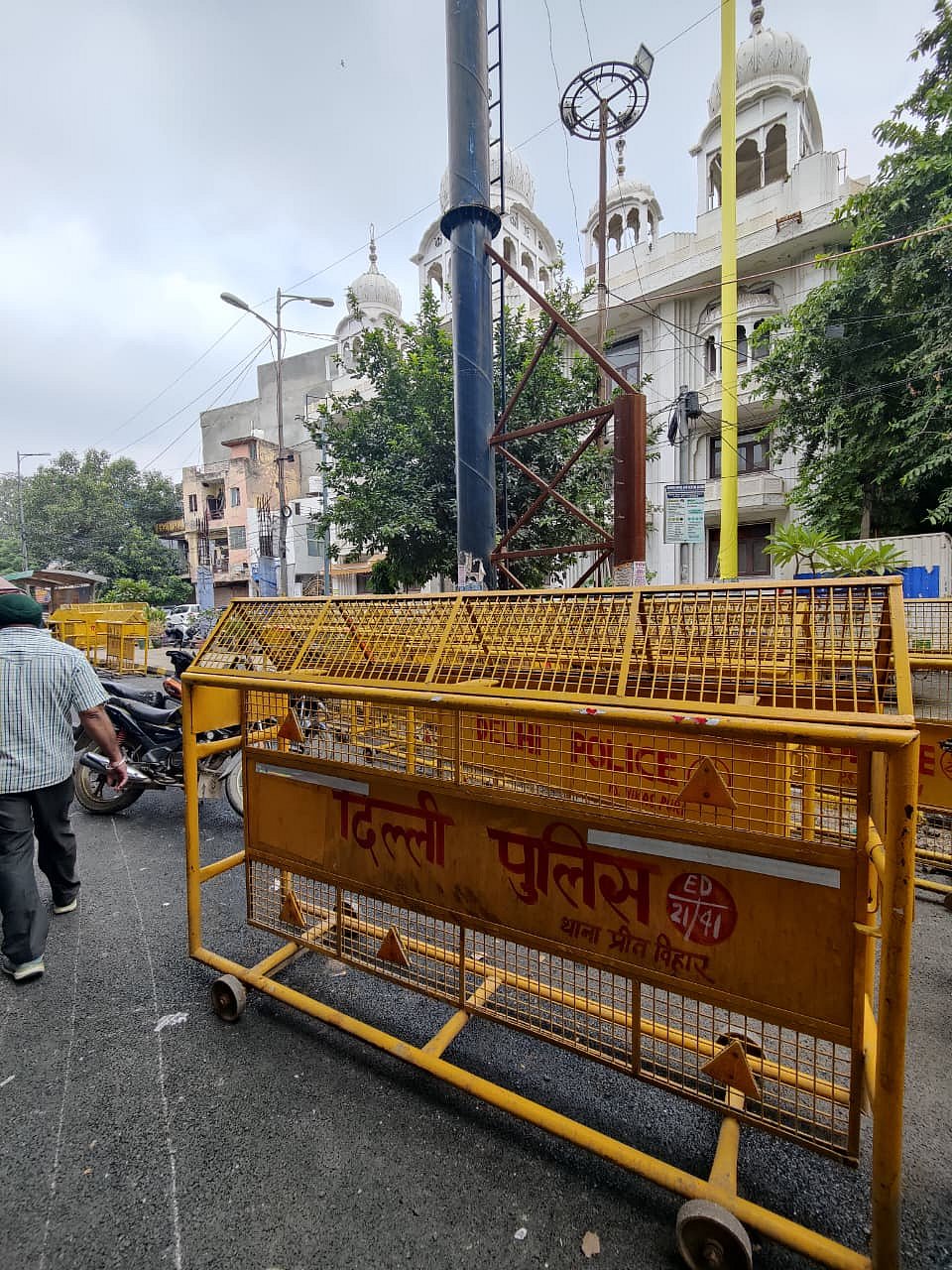
The gurdwara is separated from the main road by a service road, which was also carpeted recently, despite not being a part of the tender. According to the PWD minister, the carpeting was done solely to “facilitate” the gurdwara because it had an upcoming festival celebration.
In a video, Parvesh Verma said MLA Jarnail Singh had asked PWD engineers to repair the road, and they carried out the work there. But Verma pointed out that this road was only “temporary”.
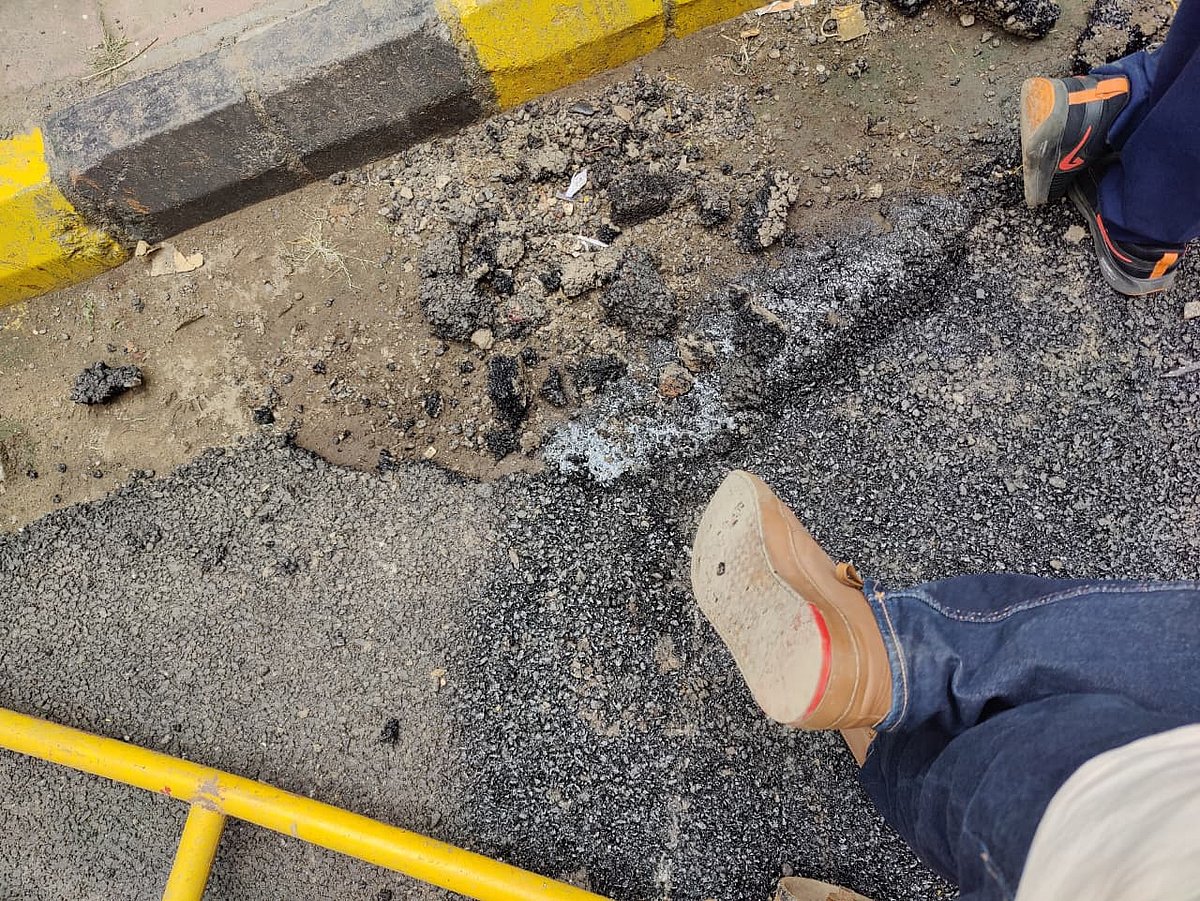
This was also the spot where locals had shown the PWD minister how easy it was to peel off the surface – both on the main road and the service road.
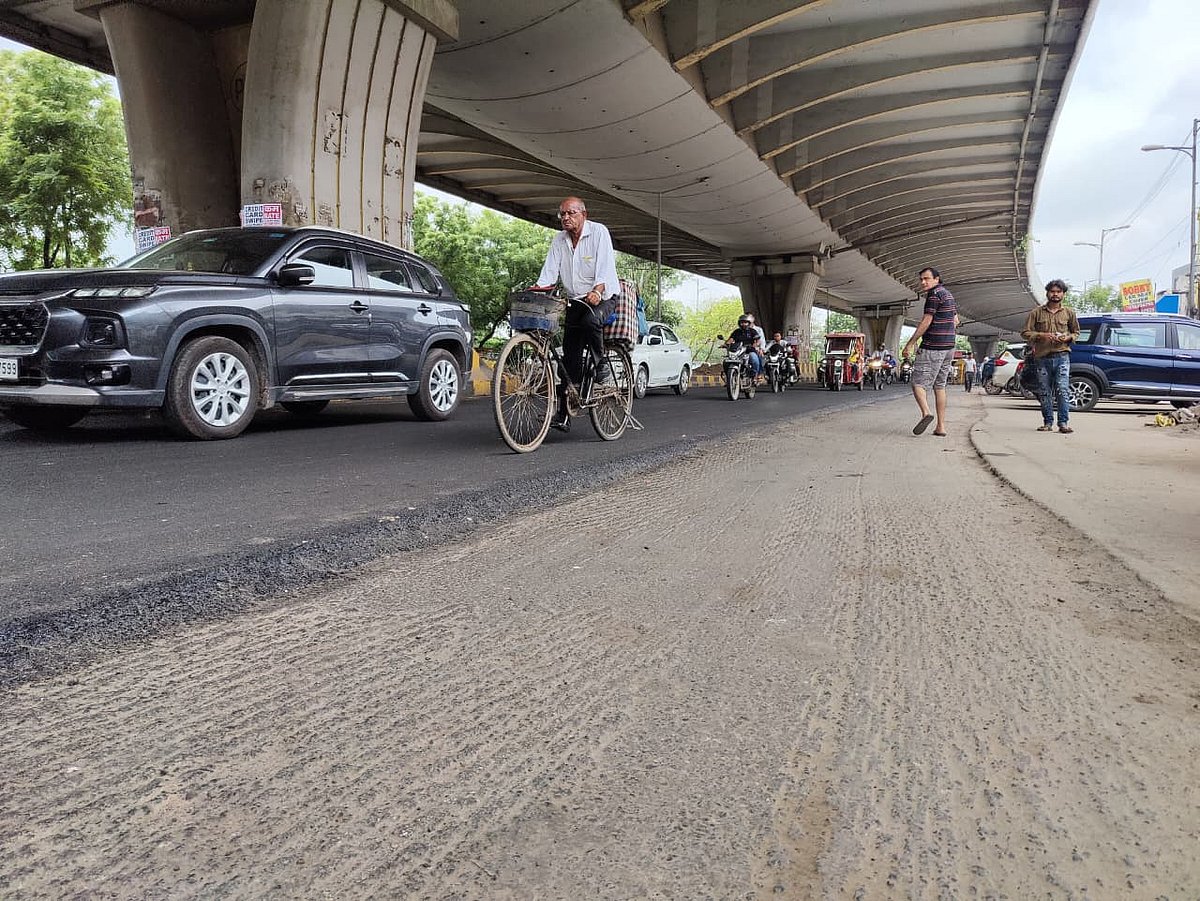
As one rolls down the road around 200 metres towards the Najafgarh Drain, the picture changes. One could see repairs done in patches, and some portions were left bald.
Before resurfacing, the existing bituminous layer is generally milled or scraped. As we got closer to the Najafgarh Drain, Newslaundry found large mounds of what appeared to be scraped road material dumped on a service road.
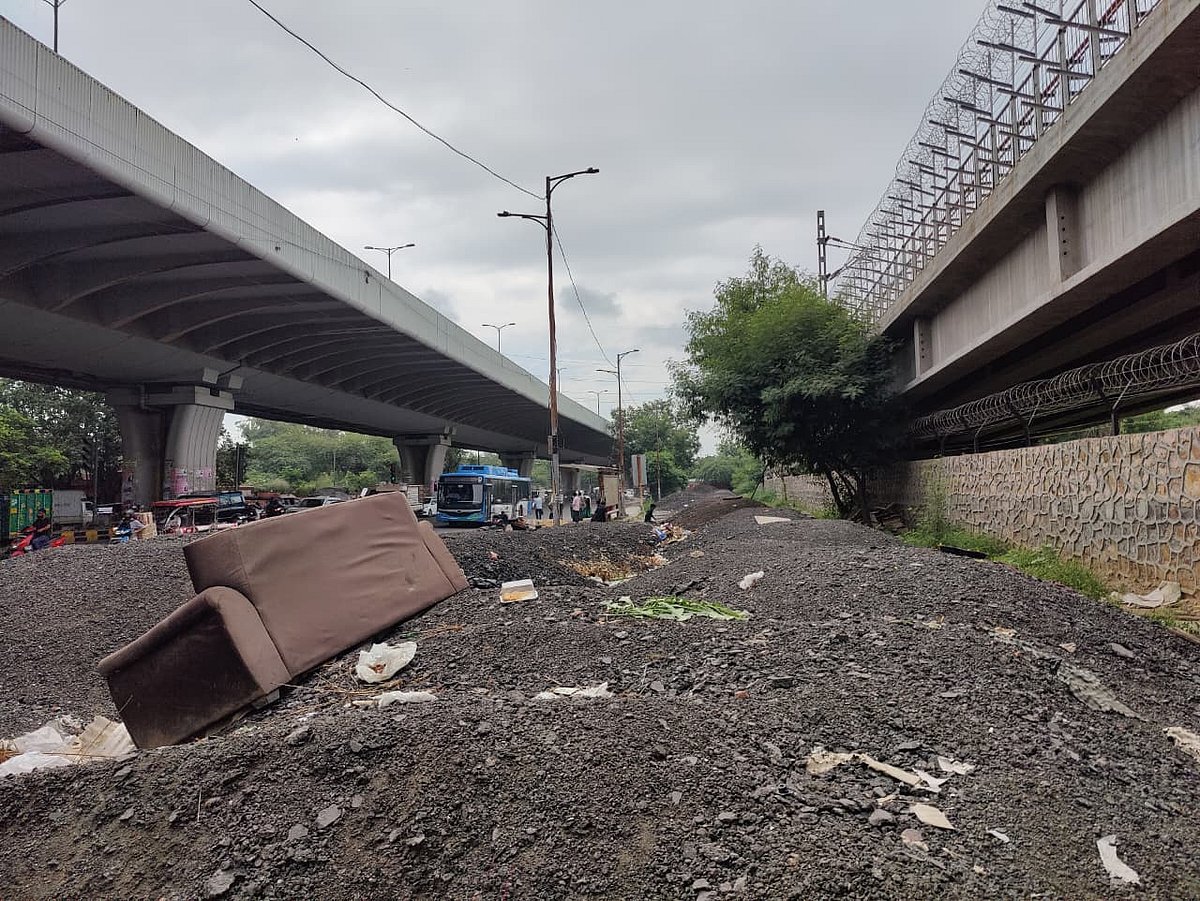
“The first layer of this road was built around six months ago. That’s when they dumped this waste here. They come in the night and leave it here,” a roadside clothes seller said.
Newslaundry contacted the PWD by phone and email asking about the material and its disposal, but did not receive a response by the time of publication.
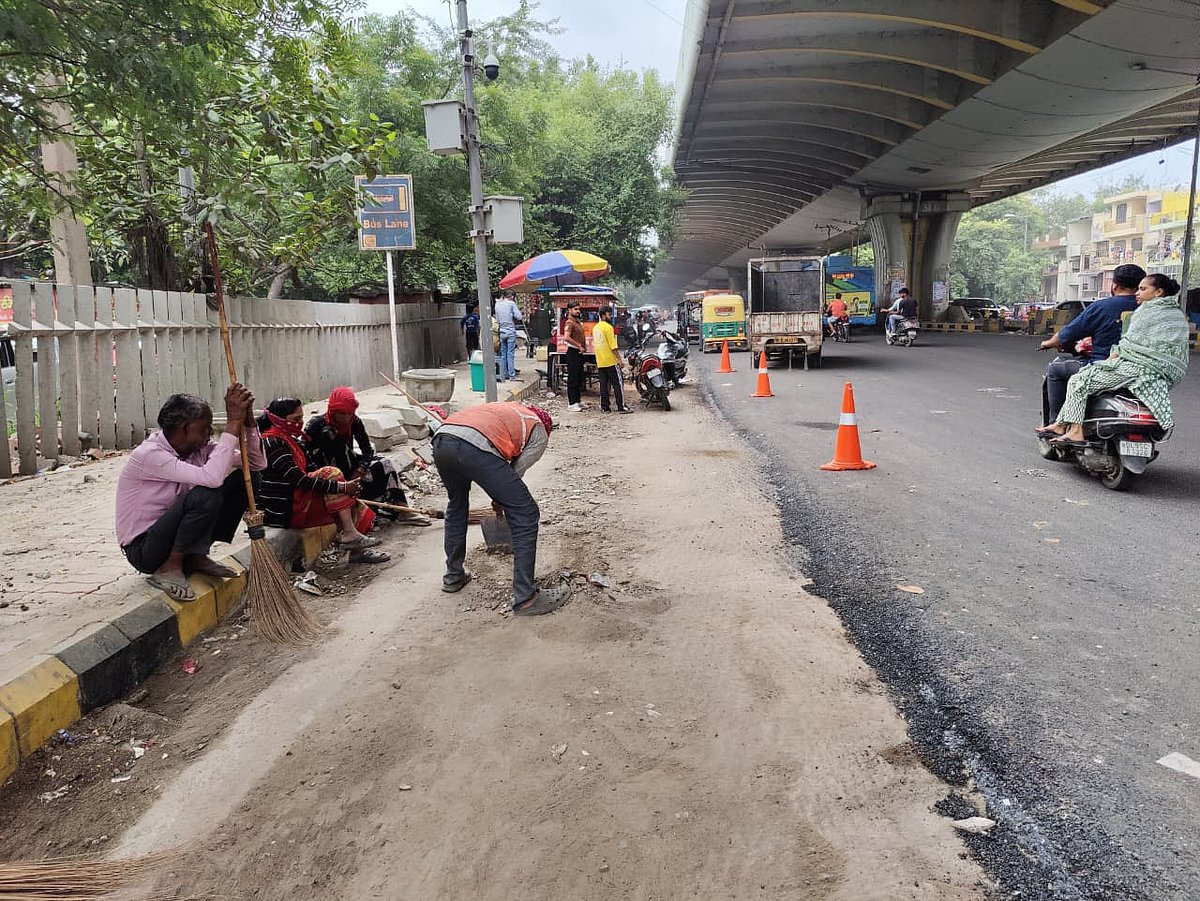
While the road in front of the gurdwara (both sides) was fully carpeted, despite being peeled off in parts, the rest of the carpeting seemed to have been done in a piecemeal manner. At several places, a sharp line was visible between the fresh, dark bitumen and the older, lighter road surface beneath it, clearly showing where the new layer ended and the old one began.
The road is still under repair, as workers were also seen cleaning the surface of a scraped road for bitumen mix to be laid on.
But how can a newly laid road peel?
A pavement scientist at the Central Road Research Institute (CRRI) told Newslaundry that there could be several reasons.
“A road peeling off can have multiple reasons. Loss of bond can happen due to the tack coat, improper cleaning of the existing surface, dampness, or lack of compaction.”
When a second layer of bituminous material is laid over an existing bituminous surface, a tack coat is applied between the layers to help them bond.
The scientist said poor-quality or insufficient tack coat, inadequate cleaning of the existing surface, dampness and inadequate compaction (use of the roller) could all potentially affect the bond between layers.
“Either the tack coat was not of proper quality, or the cleaning wasn’t done properly. Even compaction may not affect this as much.”
The scientist also pointed to the importance of temperature during laying. Bituminous mixes need to be laid and compacted within the appropriate temperature window. If the mix cools excessively before it is properly laid and compacted, this can affect the quality of the finished surface.
“Since the plants are away from Delhi, the temperature of the mix can decrease. A cold mix will not lead to the bonding,” the scientist said.
These are possible causes, the scientist stressed, and determining the actual reason for any peeling would require examining the road and the construction process.
A quarter-century of Modi governance calls for questions and a hamper. To mark the occasion, we have offers for subscribers and other readers.