Paisa and power can’t protect journalism: Why readers are the only safety net that works
Power demands caution, but readers carry the kind of messy, inconvenient truth that billionaires can’t domesticate.

Yay! Newslaundry is 14 years old.
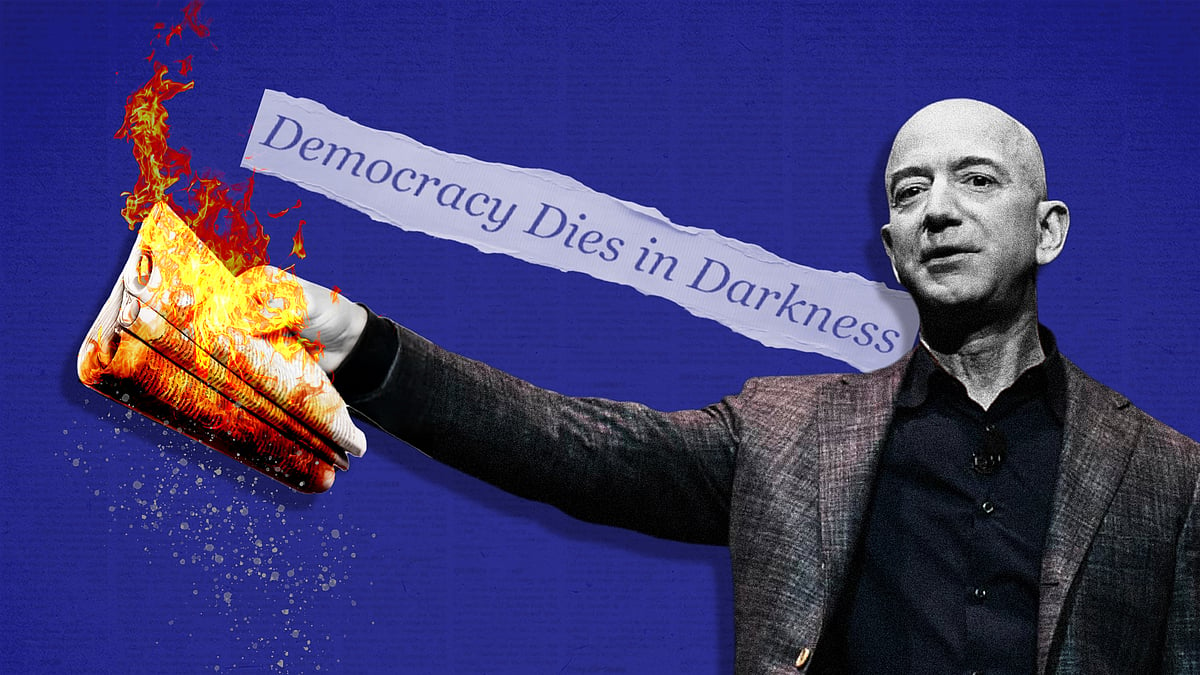
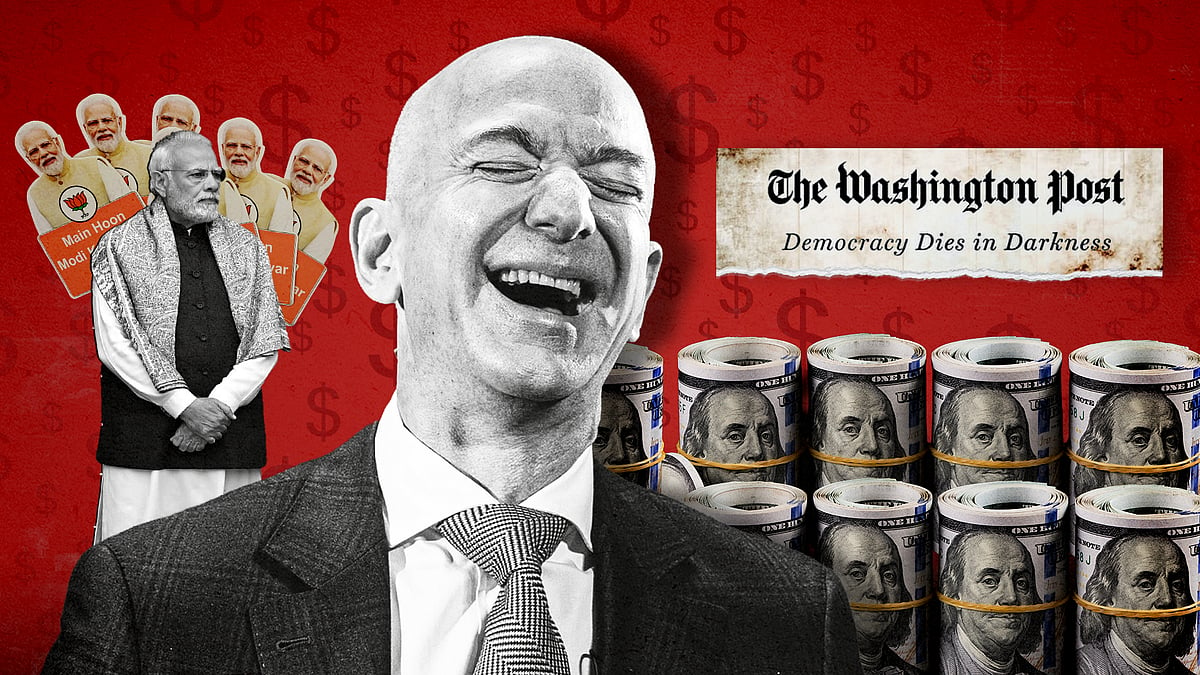
It’s an ironic sentence to write this week, because it lands in the middle of another story playing out elsewhere. One of the most iconic newspapers in the world, The Washington Post, has just laid off a large part of its newsroom. So many editors, correspondents, and artists are gone. Many key foreign desks are hollowed out. A paper that once prided itself on global presence is now forced to shrink itself into something more manageable, more defensible, more affordable.
The contrast is uncomfortable, but it’s also clarifying. On one side, a subscriber-funded newsroom in India is marking another year of survival in a media ecosystem that has steadily narrowed its imagination. On the other hand, a newspaper owned by one of the richest individuals alive is cutting back on journalism because it no longer fits neatly into sound financial logic.
Put those two facts next to each other, and a question emerges, which seems almost inevitable. If immense wealth cannot protect a newsroom, what exactly have we been expecting money to do for journalism all these years?
For a long time, the answer seemed obvious. Legacy media models were collapsing under their own contradictions, funded by advertising systems that no longer worked the way they once did. Into this confusion of shifting readership and archaic distribution structures, private wealth stepped in - BIG money - presented not just as liquidity, but as rescue.
Billionaires buying newspapers were framed as patrons stepping in where markets had failed. It sounded comforting, because it shifted the problem away from the newsroom itself and onto balance sheets.
Capital and journalism speak different languages. For someone like Jeff Bezos, The Washington Post ultimately sits alongside other large operations, expected to account for its costs and justify its scale. For societies, journalism functions very differently – less like a business to be optimised and more like shared infrastructure whose value often shows up only when it causes discomfort. That difference can be managed for a while, but it doesn’t go away.
At TIME, after Marc Benioff’s acquisition, the centre of gravity quietly shifted towards events, licensing, and brand extensions, areas where revenue is easier to predict than in investigative reporting. At the Los Angeles Times, Patrick Soon-Shiong’s ownership eventually ran up against the costs of sustaining a large newsroom, resulting in some of the paper’s most significant cuts.
India has seen its own version of this pattern. When Gautam Adani took control of NDTV, the change that mattered was the change in ownership itself. A newsroom that had once operated at a certain distance from power now existed inside a corporate group closely aligned with it. The outcome was not dramatic, but it was decisive: many journalists left, the tone shifted, and the space for friction narrowed – different owners, different contexts, same result. Once journalism is made to answer primarily to capital, its room to act begins to contract.
The trouble begins when a news organisation is asked to behave like a business optimised for return, rather than a public service designed for scrutiny. At that point, no amount of money changes the outcome. That is the fallacy at the heart of the “rescue” narrative.
When a plutocrat buys a newsroom, it isn’t accompanied by a sudden hostility to journalism. What changes is the frame through which the work is seen. It becomes another operation to be assessed, another investment expected to justify itself. And once it is placed inside that logic, familiar questions follow about margins, costs, and efficiencies. Questions journalism has never been particularly good at answering.
But capital fails to understand that these aren’t flaws. They’re the job.
A different centre of gravity
This is where Newslaundry comes in - not as a counterexample meant to impress, but as a different answer to the same question.
If money and power cannot sustainably underwrite journalism, then what can?
From the outside, our model is often described as idealistic. From the inside, it feels closer to pragmatism. Patronage almost always comes with expectations, whether they are stated openly or absorbed gradually. When advertisers pay, advertisers are served. When governments pay, governments are served. When powerful individuals pay, editorial priorities adjust themselves to their tolerance for discomfort.
We chose not to spend our time negotiating those tolerances.
Instead, we made a simpler, albeit a harder bargain. Readers pay, and our journalism earns its keep. Not as charity, but ownership. Thousands of people contributing small amounts, no single cheque large enough to tilt coverage. No patron whose irritation becomes a newsroom concern.
This arrangement doesn’t come with much comfort. There is no wealthy owner to absorb losses quietly, no safety net when a story upsets the wrong people. Every investigation has to earn its place with readers who are free to argue, criticise, cancel, or walk away.
That vulnerability is often mistaken for fragility, when it is the constraint that keeps the work grounded.
When readers pay, accountability flows outward, and journalism answers horizontally to people. There is no boardroom anxiety about offending advertisers, no calculation about political goodwill, no need to soften questions to preserve access. It’s a different sort of pressure - dispersed, constant, and visible.
Subscriber-funded journalism doesn’t guarantee virtue. Nothing does. But it does something quieter and more important. It aligns journalism’s survival with its readers' trust rather than the comfort of its patrons. It makes sustained bad faith harder to hide. It makes avoidance costlier.
Fourteen years, by itself, is not a badge of honour. What time gives you, if you’re paying attention, is clarity. About what corrodes slowly. About which compromises accumulate into habits you can’t undo.
In an industry that has steadily moved towards consolidation, corporate ownership, and proximity to power, staying reader-funded is not the easiest path. But it is a coherent one. It removes a set of conflicts before they calcify into structures. It keeps journalism answerable to people rather than insulated by wealth.
This is why the Washington Post moment matters, and why NDTV matters too. Not because they are cautionary tales about specific owners, but because they expose a larger misunderstanding. Journalism does not fail because it lacks money. It fails when money becomes the condition of its legitimacy.
If journalism is left to power, be it corporate or political, it will eventually begin to behave like power, which is always cautious, strategic, and unwilling to unsettle the arrangements that sustain it.
If readers carry journalism, it remains something else entirely. Messy. Argumentative. Occasionally inconvenient. And far more difficult to domesticate.
So yes, Newslaundry is 14 years old.
That doesn’t call for a victory lap. It calls for a quieter kind of confidence. The kind that comes from having chosen a harder path, and discovering in time that it holds. If you care about journalism not as a product, but as a public good, this is the work worth sustaining.
Not because it is perfect. But because it belongs where journalism always should – with the public that needs it.
Billionaires don’t have your back – whether it’s Bezos in Washington or someone else in Delhi, profits will always come before the public, and we’ve spent years reporting exactly what that does to newsrooms. The only real counterweight is you: subscribe, support independent journalism like Newslaundry, and help us prove that readers together are more powerful than any billionaire.
 From Watergate to watered-down: Every Indian journalist should read this piece
 What the ‘murder’ of Washington Post means for India