‘Feels like a betrayal’: SIR deletions hit BJP’s own Hindu refugee base in West Bengal
Many fear forced displacement while BJP workers on the ground try to assuage concerns.

“It feels like we aren’t worth anything at all. Everyone is able to vote but us. Money aatonko aatonko hocche (My mind is wracked with fear). Those who have voting rights, they have [worth]; we have nothing else,” says Pratima Roy, a 34-year-old resident of Bongaon Uttar.
For Roy and many in West Bengal’s Matua community, the Special Intensive Revision has triggered a familiar anxiety: the fear of losing not just a place on the voter rolls, but their claim to citizenship itself.
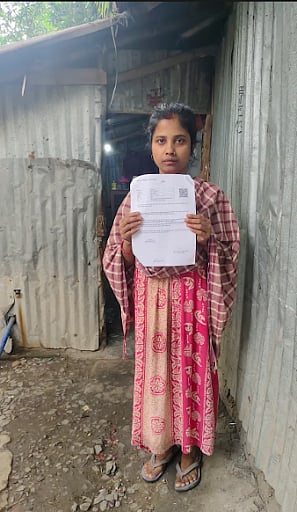
With over 1.3 crore voters spread across at least 55 assembly constituencies, the Matuas have long been a decisive political bloc, many backing the BJP in hopes that the Citizenship Amendment Act would secure their status. But as names disappear from electoral lists, questions are being raised whether the party’s carefully cultivated Matua support base might be affected just as the state heads into elections.
Barely a few hundred metres from a BJP party office in Bongaon Uttar, Bishnupriya Majumdar, a homemaker, says they had voted for the BJP before to “secure citizenship and to live a life of dignity”. With her and her husband, Shyamal, currently struck off the list, Bishnupriya says it “feels like a betrayal”. Her husband, however, is reluctant to blame “any political party” and says that the officials checking the documents made the error. The contrast within a single household reflects a larger divide.
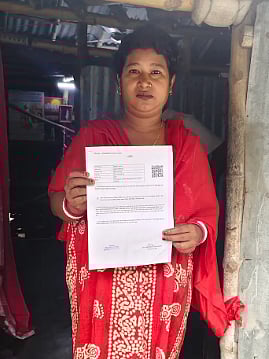
Rooted in a 19th-century reformist movement, the Matua community in the state largely comprises Scheduled Caste Hindu refugees from East Bengal who came to the state during different phases starting from the Partition. The group was known to align with the Left for years before gradually backing the Trinamool Congress before it came to power in 2011. While Matuas received benefits of government welfare schemes and secured identification documents such as voter ID and Aadhaar card, the official citizenship status remained coveted.
In recent years, their support significantly shifted towards the BJP, primarily over the promise of citizenship. The 2019 Citizenship Amendment Act, that grants citizenship to minority refugees from neighbouring countries, acted as a game-changer. During the 2019 Lok Sabha elections and 2021 Bengal Assembly elections, Matua belts contributed towards an increase in BJP’s voteshare.
Representatives from the Matua community say that deletions were politically significant.
“There is some anger among community members,” confirms Sukhendranath Gain, general secretary of the BJP-aligned faction of the All India Matua Mahasangha (AIMMS) – an influential socio-religious organisation representing the community. “But there is no other option for those seeking refuge. The refugees have understood that they need the citizenship [document]. The oft-repeated claims made by opposition leaders that the Voter ID card, Aadhaar card, and PAN card meant citizenship have fallen flat in the face of the current SIR exercise.”
Chief Minister Mamata Banerjee has, on countless occasions, assured Matuas that they belong here by pointing to their “voter ID, Aadhaar, and PAN cards”. Her party also leverages state government initiatives to woo Matua voters. These SIR deletions provide the TMC with a fresh plank to urge the community to vote against what they perceive as a betrayal.
While addressing a meeting in the Matua-dominated areas of Nadia and North 24 Parganas on Tuesday, the CM alleged that the minorities, including Matuas, were systematically removed from voter rolls. “Those who came in 2024 have CAA for them, but the names of those living here for years have been erased. Why is this discrimination happening? Why are Matuas being excluded [from the voter list]? Why are Rajbanshis and minorities being targeted?” she said in Chakdaha.
Fears of forced displacement
Though the Election Commission of India told the Supreme Court that its verification checks were strictly limited to voter registration eligibility and were not a tool for determining citizenship for deportation, it has not allayed worries on the ground.
Several Matua families Newslaundry spoke to in Matua belts of North 24 Parganas and Nadia districts had a common source of anxiety: forced displacement to Bangladesh.
Akhil Halder, a resident of Nadia’s Ranaghat area, says, “Despite my name being included in the 1995 voter list, during the current SIR, my name was put under adjudication at first and deleted later. It appears that the BJP is for the Matuas only in name. Everyone is saying that we will be pushed into detention camps like those in Assam.”
Bangaon BJP MP and Union Minister Shantanu Thakur says the party has made efforts in assuaging these fears. “Not even one person, who arrived here within the cut-off date, will have to go to Bangladesh…This is BJP’s confirmation and the message has reached everyone.” According to Thakur, over one lakh applications had been filed under the amended Citizenship laws and “at least 4,000 to 5,000 people” had already received citizenship certificates. This means, broadly speaking, nearly seven years after the law was passed in Parliament, only 5 percent of applicants received citizenship certificates – amounting to roughly 0.04 percent of Matua voters based on estimates.
Trinamool Rajya Sabha MP Mamata Bala Thakur, who also leads the TMC-faction of AIMMS, questions the BJP record.
“Matuas came here after facing intense persecution. Now, they are pushed into a cycle of suffering again. People are dying by suicide, crying inconsolably, and worrying about their future. What can be a bigger loss than losing your voting rights? How can anyone say that this won’t cause any damage? People voted for BJP hoping they’d secure citizenship but through SIR, their existing rights were also snatched away.”
There is some anger among community members. But there is no other option for those seeking refuge. The refugees have understood that they need the citizenship [document]. The oft-repeated claims made by opposition leaders that the Voter ID card, Aadhaar card, and PAN card meant citizenship have fallen flat in the face of the current SIR exercise.
Sukhendranath Gain, general secretary of the BJP-aligned faction of the All India Matua Mahasangha
BJP’s damage control
BJP workers on the ground point to multiple steps to assuage the concerns of Matua voters.
“The local booth sabhapatis are helping them file and submit an appeal – online as well as offline – along with helping with Form 6 applications where needed. All Hindu voters, including general category voters, whose names were removed from the list are also receiving assistance in their applications. I am hopeful that the Union Home Ministry is thinking about this and Matuas aren’t deprived of their voting rights,” says Aparna Nandi, Nadia Dakshin BJP president.
Her counterpart in Bongaon, Bikash Ghosh, keeps it simple. “We are taking all necessary steps. All [Matua] names will be included in the voter list before polls.”
These measures also appear precautionary. In December last year, Shantanu Thakur triggered a political controversy by suggesting that the voting rights of 1 lakh Matuas might be suspended. At a public meeting in Matua-dominated Hanshkhali-Garapota, Thakur had said, “If today, voting rights of 1 lakh people from our community are temporarily halted while names of 50 lakh Rohingya Muslims, Bangladeshi Muslims, and Pakistani Muslims are removed from the voters’ list, which one of the two is more beneficial?”
Explaining his remark, he added, “Isn’t it appropriate for us to accept this [removal of one lakh names]? We fled for our lives from there [across the border]. If we are expected to live with our perpetrators today, when will we exact revenge?”
In the past few months, the Matua-dominated areas have seen multiple protests related to the SIR exercise. News reports indicate people are turning to TMC in protest.
Satyendranath Sarkar, 72, a Matua voter residing in Bagdah, who says that he recently facilitated 61 families to join TMC, says “I had campaigned for the BJP in recent years but this time, I will be canvassing for TMC. Many families in touch with me have declared support for them because BJP failed to keep its word. So many of our voters have been deleted in the SIR exercise. The way BJP has betrayed people cannot be tolerated by any sane human being.”
Matua infighting
Along with the SIR, the other challenge for the BJP is the ongoing infighting within the Thakurbari.
It’s the community’s sacred headquarters. But to understand this better, one has to go back in history and learn more about the community’s first family in West Bengal.
After the Partition, Pramatha Ranjan Thakur, great-grandson of Matua sect founder Harichand Thakur, moved to West Bengal and set up modern-day Thakurnagar as a refugee colony. Since then, the Thakurbari has been a pilgrimage site for Matuas from all over the state.
Thakur had been accompanied by his wife Binapani Devi, affectionately known as Boro Maa, who went on to lead the community after her husband’s death. The couple had two sons: Kapil Krishna Thakur and Manjul Krishna Thakur. While both were initially in TMC, their paths diverged in 2015 when younger brother Manjul Krishna (also the-then state cabinet minister) switched to BJP with his two sons – Shantanu Thakur and Subrata Thakur. Meanwhile, following Kapil Krishna Thakur’s demise in 2014, his widow Mamata Bala Thakur took over the baton – she has remained within the TMC fold and is currently a Rajya Sabha MP.
In the upcoming polls, Mamata Bala Thakur’s daughter Madhuparna Thakur – the sitting TMC MLA from Bagdah – is pitted against her sister-in-law Soma Thakur, wife of Shantanu Thakur. Incidentally, the constituency also had the second-highest number of deletions (15,303) in the state following the publication of the final SIR list in February.
Soma Thakur’s candidature has led to widespread protests in Bagdah by a section of BJP workers and Matua supporters, who have expressed discontent over an “outsider” being “imposed” upon them. “The perception that only those associated with Thakurbari can consolidate votes is no longer correct. Activists from Matua organisational groups should also be given a chance to represent people,” says AIMMS General Secretary Gain, adding that the dissent may impact the poll outcome in Bagdah.
A rift between the Thakurbari brothers – Shantanu and Subrata – may also influence voting patterns.
Last year, Subrata Thakur, who is the BJP’s Gaighata MLA, announced a new front of the AIMMS, effectively splitting the BJP-backed Matua faction. Multiple sources pointed out that the shift was evident after the two brothers engaged in a public spat in August last year over the distribution of the religious certificates required to fill CAA forms.
Matuas came here after facing intense persecution. Now, they are pushed into a cycle of suffering again. People are dying by suicide, crying inconsolably, and worrying about their future. What can be a bigger loss than losing your voting rights? How can anyone say that this won’t cause any damage? People voted for BJP hoping they’d secure citizenship but through SIR, their existing rights were also snatched away.
TMC Rajya Sabha MP Mamata Bala Thakur
‘Community in panic mode’
Kolkata-based Sabar Institute researcher Sabir Ahamed, who engaged in an analysis of 15 Matua-dominated assembly constituencies across North 24 Parganas and Nadia districts, says, “Our initial analysis showed that Matuas are the most unmapped population – much higher than the state figures – triggered mostly due to legacy documentation gaps. With uncertainty over their voting rights and anxiety over citizenship, the community is in panic mode. There is a possibility that the SIR exercise may backfire for the BJP. The Matua population is getting benefits from the state’s welfare programme and BJP’s lip service may not work despite the polarisation politics. This might trigger a shift of votes towards the TMC.”
Though not everyone is quick to write off the BJP just yet. Some locals, such as Bongaon resident Sushoma Biswas, allege that officials struck their names off the rolls because of their alignment with the Trinamool Congress. “In our Debgarh, most of the names struck off the rolls were of those who supported TMC.”
A senior journalist, who has tracked the shifting political allegiances of the Matua community for nearly two decades for a mainstream news outlet in Bengal, expresses caution over making predictions based on random sampling. “Individual statements cannot indicate voter sentiment. BJP did take a risk [with Matua deletions] but it has also been working at the para level to gain trust of the community. How it will pan out, nobody knows. Though I don’t see the community moving away from BJP, only time will reveal the [SIR] impact.”
The Matua Woe
Lack of awareness, coupled with political misinformation, has further aggravated anxiety among Matua voters, many of whom rely on the state government’s welfare schemes. Khokhon Sarkar, an elderly resident in Bagdah, says “The election authorities and the Central government have caused this tension. I am scared about losing my old age pension. I use that money to buy my medicines for my nerve-related ailments. What if deletion of my name from the voter list also stops all government benefits?”
Bagdah resident Santu Biswas, a student at Calcutta University, says he had to stand in a queue for eight hours at the DM office after the names of his father and grandmother were removed from the voter list. “My father is a passport holder. I don't know how his name was removed. We filed an appeal and a Form 6 application through the ECINET app, which shows that a BLO has been appointed for the case. But we haven’t heard anything on the case so far.”
When asked about the electoral impact of the SIR exercise, the law student says, “It will impact the polls. In my family, though my father’s name was removed, mine is still on the voter list. Think about it: will I vote for them after they remove my father’s name?”
The SIR has not just affected people mentally and physically but also financially. For migrant workers, the decision to stay home in attempts to protect their vote has turned into an economic trap.
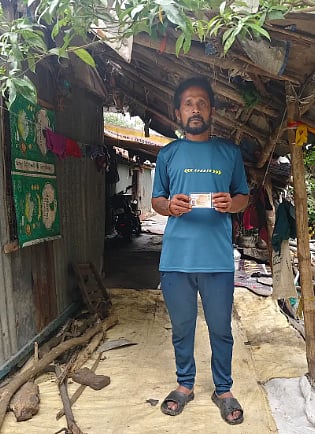
Prabhat Roy, a migrant worker from Bongaon whose name was deleted from the final voter rolls, says he hasn’t been able to go back to his workplace in Tamil Nadu for over a month due to the uncertainties surrounding the SIR process.
“I came home in mid-February and haven’t gone back since because I wanted to make sure my name was cleared during the adjudication process. Ultimately, my name was deleted along with my father’s and I don’t know whom to approach. I was the primary breadwinner of my family but now, my mother and my son have to work to manage two square meals a day – all because I wanted to vote. This was my personal right and they snatched it,” he says.
Helencha resident Meera Mondal claims she cannot sleep at night ever since the names of her entire family of three were wiped from the voter roll. “I have already lived a full life; I am not worried about myself… But my sons are just starting out their lives.”
Kainat Sarfaraz is a Kolkata-based independent journalist.
Elections are not just about who wins, but about the questions that often go unasked – and this time, they matter more than ever. Support our new NL Sena on the five upcoming assembly polls to help us follow the missing voters, the shifting politics, and the stories that could shape India’s future.
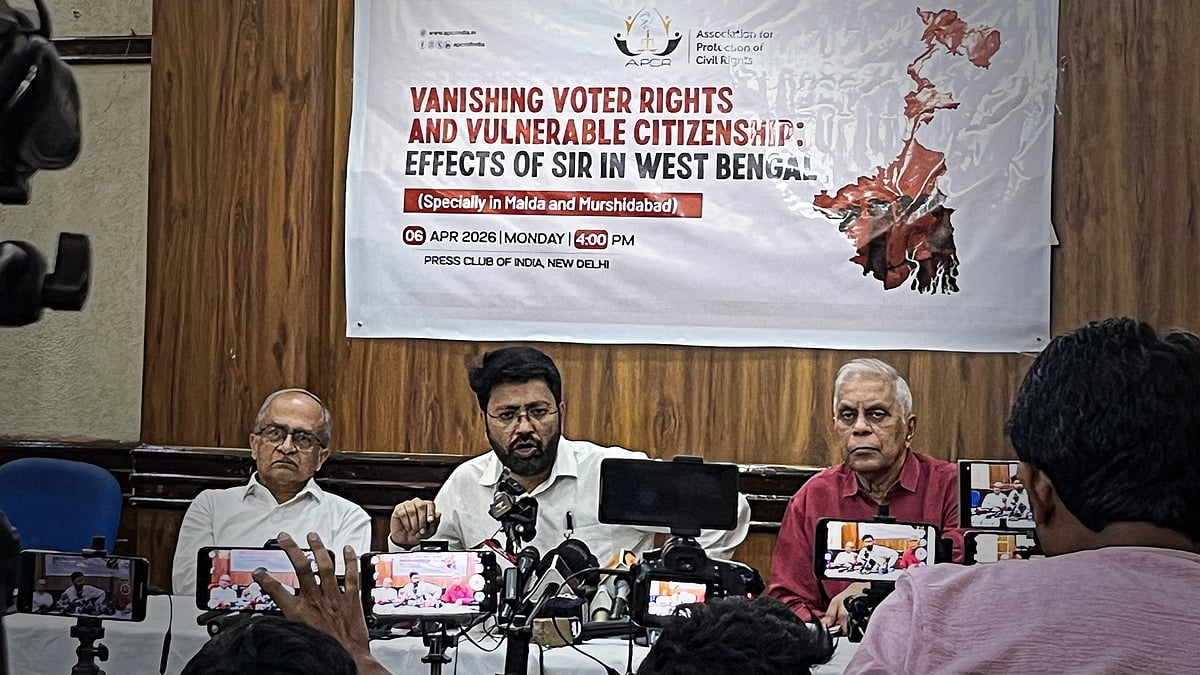 Amid Bengal voter roll uncertainty, activists flag ‘disproportionate’ exclusions
 The Dhaka effect: Did the BNP’s win in Bangladesh blunt the BJP’s poll pitch in Bengal?