As BJP govt ads celebrate Ujjwala, beneficiaries count costlier cylinders
This is the second cut in two years.

This month, LED hoardings inside several metro stations across Delhi show PM Narendra Modi on one side, CM Rekha Gupta on the other, and beaming Indian women in between. These are advertisements marking 12 years of the Modi government and celebrating the Pradhan Mantri Ujjwala Yojana (PMUY) for making kitchens “Dhuan-Mukt” (smoke-free).
But what the boards don’t mention is that the government has just slashed the scheme’s benefits again.
In June 2026, it cut subsidised LPG refills for PMUY beneficiaries from nine to four per annum, while holding the subsidy at Rs 300 per 14.2 kg cylinder. This is the second cut in two years – refills were trimmed from 12 to 9 in 2025 – even as the scheme is touted as having delivered over 10 crore LPG connections and pushed national coverage to “near saturation,” up from 62 percent in 2016.
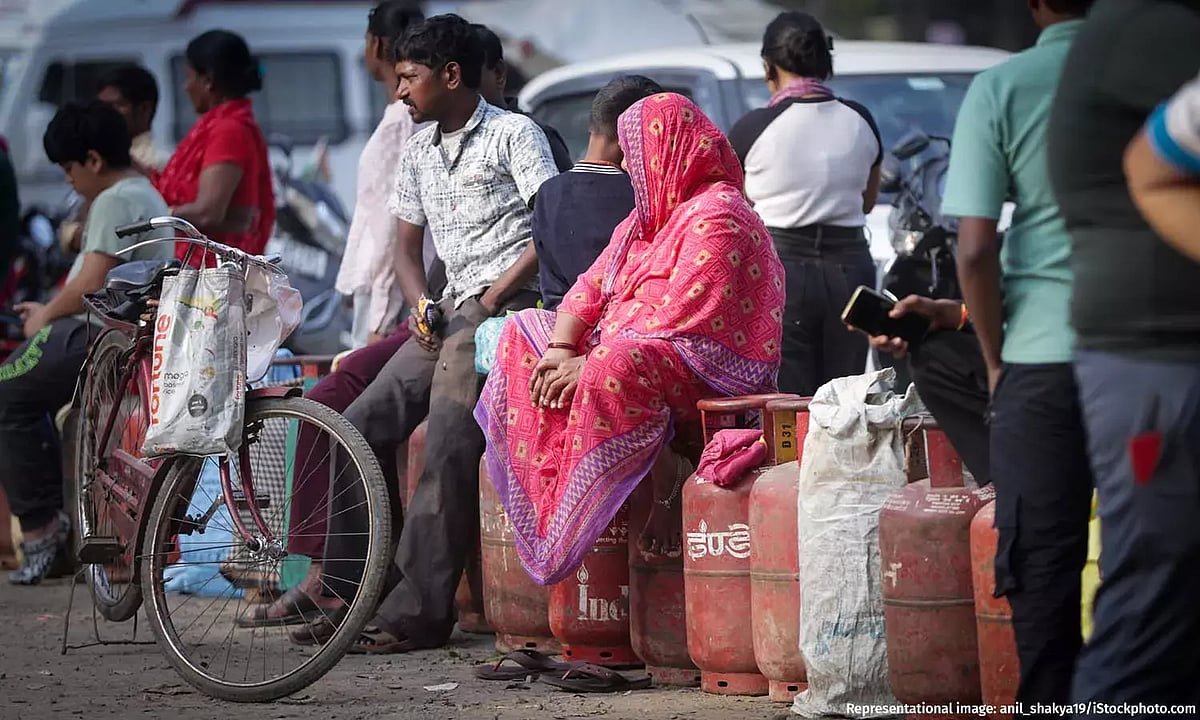
In Delhi, an LPG cylinder now costs Rs 942 for general consumers and Rs 642 for PMUY beneficiaries – but only for their first four refills a year; after that, beneficiaries pay full price too.
This comes amid the recent increase in LPG prices. The government cites data and global pressures to defend the decision. Additional Secretary in the Union Petroleum Ministry Praveen Khanooja earlier stated, “Whether I’m a Ujjwala customer or a non-Ujjwala customer, I’m getting a cylinder which should have cost Rs 1,600 at Rs 942, which is also an indirect subsidy. Over and above that, Ujjwala customers get Rs 300 more; therefore, they are getting Rs 1,000 (subsidy per cylinder).”
For many, the cuts aren’t just a number
Yasmin, from Khichripur, uses roughly a cylinder a month and called four refills insufficient: “Four cylinders are too few. What will a poor person do?” She also claimed that many in her locality, including her, hadn’t received subsidy payouts for stretches ranging from eight months to two years.
Newslaundry reached out to officials in the Ministry of Petroleum and Natural Gas for a response to these allegations. We will update this report if and when we receive one.
Mehak, who lives in Begumpur Basti, said her family of five needs at least five cylinders a year: “I didn’t know the government was cutting the subsidy; there will be much difficulty. But we need to eat, so we’ll buy the cylinder at Rs 900, what else can I do?”
There is a structural bind here: PMUY beneficiaries already consume less LPG (4.47 refills/year) than non-PMUY households (6.5/year) – plausibly because of the poverty the scheme targets.
Pratibha, another beneficiary, said the change could force a return to the chulha. She said the Rs 300 subsidy often functioned as a buffer. “When we earn only Rs 4,000 a month, isn’t Rs 300 a lot?”
A 2019 CAG report had flagged the risk: low refill retention among PMUY households tends to push families back toward chulhas and biomass fuel – undercutting the scheme’s original health and environmental rationale.
The government earlier made it a point to emphasise the scheme’s women-empowerment aspect. By 2022, this subsidy was capped at Rs 200 per refill in a year, only later to be increased to a Rs 300 subsidy per 14.2 kg cylinder refill in October 2023. The government hailed this increase in relief to beneficiaries with much pomp back then, even holding a press conference to publicly announce this decision.
With the subsidised ceiling now much lower, that environmental risk resurfaces too.
A Sobhagya Bharat Gas Agency official in Mayur Vihar maintained that subsidy itself hadn’t been cut, only the refill count. “There is no cut in subsidy. Only the refills have reduced from nine to four.”
Aasha, an Anganwadi worker from Khichripur, claimed she hadn’t received her salary for six months. “Now they have cut this subsidy. How will this work?” She said “ads won’t run a household”.
Jagannath, who runs a one-room tuition centre for children in a slum settlement in Indira Camp, Begumpur, has a family of six. He said the Rs 300 subsidy meant daily essentials and its loss will mean visible adjustments. “We used that money for vegetables and other household necessities. We will have to cut back, and work harder to make up for it,” he said, adding that all of it is “entirely in the government’s hands”.
The author is an editorial intern with Newslaundry.
Small teams can do great things. All it takes is a subscription. Subscribe now and power Newslaundry’s work.
 In Delhi’s scorching heat, its poorest women are back to the chulha
 India’s LPG crisis: The cost of weak energy planning