The making of Champat Rai: From trusted organiser to Ayodhya’s most controversial figure
As allegations over missing donations engulf Ayodhya, we trace the temple trust general secretary’s rise through the VHP, the controversies that dogged his tenure, and why many who once stood with him are now turning away.

In 1990, when L K Advani set out on his Rath Yatra from Somnath to Ayodhya, the journey didn’t survive contact with Bihar – Lalu Yadav’s government had him arrested in Samastipur. Into that vacuum stepped Ashok Singhal, the Vishwa Hindu Parishad’s then general secretary, who slipped into Ayodhya and performed the shila pujan.
Standing in his shadow was a young VHP functionary named Champat Rai. Under Singhal’s wing, Rai’s position within the organisation only grew – and according to people who watched it happen, caste had a good deal to do with it. Singhal and Rai were both Baniya, and observers say that shared identity smoothed Rai’s path.
Today, as the general secretary of Shri Ram Janmabhoomi Teerth Kshetra Trust, Rai is now at the centre of allegations about the misappropriation of Ram Temple donations. He was questioned this week as part of an SIT probe into the FIR in which eight persons have been booked.
Rai, on his part, has denied any role in the alleged embezzlement and tendered his resignation citing moral responsibility. The resignation is yet to be accepted.
From hanger-on to power broker
Rai’s stock had risen sharply once he was named the trust general secretary after the Supreme Court verdict paved the way for the Ram Mandir. But from the outset his tenure has trailed allegations. About incompetence, of murky land deals, of questionable procurement of construction material, and now, of the siphoning off donations.
Rai’s name keeps surfacing in connection with all of it, and that pattern has left many seers, Ayodhya residents and Hindutva activists visibly uneasy.
That is something we encountered during a visit to Ayodhya.
At Saryu Ghat, during the evening aarti, we met Virendra Kumar Pandey, who was in his 20s when the Ram Janmabhoomi movement was at its peak. “A man who merely played the role of a hanger-on during the Ram Mandir movement was made the general secretary of the trust. Those who went to jail and endured years of litigation were all forgotten,” he said, referring to Bajrang Dal founder Vinay Katiyar.
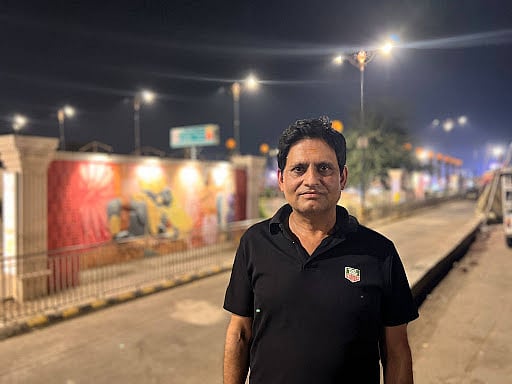
Beside him sat Karpatri Maharaj, who has long managed VHP affairs in Ayodhya. “Have you heard that statement by Champat Rai where he describes Prime Minister Narendra Modi as an incarnation of Vishnu? What kind of devotee of Ram could a man be who calls Modi an incarnation of Vishnu? Champat Rai was a favourite of Ashok Singhal. It was Singhal who brought him in; he used to carry Singhal’s files around. Singhal sahab promoted him based on his caste.”
The head priest of an ashram across the Sarayu in Ayodhya breaks into a parody of a verse from the Hanuman Chalisa. “Champat katai, mitai sab peera” (May Champat be cut down to size, may all suffering end). “Champat Rai has brought immense disrepute. His greed has tarnished even Ram Lalla’s name. Until action is taken against those at the top, the trust that Hindus have lost will not be restored.” That loss of trust, he claims, is already reflected in the decline in daily donations.
A journalist who has covered the movement since its early days offered a similar account: “During the movement, Champat Rai used to compile files for legal battles and take them to the High Court and Supreme Court. Apart from that, he didn’t have any significant role... Journalists would record his statements only when they couldn’t get quotes from figures like Ashok Singhal, Pravin Togadia, or Vinay Katiyar.”
Not everyone shares this view, of course. Subodh Mishra, who runs Champat Rai’s office at Karsevakpuram in Ayodhya, gushed: “Champat Rai-ji has created 20 Vinay Katiyars... Champat-ji strengthened the organisation.” He went further, telling us Rai is “even above the sants”.
The long climb
Champat Rai is from Bijnor in western UP. By the VHP’s own account, he taught physics for 12 years before going full-time with the RSS in 1981. Before that, he was jailed during the 1975 Emergency – as the oft-repeated story goes, he reportedly finished teaching his class before walking himself to the police station to be arrested.
After 18 months inside, he quit teaching to take up responsibilities for the Sangh: district pracharak in Dehradun (1981–84), then Saharanpur, then Meerut, before the VHP made him regional organising secretary for Western UP in 1986, based out of Agra – right as the Ram Mandir movement was hitting its peak. He was sent to Ayodhya in 1991, became the VHP general secretary in December 2011, and vice president in April 2018.
That 2018 vice-presidency followed the VHP’s first-ever contested presidential election, triggered by a rift between Praveen Togadia and rival factions. Vishnu Sadashiv Kokje won the presidency; Rai became his deputy. It’s widely believed Rai was firmly in the anti-Togadia camp, and Togadia all but vanished from public life soon after.
Asked whether Rai had a hand in his ouster, Togadia said that “is correct”.
Vinay Katiyar – Bajrang Dal founder and one of the movement’s most recognisable faces – reportedly had a public falling-out with Rai too, though Katiyar won’t discuss the details. When his name comes up, the bitterness is hard to miss: “Why do you even bring up his name?...Don’t talk about him.”
Katiyar wasn’t the only old guard eventually sidelined. At the August 2020 Bhoomi Pujan, Kalyan Singh – the BJP leader who lost his government over the Babri demolition – was reportedly told at the last minute not to attend. L K Advani and Murli Manohar Joshi weren’t invited either, officially because of Covid-19.
A chequered past
The current donations controversy isn’t the first time questions have dogged Rai or the VHP’s bookkeeping.
Santosh Dubey, a former Shiv Sena man who was part of the crowd that climbed the Babri domes in 1992, alleges that gold, silver and diamond Ram-shilas sent by devotees nationwide vanished in 2002 from behind triple-locked doors – a disappearance he says couldn’t plausibly have happened in a single day. When Mahant Paramhans Ramchandra Das, the head of the Ram Janmabhoomi Nyas, went to inspect them, he reportedly found them gone and was furious. Dubey says efforts to get a police case registered dragged on for months and ultimately failed.
Asked what Ashok Singhal did about it at the time, Dubey recalled Singhal’s reply: “Santosh, this will bring nothing but disrepute to Hindu society.”
Karpatri Maharaj, a VHP member associated with the Janmabhoomi movement, claims that Ramchandra Das had flagged his suspicions about Rai years earlier: “He would often tell us, ‘Son, keep a close watch, because Champat Rai is the one holding onto the incoming stone slabs and funds.’ Yet, the VHP never provided an account of the donations received during the temple movement.”
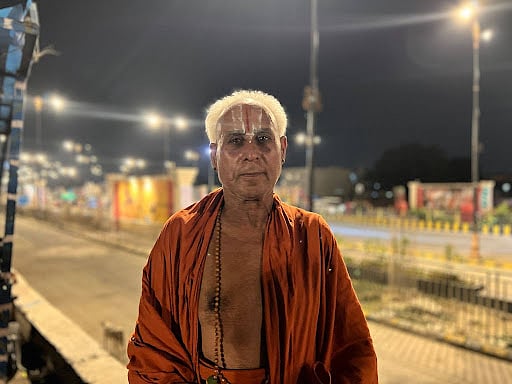
These remain allegations from named individuals, not established findings.
A questionnaire sent to Rai had elicited no response at the time of writing this report.
The land deals
Srivastava, a local who has long been associated with the Janmabhoomi movement, claimed that though the trust consists of several individuals, “it is these two people – Champat Rai and Anil Mishra – who run the trust”.
Newslaundry’s 2021 reporting on the trust’s Ayodhya land purchases had flagged this role.
In one case, Deepnarayan – nephew of a local BJP leader – bought a plot for Rs 20 lakh with Anil Mishra as witness; three months later, Rai allegedly bought the same plot for the trust at triple the price, again with Mishra witnessing. The land later turned out to be government Nazul land, not freely saleable. Separately, the Trust reportedly paid Rs 55 crore for land valued at roughly Rs 9 crore, even as the state government was acquiring nearby farmland at a fraction of that rate.
Rai’s name appears as the buyer on the documents. Trustee Kameshwar Chaupal (since deceased) had told Newslaundry a five-member land-purchase committee had technically been formed, but other trustees say it never actually met – only Rai and Mishra handled the purchases and reporting.
A state-appointed committee was set up to investigate; its findings have never been made public.
By trust accounts, donations between February 2020 and November 2025 totalled roughly Rs 4,575 crore. Trustees we spoke to said only aggregate spending figures are shared with them – not the specifics of where, how, or why the money moved.
More recent land disputes follow a similar shape, according to those involved.
Dinesh Pathak, a co-owner of a share in Ayodhya’s ‘Anand Bhavan’ temple property, claims he formally objected to a sale and emailed the trust about it – only for Rai to execute the Rs 6 crore purchase deed two days later anyway. “The trust went ahead with the purchase despite the objection,” Pathak told us, “and has now taken possession of the land.”
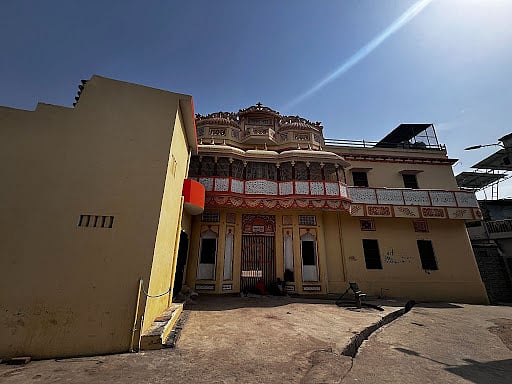
Harishankar Safriwala, who claims ownership of the nearby Ram Niwas Temple plot, alleges the trust bypassed him and transferred title through the site’s priests instead, despite pending litigation: “The priest simply cannot sell this temple. He had no authority to sell it, yet the trust used coercion to get the land transferred to its name.”
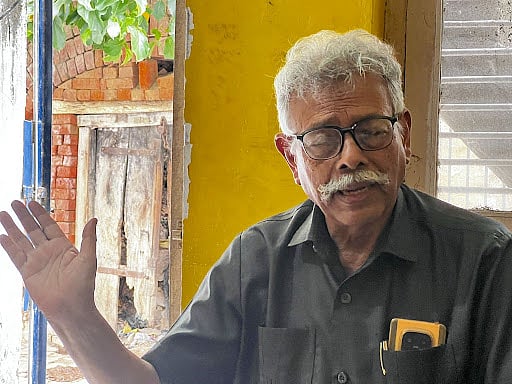
The committee examining these land purchases has, again, not yet issued a report – these remain claims by the parties involved.
The kurta, and the reckoning
For all the turbulence around him, Rai’s public persona has stayed disarmingly mild. Speaking in Kanpur in December 2025, he noted, almost proudly, that his own clothes are stitched by Muslim tailors in Ayodhya: “There are Muslims in Ayodhya who stitch clothes for the deities in 3,000 temples. All my clothes are stitched by Muslims... if you take the fabric there and say it is for Champat Rai, there is no need to even provide measurements.”
It’s a strange footnote to a movement that left the country bloodied and its religious fault lines deeper than before – and to a man who, in the eyes of critics like Hanumangarhi’s Mahant Dharamdas, has become something closer to a cautionary tale than a hero: “Champat is an RSS man. All the temples here are run by RSS people. They are looting. Even a thief donates at a temple to atone for sins, but these people have stolen even from that.”
Champat Rai has now offered his resignation from the trust, as has Anil Mishra. Whether that marks the start of real accountability or simply a pause before the story fades is the question hanging over Ayodhya right now.
Complaining about the media is easy. Why not do something to make it better? Support independent media and subscribe to Newslaundry today.
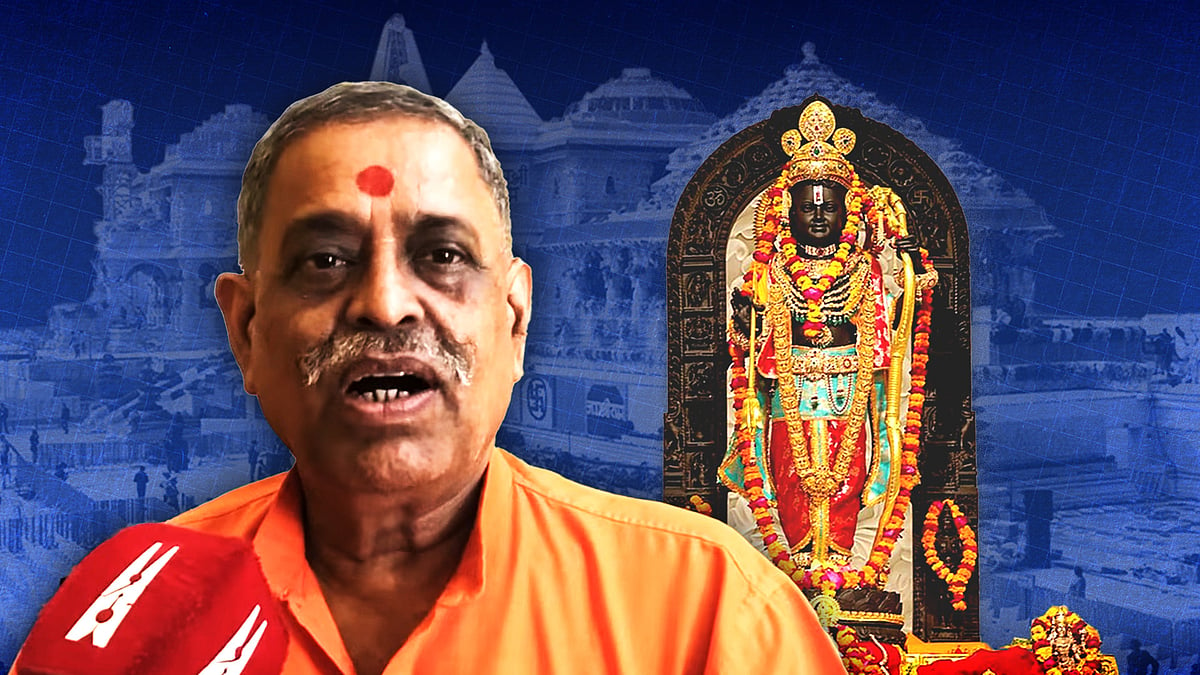 ‘They’re playing with faith’: Complainant claims Ram Temple SIT is an eyewash
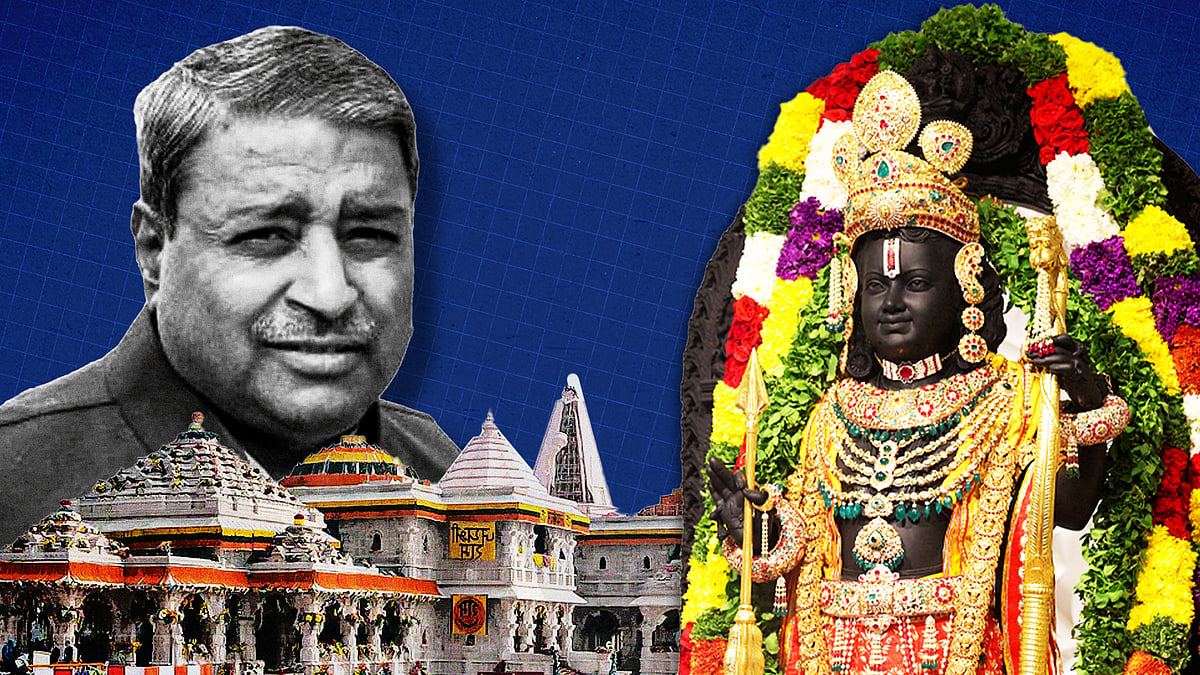 No FIR, ‘culprits will escape’: Ayodhya fumes over Ram Mandir ‘scam’