From Sittilingi to Sijimali: The doctor Odisha police arrested over anti-mining agitation
For Dr Randall, healthcare was much more than hospitals, medicines and doctors. It was about access to food, forests, land and livelihoods for the communities he served.

For Dr Randall Sequeira, writing a prescription was never enough. What was the point of giving someone medicines, he would ask, if the person had not eaten for two days? How would the medication work when the person was poorly nourished, had weak immunity and did not know where the next meal would come from?
This was a question Randall often raised with his doctor friend Nikhil Dhanpal, who remembers him as someone who looked beyond a patient's illness to understand the conditions in which they lived.
For Randall, healthcare was much more than hospitals, medicines and doctors. It was about access to food, forests, land and livelihoods for the communities he served.
This approach shaped his work among tribal villages in Odisha's Kalahandi district, where he moved to in 2017. Over the years, his work as a doctor brought him closer to the impact of mining on community health and to the anti-mining movement in the Sijimali hills.
It also placed him in the crosshairs of the state, which wants to quell the protest.
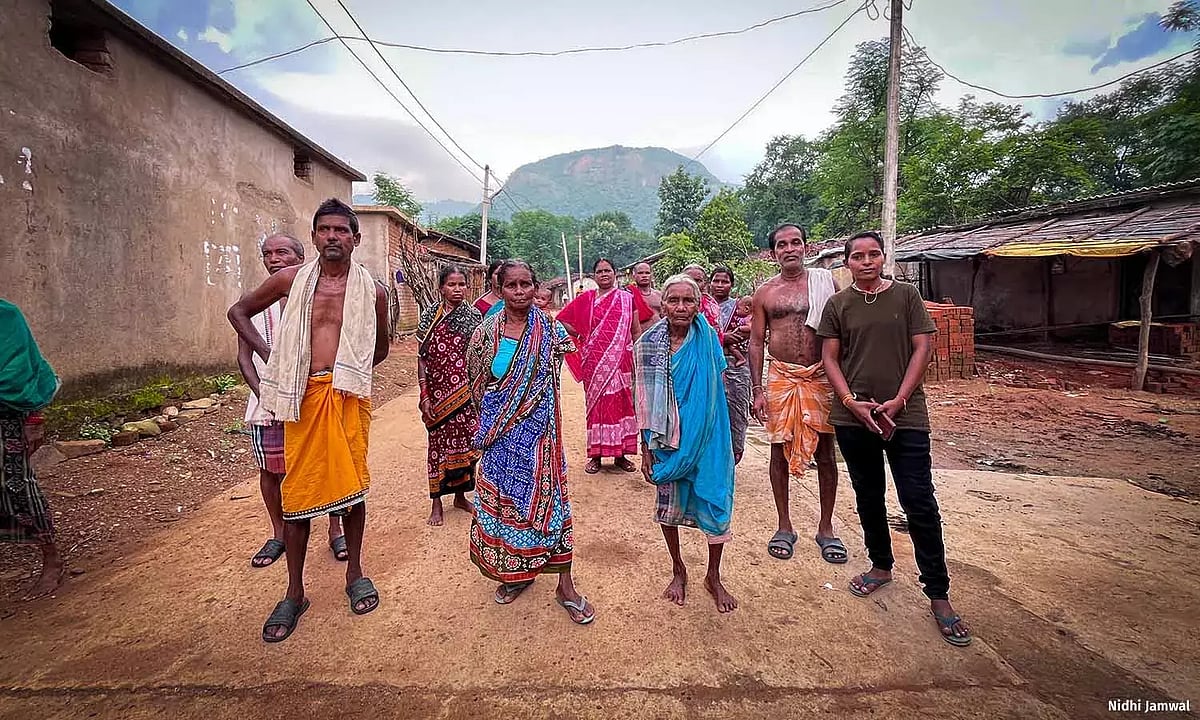
Since July 2023, villagers in the bauxite-capped Sijimali hill range, located along the Kalahandi-Rayagada border in southern Odisha, have been actively opposing a mining project, demanding cancellation of lease given to Vedanta Limited.
People from tribal communities, including the Kondh, Kutia, Jhodia and Dom, and Dalits, have been part of this movement.
On October 16, 2026, Kashipur police arrested Dr Randall, along with Laxman Naik, a leader of the anti-mining forum Maa Mati Mali Surakhya Manch, from his house in Bhawanipatna, Kalahandi.
While Dr Randall’s arrest was based on an FIR dated April 7, 2026, over an incident in Kantamal village, Laxman Naik’s name figures in two FIRs dated April 5 and 6 for opposing the work on a construction corridor in Sijimali. The FIR accuses Dr Randall of several crimes including rioting armed with deadly weapons, dacoity and attempt-to-murder.
The people associated with the Sijimali movement said his role was that of a community doctor and a supporter of tribal villagers resisting mining.
But to understand how a doctor came to be associated with a movement against bauxite mining, one should look at the philosophy of healthcare Randall believed in and the work he had been doing long before his arrest.
A community doctor at heart
Randall studied MBBS at the St John's Medical College in Bengaluru, graduating in the 2011 batch, and opted for the Tribal Health Initiative (THI) in Sittilingi, Tamil Nadu, for his compulsory rural posting.
The experience left a lasting impression on him, according to Dr Randall’s friend, who wants to remain anonymous. “His interests were rural healthcare and understanding the relationship between medicine, communities, law and ethics,” she said.
Though he joined a college in Chandigarh to study surgery, Randall quit the PG course after two months and opted for MD in Internal Medicine from SMS Medical College, Jaipur, which he completed in 2017.
The same year Randall moved to Odisha to work for an NGO working among tribal communities. Its main office was in Bhawanipatna. Randall began working in villages across the district and gradually grew attached to the people of Kerpai, a village in Rayagada. “He eventually built a mud house there,” said Randall's friend.
Around 2022, Randall also helped set up a tuberculosis clinic in Sukinda, Odisha, after learning about the health issues caused by chromite mining. He connected with a senior doctor who runs the Ekta Niketan TB clinic in Jharkhand. The clinic in Sukinda still functions but is struggling because of lack of funds. Randall had helped the clinic raise money through crowdfunding.
He had also bought land near Bhawanipatna with plans to take up farming and establish a community centre. “His needs were modest. He often travelled by general or sleeper class and put his time and resources into community work,” said his friend.
An activist associated with the Sijimali movement said for several villages in Kashipur block of Rayagada, the nearest primary health centre is in Sunger. The centre was often not open and was mostly run by a pharmacist. Dr Randall’s presence in Kerpai and his frequent visits to the villages in the region became important for residents.
For many years, the doctor riding a white Himalayan Enfield was a familiar sight for them. It helped Randall reach the interior villages of Kalahandi and Rayagada to serve patients. The two-wheeler is no longer in use and now rusts in a garage.
Dr Randall gradually picked up Odia and Kui, a language spoken by the indigenous Kandha tribal community.
A lot of his time was spent among patients, asking detailed questions about their symptoms. He also invested time to gain knowledge of traditional medicine and the herbs used to treat illnesses. Randall believed indigenous medicine should be the first line of treatment, and modern medicine only when it did not work, said the activist.
Dr Vidit Panchal, a friend of Randall, said their conversations often revolved around common diseases in rural areas and the way power and inequality affected healthcare access. “Randall spoke about how hospitals and healthcare systems could become exclusionary for tribal communities,” said Vidit.
As a doctor, Randall constantly strived to understand the links between mining, land, forests, nutrition, food and community health. He had observed that people in areas with access to forests, land and diverse food sources appeared healthier, the activist said.
“He was quite concerned about kidney problems and skin infections in mining-affected areas. This was part of his effort to document how mining could affect communities beyond the immediate loss of land and livelihood,” the activist said.
“Randall's house became a place where people heading towards Sijimali could stay and rest,” said a filmmaker who had worked with Randall while making a film on the Sijimali anti-mining movement.
The film was selected for the recent 18th short film festival in Kerala but the permission to screen it was denied by the Union government, the filmmaker said.
Randall had helped the filmmaker record footage for the film. They also had plans to work on another film together.
The Sijimali movement
The resistance to mining in Sijimali, comprising 44 villages, did not begin with outsiders or activists. According to the activist who requested anonymity, villagers had organised themselves and started raising objections to the project before others joined them.
The conflict began in 2023, after the government approved bauxite mining in the hills. It escalated on April 7, 2026, when road construction began near Shagbari village and fresh clashes broke out between villagers and police.
For the communities, the opposition was not only about losing land or livelihoods. Tiji Raja, the living deity of Sijimali hills is revered as the guardian lord by the tribes. The hills and forests were connected to their faith, sacred deities, culture, language, food and way of life. Villagers questioned how their land could be handed over for mining without their consent and consultation.
The activist, who spoke to Newslaundry said Randall’s association with the movement was as a doctor and a well-wisher of the tribal communities caught up in the fight against the bauxite mining project.
The activist said several groups, including the Niyamgiri Suraksha Samiti (Niyamgiri, which has long been in the news for bauxite mining) Khandual Mali Stayi Suraksha Samiti and Maa Mati Mali Suraksha Manch (For Sijimali, Kutrumali and Majingmali), formed in 2023, have been working together to address the crisis created by mining through rallies and protest meetings.
Hiramal Naik and Laxman Naik, who are currently in jail, are leaders of the Maa Mati Mali Suraksha Manch.
“Laxman Naik comes from an area affected by Utkal Alumina's mining operations and has seen the impact of mining on communities over 10 to 12 years. His experience helped people in Sijimali understand what could happen to their own villages if the mining project went ahead,” said the activist.
A ticket booked for home
Randall's mother, Nancy Sequeira, said she had seen his work among Adivasi communities.
During his outpatient consultations, she saw long queues of patients waiting for him. He would examine each person, listen patiently and speak to them gently.
He felt that people in the region were underserved, and there were not enough doctors to look after them, she said. “He believed he could serve the community and help people empower themselves,” said Nancy.
Nancy said she often felt anxious whenever she received a phone call, wondering whether it was some bad news.
“As a mother, there will always be fear,” she said. But she was also aware that his work could put him in difficult situations. “I was prepared mentally because he informed me,” Nancy said.
She had called Randall on the evening of October 16, but he did not answer.
“On the 17th I got to know about his arrest,” she said.
She told him he did not need to apologise because he was being jailed for a cause, for standing up for the Adivasi communities. She wanted him to know that the family understood and supported the work he had chosen to do.
Nancy said Randall had booked a ticket to Mumbai for November 12. He had plans to return around November 23.
“Even when he came home, he rarely stayed away from work. He would continue conducting meetings and working for the communities,” she said.
Protest grows against arrest
The Medico Friend Circle (MFC), a group of socially conscious, pro-poor health practitioners has condemned the arrest of Dr Randall Sequeira and Laxman Naik.
Dr Cyriac Abby Philips, widely known as TheLiverDoc on X, appealed to the medical fraternity to stand up for Dr Randall Sequeira, his former junior at St John's Medical College. He cited Sequeira's work treating malnourished children and women in remote settlements of Odisha, and asked the government to stop criminalising healthcare activism.
“Randall described sleeping under a dripping school roof in freezing fog, borrowing utensils from local health workers to cook and listening to stories of stillbirths and chronic fevers. Randall stayed with the tribal community to serve them,” wrote the TheLiverDoc.
If you’re reading this report, you’re not seeing a single advertisement. That’s because Newslaundry powers ad-free journalism that’s truly in public interest. Support our work and subscribe today.
 ‘We thought the battle was over’: 40 years after resistance, mining fears return to Odisha’s sacred hills