Bengal’s migrant workers caught between ‘ghuspaithiya’ politics and SIR deletions
For Bengal’s migrant workforce, a deleted name on a voter roll is more than a lost ballot – it’s a serious threat to their livelihood.

Md Anikul Hoque, a migrant labourer from Samserganj in West Bengal’s Murshidabad district, has waited through many crises. He stood in queues for food, water, and cash during demonetisation in 2016. He worked through the Covid-19 lockdown inside sealed buildings in Odisha “like a thief in a prison” waiting to return home. But this time it is different.
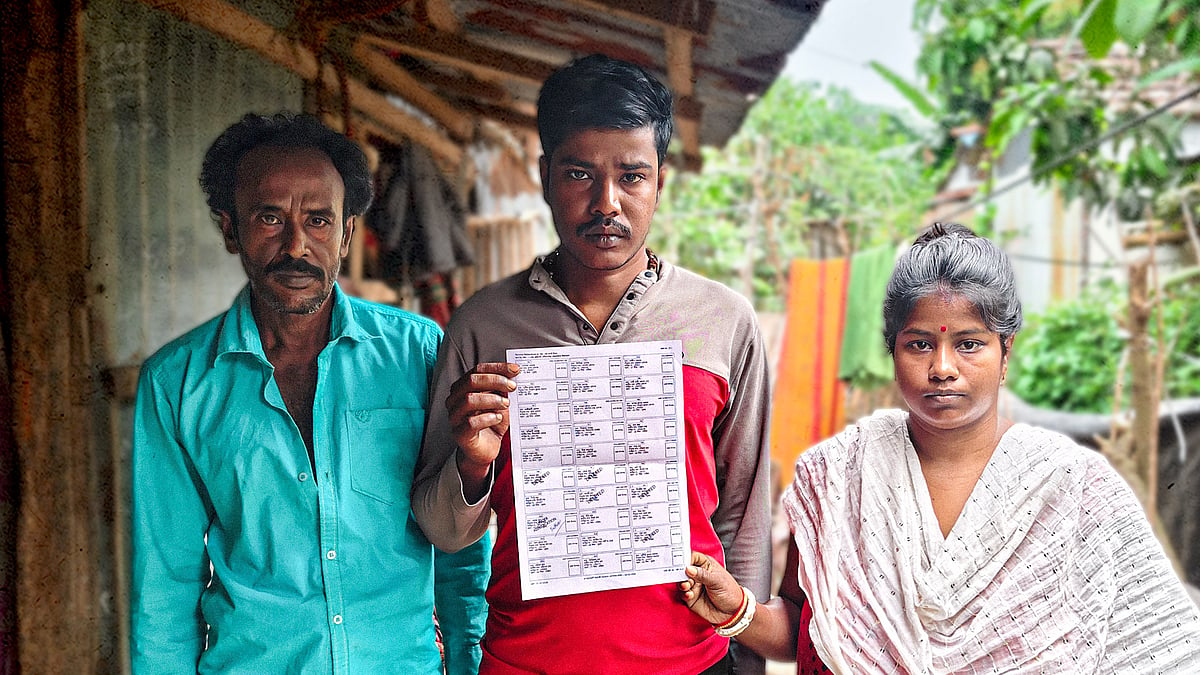
After a controversial Special Intensive Revision (SIR) exercise erased his name from the voter rolls, Hoque is trapped in a new state of anxiety. With his appeal still pending before an appellate tribunal, he is awaiting the restoration of his voting rights so that he can return to work. Since returning home for Eid, the Samserganj resident has been forced to roll beedis for a living, slashing his income by half. Afraid that his deleted status will mark him as a target, Hoque refuses to leave the state for work. For him, losing his vote is synonymous with losing his ability to earn a livelihood.
“Obviously, there is fear. Even when we had the necessary documents, we were branded as Bangladeshis in many states for merely speaking in Bengali. Now that my name has been removed from the voter list, there is a greater chance of that happening,” says Hoque, who has worked in Odisha, Jharkhand, Bihar, and Tamil Nadu, speaking to Newslaundry.
Eight out of nine voters in his family have had their names struck off from the electoral rolls. In a copy of the letter submitted to their local Electoral Registration Officer (ERO), the reason for their removal states: “linked with someone, who is claimed by 6 others as parent.” However, Hoque claims that his family has all the requisite documents.
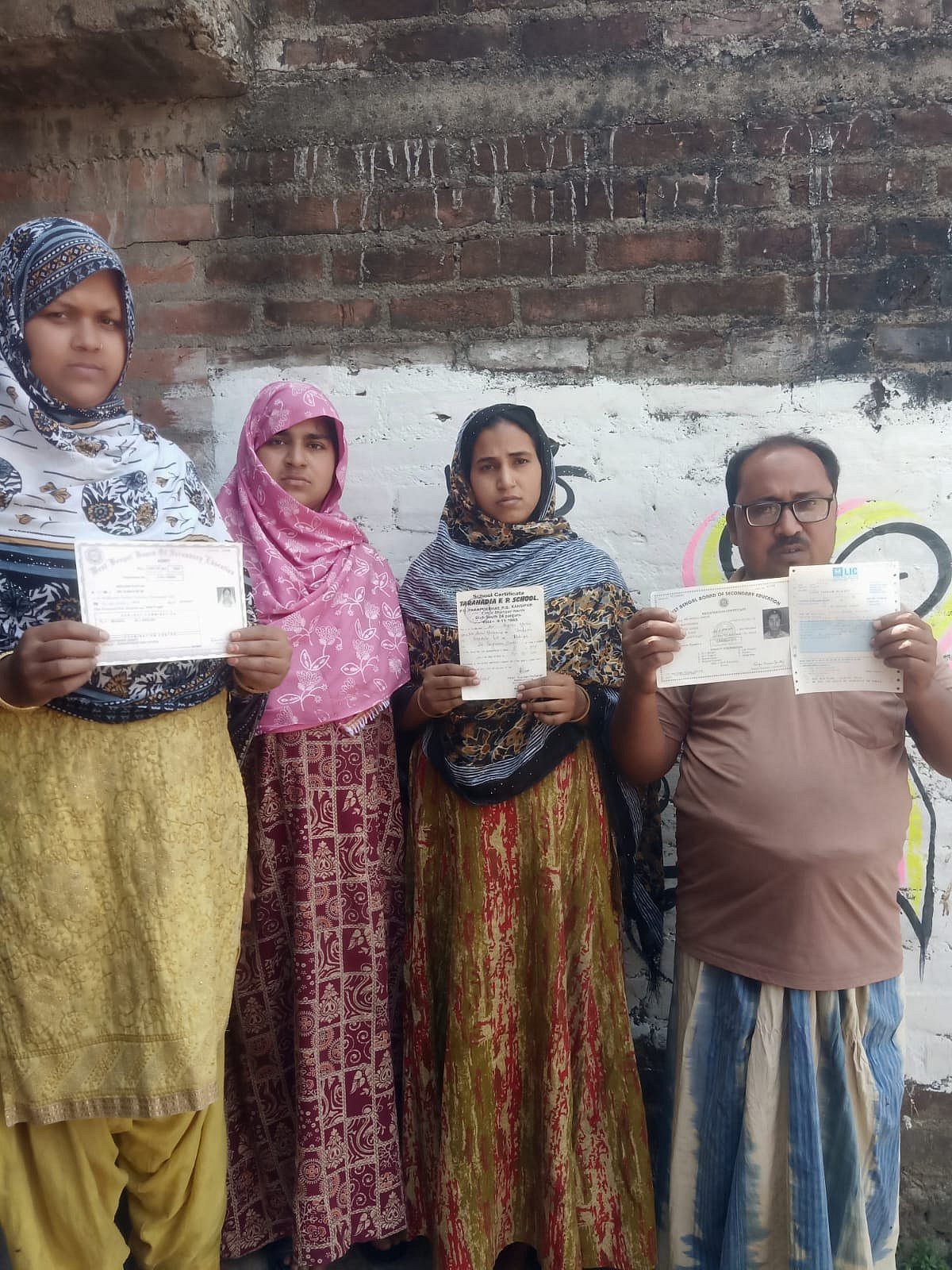
The family’s struggles depict the electoral mayhem in Samserganj, a Muslim-dominated constituency, which has recorded the highest number of deletions of those ‘under adjudication’ in West Bengal.
Critics of the Bengal SIR have raised concerns that ECI’s electoral roll revision is becoming a process for determining citizenship. Political activist Yogendra Yadav, who has been closely following the SIR developments, said the roll revision process “has challenged constitutional values.” Last week, activists in Kolkata reiterated that the poll panel “has no jurisdiction to determine citizenship.”
In Samserganj, the Election Commission placed roughly 45 percent (1,08,400) of the total 2,35,944 voters under adjudication. Of those, officials deleted 74,775 names – nearly 69 percent. The purge hit Hoque’s booth even harder: authorities removed 97.8 percent of those under adjudication, leaving only 12 names out of 551.
“We have to furnish our documents wherever we work. Otherwise, they won’t employ us. We have to show our Aadhaar card, PAN card, or voter ID card… What if they find out that our names were deleted? We have lost all sleep, afraid of what’s next,” remarks Hoque.
The Election Commission struck over 27 lakh names from West Bengal’s final voter list following adjudication. On Thursday, the Supreme Court ruled that individuals cleared by appellate tribunals can vote in the upcoming polls, directing the ECI to issue supplementary rolls with cut-off dates of April 21 and April 27 for the two polling phases, respectively. However, the delayed establishment of these tribunals, coupled with the volume of cases, has effectively turned the right to appeal into a race against time.
This logjam effectively traps Bengal’s migrant workers, whose names were deleted, in a state of precarity. Most of these workers hail from Murshidabad and Malda – the state's primary hubs for migrant workers. These two districts also lead the state in electoral exclusions after adjudication, with officials purging 4.5 lakh and 2.39 lakh names, respectively.
Apart from the financial burden of travel, documentation and repeated SIR hearings, the threat to safety is also real. Bengali migrant workers face heightened scrutiny in a national climate charged against “illegal immigrants” or “ghuspaithiyas” (‘infiltrators’). Reports of illegal deportation, detention, harassment and discrimination, including in housing and employment, add to their vulnerability and make routine travel for work more uncertain.
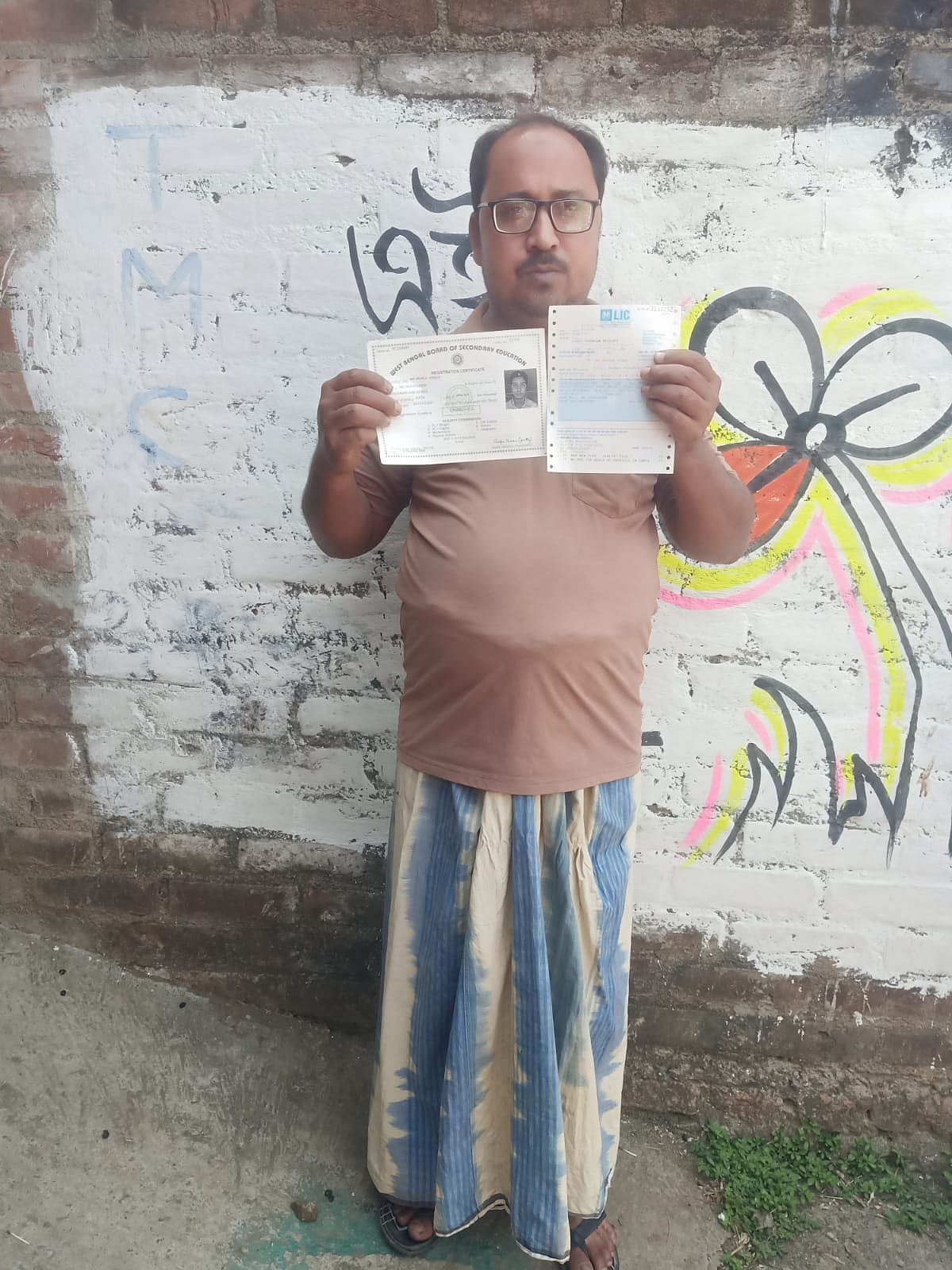
The branding of ‘infiltrators’
This atmosphere of suspicion against migrant workers from Bengal took a dark turn in May 2025, just days after the terror attack in Pahalgam. The Ministry of Home Affairs reportedly issued directives to all states and Union Territories to “detect, identify and deport illegal immigrants”; further prescribing the establishment of district-level detention centres.
Asif Faruk, general secretary of the Parijayee Shramik Aikya Mancha (PSAM), attributes the surge in institutional crackdowns to this specific notification. His association has since worked closely with authorities to secure the release of multiple individuals who were forcefully pushed across the border into Bangladesh.
“Bengali-speaking migrant workers have been harassed since 2014, but hostility peaked after the Pahalgam attack,” says Faruk, explaining the precarity faced by these groups. “Hardworking labourers are the most targeted because they lack a safety net. An office worker might have resources for protection, but a labourer’s work is often neither valued nor protected.”
Faruk suggests that the narrative painting Bengali speakers as illegal Bangladeshis was amplified with the Bengal polls in mind to create political polarisation. In the wake of the MHA notification, migrant workers now face a double threat: harassment from right-wing outfits and increased scrutiny from the police.
TMC MP Samirul Islam, who chairs the West Bengal Migrant Welfare Board and has worked closely with migrant workers, alleges, “Since April 2025, there has been a marked increase in the harassment of Bengali migrant workers, carried out in a pre-planned manner. They were detained, beaten, and pushed back [to Bangladesh]. We have received over 10,000 complaints in the past year, with Bengali workers harassed in multiple ways.”
These SIR deletions do not exist in a vacuum. They have emerged amid this heightened institutional scrutiny. Removal from the voter list leaves migrant workers further defenceless in a climate where language has become a litmus test for nationality.
“They get jobs in other states by showing their voter ID cards. Now, employers can check EPIC (a unique 10-digit code issued by the ECI to each voter) numbers on open platforms and see if a name has been deleted,” Faruk explains, echoing the fears of many workers. “The migrant then faces a grim choice: lose the job, or face further harassment.”
In January this year, the Election Commission told the Supreme Court that it could determine citizenship only to the extent of voter registration and could not deport anyone. However, the fear on the ground is that it is being weaponised as one.
Chief Minister Mamata Banerjee has leaned into this anxiety, alleging that voters are being removed selectively at the BJP’s behest.
‘When did Bengali-speaking start meaning Bangladeshi?’
Shamim Khan, a resident of Hariharpara in Murshidabad, who works in Mumbai, tells Newslaundry, “We kept showing our documents to prove Indian citizenship. But authorities alleged it was fake and forcefully pushed us into Bangladesh at gunpoint.”
Khan is currently in Murshidabad to cast his vote on April 23, when his constituency goes to the polls, unlike many of his friends, who he says were removed from the voter rolls.
In June last year, Mumbai Police picked up Khan on suspicion of being a ‘Bangladeshi infiltrator.’ He was first moved to Pune, then transported across Bengal, before being forcefully pushed across the border into Bangladesh, he recalls.
After getting thrashed at the checkpoint for refusing to cross the border, Khan was pushed into the forests of Bangladesh in the dead of the night, he says.
“We had no mobile phone or anything to ascertain the time or even call someone. We could see lights at the border, beyond our reach. I spent that entire night in terror, thinking I wouldn’t survive this. We were all in tears.”
But after his case came to light, the authorities intervened and held flag meetings to ensure his safe return.
“The incident is still fresh in my mind. I get anxious when I see the police. It seems they have started arresting and beating people the moment they hear someone speaking Bengali. I have stopped communicating in Bengali while travelling in public transport (in Mumbai). When did Bengali-speaking start meaning Bangladeshi? We understand why actual Bangladeshis who entered the country illegally are being arrested and sent to their own country. But why treat Bengali-speaking Indians this way?” asks Khan.
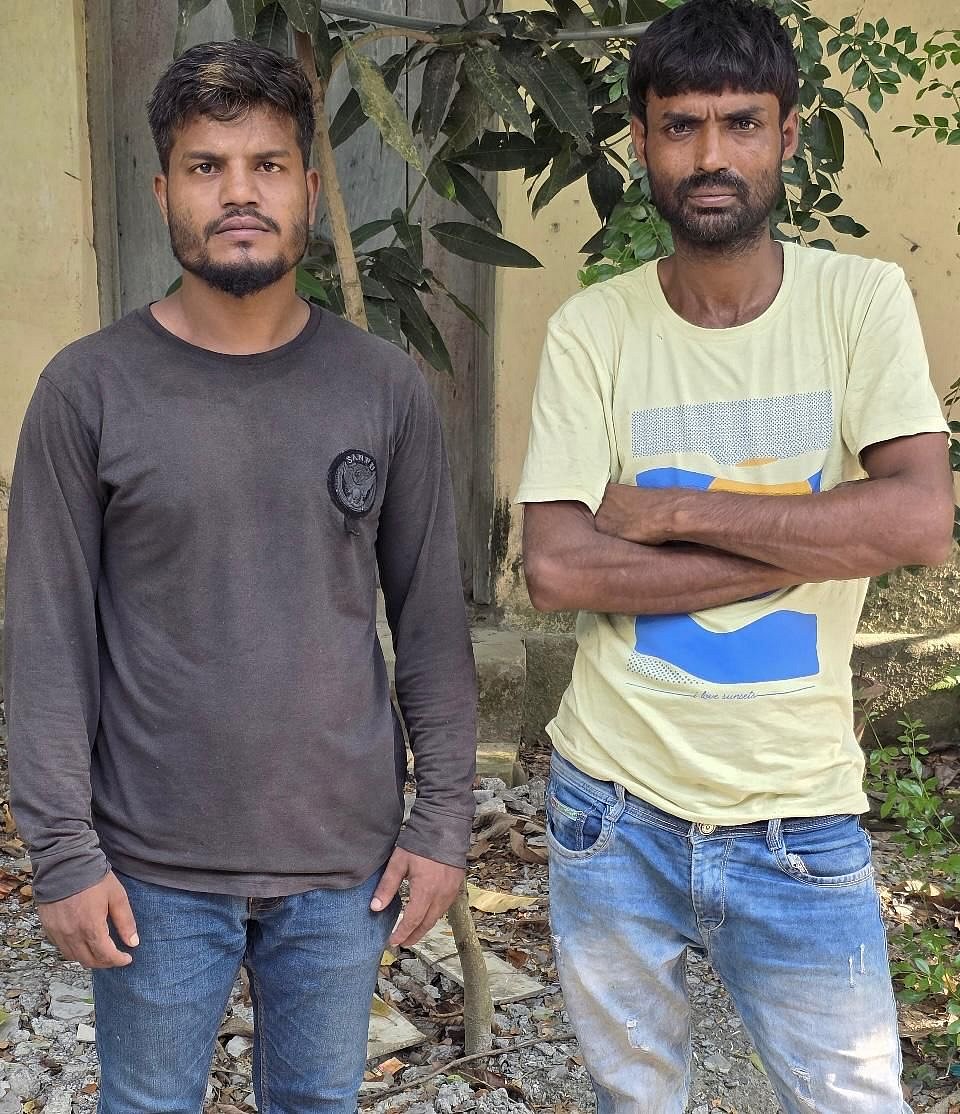
Experts note that what is happening to migrant workers extends far beyond the individual. Samata Biswas, a migration researcher at Kolkata’s Sanskrit College and University, highlights that the “concoction” of language-based harassment and SIR deletions creates a ripple effect, destabilising entire households.
“The remittances that migrant workers send home are also used to educate their children and form a significant, if not the entire, portion of the family’s income. The combination of discrimination and SIR deletions that disturbs their income will also affect the quality of life for their families,” she explains.
“A study done by the Stranded Workers Action Network had already established that migrant workers were disproportionately affected by the SIR exercise in Bihar. Bengali migrant workers are more vulnerable because their identity as Indians has come under threat, which is not the case with migrant workers from states such as UP or Bihar.”
Acknowledging the challenges faced by the Bengali migrant worker community across the country, Chief Minister Mamata Banerjee launched the Shramashree scheme in August 2025 for Bengal’s migrant workers who wanted to return home. Applicants receive a one-time grant of Rs 5,000 to cover travel costs, followed by Rs 5,000 per month until they secure employment (subject to a maximum of 1 year).
We understand why actual Bangladeshis who entered the country illegally are being arrested and sent to their own country. But why treat Bengali-speaking Indians this way?
Shamim Khan
Rising costs
Caught in the crossfire of “ghuspaithiya” politics and the bureaucratic maze of SIR, migrant workers are battling not just emotional and physical strain, but also rising costs.
Tanbir Bulbul, 40, a mason from Harishchandrapur in Malda who works in Gujarat’s Surat, told Newslaundry that he has spent at least Rs 20,000 so far to secure his name on the electoral rolls. But his name was ultimately struck off from the final list. Of the 29 voters in his extended family, he claims only four remain on the final list.
“I have had to make at least two trips for the entire SIR process. Each ticket, often booked at the last moment, costs anything between Rs 3,000 and Rs 4,000. Add to that the 40-hour train journey and countless trips to various offices to get the documents in order. In our neighbourhood, a single photocopy now costs Rs 10-15, up from the usual Rs 2, because of the SIR. No government will ever be able to compensate us for this, even if we get our names on the voter list at some point,” says Bulbul, who earns anything between Rs 20,000 and Rs 30,000 per month.
He is currently waiting for his appellate tribunal hearing. “I had been following the hearing in the Supreme Court to try to understand if we could vote this time. From what I know, the voter list has been frozen. But my appeal is still pending. Is there no way I can vote?” he asks, echoing the desperation of thousands of voters excluded from the electoral rolls. Like most Bengali migrants across the country, fear compels him to return home.
Antu Sheikh, a construction worker from Bhagabangola in Murshidabad, has travelled to cities like Chennai, Delhi, and Mumbai for work. However, he has recently opted for a job closer to home in Purba Medinipur (East Midnapore), seeking a temporary haven until the polling season subsides. His name is among those recently struck from the voter rolls.
“Even though I cannot vote, I will go home before polling on April 23. We don’t know how things will be then. It is better to be with the family,” says Sheikh, who notes that his family holds land deeds dating back to 1948. “My parents and siblings are on the voter list, but my name was struck off along with one of my sisters. It does not make sense, but what else is there to do? If we protest, there is fear that we might be arrested.”
“After elections, we will again move out to other states because we can earn more there. But many reports are circulating. Some said that gradually, all our documents would be under the scanner and our [bank] accounts would be locked. All of this causes a lot of anxiety among us,” he adds.
Not all migrant workers, however, want to continue working outside the state. Some want to come home, no matter the cost. One of them is Sainur Islam, a mason, who was detained with 400 others in Odisha last year over suspicions of being ‘illegal Bangladeshis’. His name is on the voter list, but he hasn’t been able to buy a ticket to return home and vote in his home constituency of Hariharpara. He is currently working in Chennai.
“I had never experienced this kind of discrimination before. In my 20 years as a migrant worker, I have worked in multiple states, including Kerala, Delhi, and Tamil Nadu, but Odisha was my favourite. I would talk about how people of different faiths lived in complete harmony there. This is why I was there for eight continuous years. But things changed suddenly after the new government,” says Islam. His only goal right now is to do “everything in his power” to educate his son so that he does not have to go through this ordeal.
“My wife is also asking me to find some work in the village. I don’t want to work outside either, but I have an outstanding loan and need to repay it. As soon as it is done, I will go back to my village. There are reports of Bengali-speaking migrant workers getting killed in other states. Who will look after my family if something happens to me?”
Elections are not just about who wins, but about the questions that often go unasked – and this time, they matter more than ever. Support our new NL Sena on the five upcoming assembly polls to help us follow the missing voters, the shifting politics, and the stories that could shape India’s future.
 ‘We are Chitragupta of the Bengal SIR’: Meet the SABAR team tracking deleted voters
 ‘Feels like a betrayal’: SIR deletions hit BJP’s own Hindu refugee base in West Bengal